


Al 3004 Powder
$0.00
Al 3004 Powder
| Product | Al 3004 Powder |
| CAS No. | N/A |
| Appearance | Gray Powder |
| Purity | ≥99%, ≥99.9%, ≥95%(Other purities are also available) |
| APS | 1-5 µM, 10-53 µM (Can be customized), Ask for other available size range. |
| Ingredient | Al-1.2Mn-1.0Mg |
| Density | 2.6-2.8g/cm3 |
| Molecular Weight | N/A |
| Product Codes | NCZ-DCY-297/25 |
Al 3004 Description:
Al 3004 Powder is one of the numerous advanced ceramic materials manufactured by Nanochemazone. Nanochemazone produces too many standard grades when applicable, including Mil Spec (military grade); ACS, Reagent and Technical Grade; Food, Agricultural and Pharmaceutical Grade; Optical Grade, USP and EP/BP (European Pharmacopoeia/British Pharmacopoeia) and follows applicable ASTM testing standards. Typical and custom packaging is available. Additional technical, research and safety (MSDS) information are available. Please request a quote above for more information on lead time and pricing
Al 3004 Powder Related Information :
Storage Conditions:
Airtight sealed, avoid light and keep dry at room temperature.
Please contact us for customization and price inquiry
Email: contact@nanochemazone.com
Note: We supply different size ranges of Nano and micron as per the client’s requirements and also accept customization in various parameters.
Al 3004 powder
Al 3004 powder is a specially formulated coating material composed of aluminum alloy. It is created by combining aluminum with a precise blend of alloying elements to ensure optimal performance. The powder form allows for easy application and provides a uniform coating when properly cured.
Overview of Al 3004 Powder
Al 3004 is a wrought aluminum alloy known for its moderate strength, excellent corrosion resistance, good formability and weldability. Manganese enhances strength through solid solution strengthening while magnesium improves strength through precipitation hardening.
Key characteristics of Al 3004 powder include:
Moderate tensile strength with excellent ductility
Very good formability and weldability
Excellent corrosion resistance
High thermal and electrical conductivity
Low density
Available in various particle size distributions
Al 3004 powder is suitable for applications requiring moderate strength combined with good weldability, machinability and corrosion resistance.
Chemical Composition of Al 3004 Powder
| Element | Weight % |
| Aluminum (Al) | Balance |
| Manganese (Mn) | 1.0-1.5% |
| Magnesium (Mg) | 0.2-0.8% |
| Silicon (Si) | 0-0.6% |
| Iron (Fe) | 0-0.7% |
| Copper (Cu) | 0-0.25% |
| Chromium (Cr) | 0-0.10% |
| Zinc (Zn) | 0-0.10% |
Properties of Al 3004 Powder
| Property | Value |
| Density | 2.73 g/cm3 |
| Melting Point | 630-655°C |
| Thermal Conductivity | 180 W/mK |
| Electrical Conductivity | 41-43 %IACS |
| Young’s Modulus | 68-72 GPa |
| Poisson’s Ratio | 0.33 |
| Tensile Strength | 190-240 MPa |
| Yield Strength | 110-170 MPa |
| Elongation | 10-20% |
| Hardness | 50-65 Brinell |
The alloy offers moderate strength with excellent ductility and formability. It has good resistance to atmospheric corrosion. Thermal and electrical conductivity is high.
Production Method for Al 3004 Powder
Common production methods for Al 3004 powder include:
Gas Atomization – Molten alloy stream disintegrated by inert gas jets into fine spherical powder with controlled particle distribution.
Water Atomization – High velocity water jet used to produce fine irregular Al 3004 particles. Lower cost but higher oxygen content.
Mechanical Alloying – Ball milling a blend of aluminum and alloying powders followed by cold compaction and sintering.
Gas atomization provides superior control over powder characteristics critical for advanced applications.
Applications of Al 3004 Powder
Typical applications of Al 3004 powder include:
Additive Manufacturing – Used in binder jetting, laser melting, electron beam melting processes to produce complex aluminum parts.
Metal Injection Molding – To manufacture small intricate components that need good strength and corrosion resistance.
Powder Metallurgy – Press and sinter process to produce moderately high-performance automotive and machinery parts.
Thermal Spraying – Wire arc spray deposition to produce protective coatings offering moderate wear and corrosion resistance.
Welding Filler – Used as filler wire to provide weld strength similar to base metal.
Pigments – Added to paints and coatings to provide shine and corrosion protection.
Specifications of Al 3004 Powder
Al 3004 powder is available under different size ranges, shapes, purity levels, and grades:
Particle Size: From 10-150 microns for AM methods, up to 300 microns for thermal spray processes.
Morphology: Spherical, granular, irregular and flake powder shapes are available.
Purity: From commercial grades up to high purity levels based on impurity limits.
Grades: Conforming to ASTM B209, EN 573, and ISO 209 specifications. Custom grades offered.
Flowability: Powder can be customized for specific flow rates as per application requirements.
Storage and Handling of Al 3004 Powder
Al 3004 powder should be properly handled and stored to prevent:
Oxidation and reaction with moisture
Dust explosion hazards from fine powder
Inhalation related health problems
Safety practices from supplier SDS should be followed
Inert gas blanketing, proper grounding, ventilation, and PPE is recommended when handling the powder.
Testing and Characterization Methods
Key test methods used for Al 3004 powder include:
Chemical composition analysis using OES or XRF
Particle size distribution as per ASTM B822 standard
Morphology analysis through SEM
Powder flow rate measured by Hall flowmeter
Density determined by helium pycnometry
Impurity level testing by ICP-MS
Microstructure examination by X-ray diffraction
These tests ensure batch-to-batch consistency and that the powder meets application requirements.
Comparison Between Al 3004 and Al 6061 Powders
Al 3004 and Al 6061 are two aluminum alloy powders compared:
| Parameter | Al 3004 | Al 6061 |
| Alloy type | Non-heat treatable | Heat treatable |
| Mg content | 0.2-0.8% | 0.8-1.2% |
| Strength | Moderate | Higher |
| Corrosion resistance | Excellent | Excellent |
| Weldability | Excellent | Good |
| Machinability | Good | Excellent |
| Cost | Lower | Higher |
Al 3004 offers better weldability while Al 6061 has higher strength. Both offer excellent corrosion resistance.
Al 3004 Powder FAQs
Q: How is Al 3004 powder produced?
A: Al 3004 powder is commercially produced using gas atomization, water atomization, and mechanical alloying followed by sintering. Gas atomization provides the best control of particle characteristics.
Q: What are the main applications of Al 3004 powder?
A: The major applications of Al 3004 powder include additive manufacturing, thermal spray coatings, powder metallurgy parts manufacturing, metal injection molding, pigments, and welding filler wire.
Q: What is the recommended particle size for Al 3004 powder for binder jet 3D printing?
A: For binder jetting process, the typical Al 3004 powder size range is 20-45 microns with near-spherical morphology to provide good powder bed density and binder infiltration.
Q: Does Al 3004 powder require any special handling precautions?
A: Yes, it is recommended to handle aluminum powders carefully under inert atmosphere using proper grounding, ventilation and PPE to prevent fire or explosion hazards.
Q: Where can I buy Al 3004 powder suitable for aerospace welding wire?
A: High purity gas atomized Al 3004 powder meeting aerospace standards can be purchased from leading manufacturer.
Description
Note: For pricing & ordering information, please get in touch with us at sales@nanochemazone.com
Please contact us for quotes on Larger Quantities and customization. E-mail: contact@nanochemazone.com
Customization:
If you are planning to order large quantities for your industrial and academic needs, please note that customization of parameters (such as size, length, purity, functionalities, etc.) is available upon request.
NOTE:
Images, pictures, colors, particle sizes, purity, packing, descriptions, and specifications for the real and actual goods may differ. These are only used on the website for the purposes of reference, advertising, and portrayal. Please contact us via email at sales@nanochemazone.com or by phone at (+1 780 612 4177) if you have any questions.
Only logged in customers who have purchased this product may leave a review.
Related products

Al 2024 Powder
Al 2024 Powder
| Product | Al 2024 Powder |
| CAS No. | N/A |
| Appearance | Silver-Gray Powder |
| Purity | ≥99%, ≥99.9%, ≥95%(Other purities are also available) |
| APS | 1-5 µM, 10-53 µM (Can be customized), Ask for other available size range. |
| Ingredient | Al-4.4Cu-1.5Mg-0.6Mn |
| Density | 2.78g/cm3 |
| Molecular Weight | N/A |
| Product Codes | NCZ-DCY-294/25 |
Al 2024 Description:
Al 2024 Powder is one of the numerous advanced ceramic materials manufactured by Nanochemazone. Nanochemazone produces too many standard grades when applicable, including Mil Spec (military grade); ACS, Reagent and Technical Grade; Food, Agricultural and Pharmaceutical Grade; Optical Grade, USP and EP/BP (European Pharmacopoeia/British Pharmacopoeia) and follows applicable ASTM testing standards. Typical and custom packaging is available. Additional technical, research and safety (MSDS) information are available. Please request a quote above for more information on lead time and pricing
Al 2024 Powder Related Information :
Storage Conditions:
Airtight sealed, avoid light and keep dry at room temperature.
Please contact us for customization and price inquiry
Email: contact@nanochemazone.com
Note: We supply different size ranges of Nano and micron as per the client’s requirements and also accept customization in various parameters.
Al 2024 powder
Al 2024 powder is an aluminum alloy that primarily consists of aluminum, copper, and small amounts of magnesium and manganese. This alloy exhibits exceptional strength and excellent fatigue resistance, making it ideal for applications where lightweight materials with high mechanical properties are required. Al 2024 powder is commonly used in industries such as aerospace, automotive, and sporting goods.
Overview of Al 2024 Powder
Al 2024 is one of the most popular 2000 series wrought aluminum alloys known for its strength, fatigue resistance, and excellent machinability and corrosion resistance. The copper additions impart substantial strengthening through precipitation hardening while retaining formability and weldability.
Key characteristics of Al 2024 powder include:
High strength with moderate ductility and toughness
Excellent fatigue and fracture resistance
Very good machinability and polishability
Good weldability and formability
High thermal and electrical conductivity
Available in range of powder sizes and shapes
Al 2024 powder is suitable for aerospace components and other high-performance applications needing strength combined with fabrication capabilities.
Chemical Composition of Al 2024 Powder
The typical composition of Al 2024 powder is:
| Element | Weight % |
| Aluminum (Al) | 90.7-94.7% |
| Copper (Cu) | 3.8-4.9% |
| Magnesium (Mg) | 1.2-1.8% |
| Manganese (Mn) | 0.3-0.9% |
| Iron (Fe) | 0-0.5% |
| Silicon (Si) | 0-0.5% |
| Zinc (Zn) | 0-0.25% |
| Chromium (Cr) | 0-0.1% |
| Titanium (Ti) | 0-0.15% |
| Property | Value |
| Density | 2.77 g/cm3 |
| Melting Point | 500-638°C |
| Thermal Conductivity | 121-190 W/mK |
| Electrical Conductivity | 26-35% IACS |
| Young’s Modulus | 73 GPa |
| Poisson’s Ratio | 0.33 |
| Tensile Strength | 400-500 MPa |
| Yield Strength | 290-385 MPa |
| Elongation | 8-20% |
| Hardness | 90-150 Vickers |
The copper additions result in substantial increase in strength while maintaining moderate ductility and excellent fatigue strength through precipitation hardening. It offers optimal combination of properties for high-performance applications.
Production Method for Al 2024 Powder
Commercial production methods for Al 2024 powder include:
Gas Atomization – Molten alloy stream disintegrated by high pressure inert gas jets into fine spherical powder. Controlled particle size distribution.
Water Atomization – High velocity water jet impacts and disintegrates molten metal stream to produce fine irregular powder.
Mechanical Alloying – Ball milling a mixture of aluminum and alloying element powders followed by cold compaction and sintering.
Electrolysis – Aluminum produced through electrolysis process and then alloyed and atomized.
Gas atomization provides the best control over particle characteristics like size, shape and microstructure.
Applications of Al 2024 Powder
Key applications of Al 2024 powder include:
Additive Manufacturing – Used in selective laser melting, direct metal laser sintering to produce complex aerospace and automotive components.
Metal Injection Molding – To manufacture small intricate parts with good mechanical properties and corrosion resistance.
Powder Metallurgy – Press and sinter process to create high performance automotive and machinery parts.
Thermal Spraying – Plasma or arc spraying to deposit protective Al 2024 coatings against wear and corrosion.
Welding Filler – Used as filler wire/rod for arc welding of aluminum alloys. Provides excellent weld strength.
Pyrotechnics – Added to pyrotechnic compositions as fuel due to flammability of aluminum.
Specifications of Al 2024 Powder
Al 2024 powder is available in different size ranges, shapes and grades including:
Particle Size: From 10 – 150 microns for AM, up to 300 microns for thermal spray processes.
Morphology: Spherical, granular, dendritic and irregular shaped particles. Smooth powder flows better.
Grades: Conforming to AMS 4255, ASTM B221, EN 573-3, ISO 209 specifications and other custom grades.
Purity: From commercial to high purity levels based on chemical composition and application needs.
Storage and Handling of Al 2024 Powder
Al 2024 powder requires careful storage and handling to prevent:
Oxidation and reaction with moisture
Dust explosions from ignition of fine powder
Inhalation related health problems
Safety practices recommended by supplier should be followed
Inert gas blanketing, proper grounding, ventilation, and PPE should be used when handling the powder.
Testing and Characterization Methods
Key test methods used for Al 2024 powder include:
Chemical analysis using OES or XRF spectroscopy
Particle size distribution as per ASTM B822 standard
Morphology analysis through scanning electron microscopy
Powder flow rate measurement using Hall flowmeter
Density measurement by helium pycnometry
Impurities testing by ICP-MS
Microstructure examination by X-ray diffraction
These tests ensure the powder meets the required chemistry, physical characteristics, and microstructure as per application needs.
Comparison Between Al 2024 and Al 7075 Powder
Al 2024 and Al 7075 are two high strength aluminum alloy powders compared:
| Parameter | Al 2024 | Al 7075 |
| Alloy type | Heat treatable | Heat treatable |
| Cu content | 3.8-4.9% | 1.2-2% |
| Zn content | 0-0.25% | 5.1-6.1% |
| Strength | High | Very high |
| Fracture toughness | Higher | Moderate |
| Corrosion resistance | Good | Moderate |
| Weldability | Fair | Poor |
| Cost | Lower | Higher |
Al 2024 offers better fabricability whereas Al 7075 provides very high strength after heat treatment. Al 2024 is more cost effective.
Al 2024 Powder FAQs
Q: How is Al 2024 powder produced?
A: Al 2024 powder is commercially produced using gas atomization, water atomization, mechanical alloying, and electrolysis techniques. Gas atomization offers the best control of particle size and morphology.
Q: What are the main applications of Al 2024 powder?
A: The major applications include additive manufacturing, thermal spraying, powder metallurgy, metal injection molding, welding filler, and pyrotechnic compositions where high strength and good corrosion resistance is required.
Q: What is the typical particle size used for Al 2024 powder in AM?
A: In most metal 3D printing processes, the ideal particle size range for Al 2024 powder is 15-45 microns with spherical morphology and good flow characteristics.
Q: Does Al 2024 powder require any special handling precautions?
A: Yes, it is recommended to handle fine aluminum powders under inert gases using proper grounding, ventilation and PPE to prevent risk of fires and explosions.
Q: Where can I buy Al 2024 powder suitable for aerospace components?
A: High purity gas atomized Al 2024 powders meeting aerospace requirements can be sourced from companies.
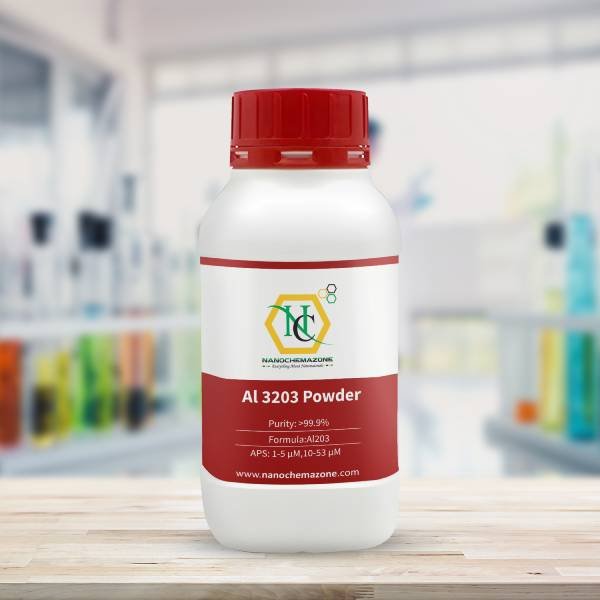
Al 3203 Powder
Al 3203 Powder
| Product | Al 3203 Powder |
| CAS No. | 1344-28-1 |
| Appearance | White Powder |
| Purity | ≥99%, ≥99.9%, ≥95%(Other purities are also available) |
| APS | 1-5 µM, 10-53 µM (Can be customized), Ask for other available size range. |
| Ingredient | Al203 |
| Density | 3.95g/cm3 |
| Molecular Weight | 10.961g/mol |
| Product Codes | NCZ-DCY-299/25 |
Al 3203 Description:
Al 3203 Powder is one of the numerous advanced ceramic materials manufactured by Nanochemazone. Nanochemazone produces too many standard grades when applicable, including Mil Spec (military grade); ACS, Reagent and Technical Grade; Food, Agricultural and Pharmaceutical Grade; Optical Grade, USP and EP/BP (European Pharmacopoeia/British Pharmacopoeia) and follows applicable ASTM testing standards. Typical and custom packaging is available. Additional technical, research and safety (MSDS) information are available. Please request a quote above for more information on lead time and pricing
Al 3203 Powder Related Information :
Storage Conditions:
Airtight sealed, avoid light and keep dry at room temperature.
Please contact us for customization and price inquiry
Email: contact@nanochemazone.com
Note: We supply different size ranges of Nano and micron as per the client’s requirements and also accept customization in various parameters.
Al 3203 powder
Al2O3 powder is an aluminum alloy composed of aluminum, copper, and manganese. It is renowned for its excellent strength and high fatigue resistance, making it an ideal choice for demanding environments and structural components. The precise composition and manufacturing process of Al 3203 powder ensure consistent quality and performance, making it a reliable material for numerous applications.
Al2O3 or aluminum oxide is a ceramic material known for its high hardness, excellent dielectric properties, refractoriness, abrasion and corrosion resistance. Alumina powder is the powder form of aluminum oxide used in a variety of applications.
Key properties of Al2O3 powder include:
High hardness and wear resistance
High melting point of over 2000°C
Low electrical and thermal conductivity
Excellent thermal shock resistance
Resistant to strong acids and alkalis
Low density around 3.95 g/cm3
Chemically inert material
White color powder available in various particle sizes
Chemical Composition of Al2O3 Powder
Al2O3 powder has the following chemical composition:
| Compound | Formula | Weight % |
| Aluminum oxide | Al2O3 | 99.5% min |
| Silicon dioxide | SiO2 | 0.05% max |
| Iron oxide | Fe2O3 | 0.08% max |
| Titanium dioxide | TiO2 | 0.03% max |
| Sodium oxide | Na2O | 0.05% max |
| Magnesium oxide | MgO | 0.03% max |
High purity Al2O3 powder contains over 99.5% aluminum oxide as the principal component. Maximum impurity limits are specified for silica, iron oxide, titania, and other oxides.
Al2O3 powder exhibits the following key properties:
| Property | Value |
| Melting point | 2050°C |
| Density | 3.95 g/cm3 |
| Hardness | 9 Mohs |
| Flexural strength | 330 MPa |
| Compressive strength | 2600 MPa |
| Porosity | <1% |
| Thermal conductivity | 30 W/m.K |
| Electrical resistivity | >1014 ohm.cm |
| Dielectric strength | 15-35 kV/mm |
| Water absorption | 0% |
Production Methods for Al2O3 Powder
The common production methods for Al2O3 powder include:
Bayer Process – Alumina trihydrate is extracted from bauxite ore and thermally converted to alumina powder. This process yields high purity powder.
Hall–Héroult Process – Alumina is dissolved in molten cryolite and electrolyzed to produce aluminum. Alumina powder is recovered as a by-product.
Calcination – Dehydration and calcination of various aluminum hydroxides to form alumina powder.
Sol-gel – Alumina gel is formed from aluminum alkoxides or nitrates and then dried and calcined to make nanoscale alumina powder.
Flame Pyrolysis – Vapor phase combustion of aluminum chloride produces ultrafine alumina powder.
The Bayer process is the most common industrial method while the others yield specialty grade alumina.
Applications of Al2O3 Powder
Key applications of Al2O3 powder include:
Abrasives – For grinding, sanding, polishing, blasting media due to its hardness.
Refractories – High temperature furnace linings, ceramics, firebricks for metallurgy, glass, cement industries.
Ceramics – Electrical, structural, biomedical applications using alumina ceramics.
Catalysts – Gamma alumina used as catalyst support and directly as catalyst.
Coatings – Thermal spray coatings for wear and corrosion protection.
Polishing – CMP slurries for polishing silicon wafers, optic components, metals.
Fillers – Added to plastics, rubber, paper to improve mechanical properties.
Cosmetics – For manufacturing makeup, personal care products.
Specifications of Al2O3 Powder
Al2O3 powder is available under various purity levels, particle size distribution, and grades:
Purity – From industrial (90%) to high purity (99.99%) grades based on impurity levels.
Particle Size – Ranging from nanoscale (10-50 nm) to coarse grade (over 100 microns).
Phases – Alpha, gamma, theta, delta phases have different properties.
Grades – Conforming to standards for abrasives, technical ceramics, bioceramics, etc.
Surface Area – For nanosized powder, surface area is 1-100 m2/g.
Morphology – Regular and spherical shaped particles preferred.
Applications – Powder customized for composites, 3D printing, other uses.
Health and Safety When Handling Al2O3 Powder
Al2O3 powder does not pose severe health and safety risks but standard precautions should be taken:
Use dust masks or respirators to avoid inhaling fine particles during handling.
Wear protective goggles and gloves while handling powder.
Prevent skin contact to avoid drying and irritation.
Avoid generating and breathing airborne dust. Ensure adequate ventilation.
Handle and store powder carefully avoiding dispersion in air.
Properly dispose of waste powder based on environmental regulations.
Refer to Material Safety Data Sheet (MSDS) provided by the supplier for complete health hazard data.
Inspection and Testing of Al2O3 Powder
Key tests carried out for quality control of Al2O3 powder are:
Chemical analysis using X-ray Fluorescence (XRF) or Inductively Coupled Plasma (ICP) techniques to ensure composition meets specifications.
Particle size analysis through laser diffraction or dynamic light scattering method.
Scanning Electron Microscopy (SEM) to examine particle morphology.
Specific surface area measurement using gas absorption technique.
X-ray diffraction (XRD) analysis to determine phases present.
Impurity analysis for trace metallic elements using ICP mass spectrometry.
Loss of mass on ignition when heated to 1000°C.
Density measurement through pycnometry method.
Thorough inspection and testing ensures the powder meets the quality and performance requirements of specific applications.
Comparison Between α-Al2O3 and γ-Al2O3 Powder
α-Al2O3 and γ-Al2O3 are two common phases of alumina powder compared here:
| Parameter | α-Al2O3 | γ-Al2O3 |
| Crystal structure | Hexagonal | Cubic |
| Density | 3.95 g/cm3 | 3.65 g/cm3 |
| Hardness | 9 Mohs | 8 Mohs |
| Melting point | 2050°C | ~1100°C |
| Thermal conductivity | 30 W/m.K | 5-10 W/m.K |
| Surface area | <10 m2/g | 100-300 m2/g |
| Applications | Abrasives, ceramics | Catalysts, adsorbents |
| Price | Lower | Higher |
α-Al2O3 has higher hardness, density, thermal conductivity and refractoriness whereas γ-Al2O3 has higher surface area and extensively used in catalysts. α-form has wider applications and lower price.
FAQs
Q: What is Al2O3 powder used for?
A: Al2O3 powder is used to manufacture abrasives, refractories, structural ceramics, ceramic coatings, polishing compounds, plastic & rubber fillers, and other applications due to its high hardness, strength, and corrosion resistance.
Q: What is the difference between white, pink, and brown alumina powder?
A: White alumina is high purity Al2O3. Pink and brown alumina contain small amounts of chromium and iron oxides respectively that impart color. White alumina is used when color contamination must be avoided.
Q: Is Al2O3 powder hazardous?
A: Al2O3 powder is generally not classified as a hazardous material but like all fine powders can cause irritation and breathing issues during handling. Use of proper PPE is recommended.
Q: What is the difference between fused and sintered alumina powder?
A: Fused alumina is produced by melting pure alumina whereas sintered type is made by compacting and firing alumina powder. Fused alumina has higher purity and density compared to sintered.
Q: Where can I buy Al2O3 powder for making ceramic components?
A: High purity fine alumina powder for ceramic applications can be purchased from leading supplier.

Al 7075 Powder
Al 7075 Powder
| Product | Al 7075 Powder |
| CAS No. | 7429-90-5 |
| Appearance | Gray Metallic Powder |
| Purity | ≥99%, ≥99.9%, ≥95%(Other purities are also available) |
| APS | 1-5 µM, 10-53 µM (Can be customized), Ask for other available size range. |
| Ingredient | Al-5.6Zn-2.5Mg-1.6Cu |
| Density | 2.81g/cm3 |
| Molecular Weight | N/A |
| Product Codes | NCZ-DCY-303/25 |
Al 7075 Description:
Al 7075 Powder is one of the numerous advanced ceramic materials manufactured by Nanochemazone. Nanochemazone produces too many standard grades when applicable, including Mil Spec (military grade); ACS, Reagent and Technical Grade; Food, Agricultural and Pharmaceutical Grade; Optical Grade, USP and EP/BP (European Pharmacopoeia/British Pharmacopoeia) and follows applicable ASTM testing standards. Typical and custom packaging is available. Additional technical, research and safety (MSDS) information are available. Please request a quote above for more information on lead time and pricing
Al 7075 Powder Related Information :
Storage Conditions:
Airtight sealed, avoid light and keep dry at room temperature.
Please contact us for customization and price inquiry
Email: contact@nanochemazone.com
Note: We supply different size ranges of Nano and micron as per the client’s requirements and also accept customization in various parameters.
Al 7075 powder
Al 7075 powder is a high-strength aluminum alloy composed primarily of aluminum, zinc, copper, and small amounts of magnesium and chromium. It is renowned for its impressive mechanical properties, making it an ideal choice for applications that require strength, durability, and lightweight characteristics. Al 7075 powder is typically produced through a process called atomization, where molten aluminum is sprayed and solidified into fine powder particles.
Overview of Al 7075 Powder
Al 7075 is one of the highest strength 7000 series aluminum alloys, offering strength superior to many steels. Zinc is the main alloying addition while magnesium imparts strength through precipitation hardening.
Key properties of Al 7075 powder include:
Exceptionally high tensile and yield strength
High hardness and good fatigue strength
Good toughness and moderate ductility
Excellent finishing characteristics
High corrosion resistance
Available in range of powder sizes and shapes
Al 7075 powder is ideal for high-performance aerospace and defense components needing the optimal combination of strength, hardness, fatigue resistance, and moderate weldability.
Chemical Composition of Al 7075 Powder
The typical chemical composition of Al 7075 powder is:
| Element | Weight % |
| Aluminum (Al) | 87.1-91.4% |
| Zinc (Zn) | 5.1-6.1% |
| Magnesium (Mg) | 2.1-2.9% |
| Copper (Cu) | 1.2-2.0% |
| Iron (Fe) | 0-0.5% |
| Silicon (Si) | 0-0.4% |
| Manganese (Mn) | 0-0.3% |
| Chromium (Cr) | 0.18-0.28% |
| Titanium (Ti) | 0-0.2% |
Properties of Al 7075 Powder
Key properties of Al 7075 powder include:
| Property | Value |
| Density | 2.81 g/cm3 |
| Melting Point | 477–635°C |
| Thermal Conductivity | 130–210 W/mK |
| Electrical Conductivity | 22-30% IACS |
| Young’s Modulus | 71–72 GPa |
| Poisson’s Ratio | 0.33 |
| Tensile Strength | 570–635 MPa |
| Yield Strength | 505–570 MPa |
| Elongation | 7–10% |
| Hardness | 150–190 Brinell |
The zinc additions result in extremely high strength and hardness while maintaining reasonable ductility and toughness. The alloy has excellent finishing characteristics.
Production Method for Al 7075 Powder
Commercial production methods for Al 7075 powder include:
Gas Atomization – Molten alloy stream disintegrated by inert gas jets into fine spherical powder particles with controlled size distribution.
Water Atomization – High pressure water jet used to produce fine Al 7075 powders with irregular shape. Lower cost but higher oxygen pickup.
Mechanical Alloying – Ball milling a blend of aluminum and alloying element powders followed by cold compaction and sintering.
Gas atomization offers superior control over powder characteristics like particle size, shape and microstructure.
Applications of Al 7075 Powder
Common applications of Al 7075 powder include:
Additive Manufacturing – Used in selective laser melting, direct metal laser sintering to produce complex, lightweight aerospace and defense parts.
Metal Injection Molding – To manufacture small intricate components with high strength and moderate corrosion resistance.
Powder Metallurgy – Press and sinter process to create high-performance automotive parts and machinery components.
Thermal Spraying – Wire arc spraying to deposit very hard and wear resistant Al 7075 coatings.
Pyrotechnics – Added as fuel constituent in pyrotechnic compositions due to its high reactivity.
Welding Filler – Used as filler wire providing weld strength but limited weldability.
Specifications of Al 7075 Powder
Al 7075 powder is available in various size ranges, shapes, grades and purity levels:
Particle Size: From 10-45 microns for AM methods, up to 120 microns for thermal spray processes.
Morphology: Spherical, irregular and mixed particle shapes. Smooth spherical powder has better flowability.
Purity: From commercial to high purity grades tailored for the specific application.
Grades: Conforming to ASTM B951, AMS 4045, AMS 4282, EN 573-3 and other equivalent standards.
Oxygen Content: Varies between 500-1500 ppm based on production method. Lower is better.
Storage and Handling of Al 7075 Powder
Al 7075 reactive alloy powder must be handled with care to prevent:
Oxidation and reaction with moisture
Dust explosion hazards from fine powder
Inhalation related health problems
Safety practices recommended by supplier should be followed
Inert gas blanketing, proper grounding, ventilation, and PPE should be utilized for safe handling.
Testing and Characterization Methods
Key test methods used for Al 7075 powder include:
Chemical composition analysis using OES or XRF
Particle size distribution as per ASTM B822 standard
Morphology analysis through SEM
Powder flow rate using Hall flowmeter
Density measurement by helium pycnometry
Impurities testing by ICP-MS
Microstructure examination by X-ray diffraction
These tests ensure the powder meets the required chemical, physical, and microstructural characteristics for the specific application.
Comparison Between Al 7075 and Al 6061 Powder
Al 7075 and Al 6061 are two aluminum alloy powders compared:
| Parameter | Al 7075 | Al 6061 |
| Alloy type | Heat treatable | Heat treatable |
| Zn content | 5.1-6.1% | 0% |
| Mg content | 2.1-2.9% | 0.8-1.2% |
| Strength | Much higher | Moderate |
| Machinability | Poor | Excellent |
| Weldability | Poor | Very good |
| Corrosion resistance | Moderate | Excellent |
| Cost | Higher | Lower |
Al 7075 offers very high strength whereas Al 6061 provides better corrosion resistance, weldability and machinability at lower cost.
Al 7075 Powder FAQs
Q: How is Al 7075 powder produced?
A: Al 7075 powder is commercially produced using gas atomization, water atomization, mechanical alloying and electrolysis techniques. Gas atomization offers the best control of particle characteristics.
Q: What are the main applications for Al 7075 powder?
A: The major applications for Al 7075 are additive manufacturing, thermal spray coatings, powder metallurgy parts manufacturing, metal injection molding, and pyrotechnic compositions requiring exceptionally high strength.
Q: What is the recommended particle size for Al 7075 powder in AM?
A: For most metal 3D printing processes, the ideal particle size range for Al 7075 is 15-45 microns with spherical morphology and good powder flowability.
Q: Does Al 7075 powder require any special handling precautions?
A: Yes, it is recommended to handle reactive aluminum alloy powders carefully under inert atmosphere using proper grounding, ventilation and PPE.
Q: Where can I purchase ultrafine Al 7075 powder suitable for aerospace components?
A: High purity, gas atomized ultrafine Al 7075 powders meeting aerospace requirements can be sourced from leading supplier.

AlSi10 Powder
AlSi10 Powder
| Product | AlSi10 Powder |
| CAS No. | 7440-21-3 |
| Appearance | Gray Powder |
| Purity | ≥99%, ≥99.9%, ≥95%(Other purities are also available) |
| APS | 1-5 µM, 10-53 µM (Can be customized), Ask for other available size range. |
| Ingredient | Al90Si10 |
| Density | 2.67g/cm3 |
| Molecular Weight | N/A |
| Product Codes | NCZ-DCY-305/25 |
AlSi10 Description:
AlSi10 Powder is one of the numerous advanced ceramic materials manufactured by Nanochemazone. Nanochemazone produces too many standard grades when applicable, including Mil Spec (military grade); ACS, Reagent and Technical Grade; Food, Agricultural and Pharmaceutical Grade; Optical Grade, USP and EP/BP (European Pharmacopoeia/British Pharmacopoeia) and follows applicable ASTM testing standards. Typical and custom packaging is available. Additional technical, research and safety (MSDS) information are available. Please request a quote above for more information on lead time and pricing
AlSi10 Powder Related Information :
Storage Conditions:
Airtight sealed, avoid light and keep dry at room temperature.
Please contact us for customization and price inquiry
Email: contact@nanochemazone.com
Note: We supply different size ranges of Nano and micron as per the client’s requirements and also accept customization in various parameters.
AlSi10 Powder
AlSi10 is an aluminum alloy powder containing 10% silicon and remainder aluminum. It offers an excellent combination of strength, low density, thermal properties, corrosion resistance and weldability.
AlSi10 Powder Composition
The typical composition of AlSi10 alloy powder is:
| Element | Composition |
| Aluminum (Al) | Balance |
| Silicon (Si) | 9-11% |
Aluminum forms the matrix providing low density, ductility and corrosion resistance.
Silicon provides solid solution strengthening and improves castability.
Strict control of the aluminum to silicon ratio is critical to achieve optimal strength and physical properties. Other minor alloying elements like magnesium, iron, copper or zinc may also be present in certain grades.
Properties of AlSi10 Powder
AlSi10 powder possesses an excellent combination of properties making it suitable for various demanding applications:
| Property | Value |
| Density | 2.7 g/cm3 |
| Melting Point | ~600°C |
| Thermal Conductivity | 150-180 W/m-K |
| Electrical Conductivity | 35-40% IACS |
| Coefficient of Thermal Expansion | 21-23 x 10<sup>-6</sup> /°C |
| Modulus of Elasticity | 80-85 GPa |
| Tensile Strength | 240-300 MPa |
| Elongation | 1-5% |
| Hardness | 80-90 Brinell |
| Corrosion Resistance | Excellent |
Low density – Up to 65% lighter than copper alloys and steels.
High thermal conductivity – Enables rapid dissipation of heat in electronics.
High strength-to-weight ratio – Strength comparable to titanium alloys with lower density.
Excellent weldability and castability – High fluidity when molten allowing easy casting and welding.
Resistant to corrosion and oxidation – Protective oxide layer prevents corrosion in many environments.
This exceptional property profile makes AlSi10 suitable for lightweight structural applications across aviation, space, automotive and other sectors.
Applications of AlSi10 Powder
Owing to its lightweight, strength and thermal properties, AlSi10 powder is ideal for:
| Applications | Benefits |
| Aerospace components | Low density combined with high strength. |
| Automotive parts | Weight reduction without compromising mechanical performance. |
| Electronic housings | Thermal management for heat dissipation combined with low weight. |
| Medical implants | Biocompatible, non-toxic, corrosion resistant. |
| Thermal management | High thermal conductivity to dissipate heat. |
Used extensively in aircraft and rocket components like engine mounts to reduce weight.
Automotive industry uses AlSi10 for pistons, transmission casings, suspension parts to improve fuel efficiency through lightweighting.
Electronic enclosures and heat sinks leverage high thermal conductivity for efficient cooling.
Rewards excellent strength-to-weight ratio with lower density compared to titanium alloys.
Provides excellent biocompatibility, corrosion resistance for medical implants like orthopedic devices.
AlSi10 delivers maximum performance in demanding applications where low mass and high strength are critical.
AlSi10 Powder Specifications
AlSi10 powder is available in various size fractions, shapes and purity levels:
| Parameter | Options |
| Particle size | 5-150 microns |
| Particle shape | Spherical, irregular |
| Apparent density | Up to 2.7 g/cm3 |
| Flow rate | Up to 25 s/50g |
| Purity | Up to 99.7% |
| Alloy variants | AlSi12, AlSi5 |
Smaller particles promote better sintering while larger sizes provide higher flowability.
Spherical morphology improves flow and packaging density. Irregular particles offer cost benefits.
Higher apparent density increases effective loading in composites manufacturing.
Higher flow rates enhance ease of powder handling and processing.
High purity reduces contamination issues during processing and improves final properties.
Range of silicon levels between 5-12% available to balance fluidity and strength.
Powder attributes are customized based on specific application requirements and processing methods.
Consolidation Methods for AlSi10 Powder
AlSi10 powder can be transformed into full density components using techniques like:
| Method | Benefits |
| Additive manufacturing | Excellent geometric freedom for complex shapes. |
| Metal injection molding | High precision net shape capability. |
| Pressing and sintering | Economical for high volume simpler geometries. |
| Extrusion | Continuous production of rods and tubes. |
| Isostatic pressing | Achieves full density and improves properties. |
Powder bed fusion additive manufacturing methods like selective laser melting are popular for prototypes or low volume production.
Metal injection molding offers closest tolerances and excellent surface finish.
Pressing followed by liquid phase sintering is commonly used but secondary processing like extrusion is needed.
Extrusion leverages excellent castability to produce rods, tubes and profiles.
Cold and hot isostatic pressing reduce porosity and increase density.
The consolidation technique influences the microstructure, final properties, geometrical capabilities and productivity.
Heat Treatment of AlSi10 Parts
Solution heat treatment and artificial aging are used to tailor the strength of AlSi10 components:
| Heat Treatment | Details | Purpose |
| Solutionizing | 530-550°C, quench | Dissolve soluble phases |
| Artificial Aging | 150-180°C, 5-10 hrs | Precipitation hardening |
| Annealing | 350°C, slow cooling | Restores ductility |
Solution heat treatment dissolves alloying elements like silicon in the aluminum matrix followed by rapid cooling or quenching.
Subsequent aging treatment causes fine precipitation resulting in considerable hardening.
Annealing helps recover ductility after extensive prior cold working.
Careful control of time and temperature of solutionizing and aging allows customizing mechanical properties as per specific requirements.
Comparison of AlSi10 Powder with Alternatives
Here is how AlSi10 compares to other aluminum alloy powders:
| Alloy | AlSi10 | AlSi12 | Al6061 | Al7075 |
| Strength | High | Highest | Medium | Very High |
| Weldability | Excellent | Poor | Good | Poor |
| Corrosion Resistance | Excellent | Excellent | Excellent | Good |
| Thermal Conductivity | High | Medium | Medium | Low |
| Density | Low | Low | Low | Low |
| Cost | Low | High | Medium | High |
AlSi12 has the highest strength but poorer weldability and thermal conductivity.
6061 is a popular general purpose alloy with medium strength and good corrosion resistance.
7075 excels in very high strength but has poor weldability and only moderate corrosion resistance.
AlSi10 provides the best all-round properties with added cost benefits.
For most applications, AlSi10 offers the optimum balance of performance, weldability and cost.
Health and Safety Considerations for AlSi10 Powder
Like any metal powder, AlSi10 powder requires safe handling:
| Hazard | Precautions | PPE |
| Skin/eye contact | Avoid direct contact. Rinse if exposed. | Gloves, goggles |
| Inhalation | Avoid breathing dust. Ensure ventilation. | Respirator |
| Ingestion | Avoid hand-mouth transfer. Wash hands. | – |
| Fire | Use sand. Do not use water. | Protective gear |
Wear gloves, goggles, mask when handling powder.
Avoid skin contact. Wash after exposure.
Store in cool, dry place away from sparks, flames.
Ensure proper ventilation and dust collection.
Refer SDS and local regulations for complete guidelines.
With proper precautions and PPE, AlSi10 powder can be safely handled during storage, processing and operation.
Inspection and Testing of AlSi10 Powder
To ensure quality requirements are met, AlSi10 powder should be tested for:
| Parameter | Method | Specification |
| Chemical composition | OES, XRF, wet chemistry | Conformance to Al, Si, Mg content |
| Particle size distribution | Laser diffraction, sieving | D10, D50, D90 within range |
| Powder morphology | SEM imaging | Spherical shape and flowability |
| Apparent density | Hall flowmeter test | Minimum specified density |
| Flow rate | Hall flow meter test | Maximum flow seconds |
| Impurity levels | ICP or LECO analysis | Low oxygen, moisture content |
Routine testing as per ASTM standards ensures consistency and high quality powder suitable for critical applications.
FAQs
What is AlSi10 alloy used for?
AlSi10 is widely used in aerospace, automotive, and electronics applications where low weight and high strength are critical such as engine mounts, pistons, housings, heat sinks.
Does AlSi10 require heat treatment?
Yes, solution heat treatment followed by aging can significantly enhance the tensile strength by precipitating alloying elements like silicon.
What methods can consolidate AlSi10 powder?
AlSi10 powder can be consolidated to full density using additive manufacturing, metal injection molding, extrusion, and powder compact forging.
Is AlSi10 weldable?
Yes, AlSi10 has excellent weldability owing to the silicon alloying addition which improves fluidity in the molten state. This allows easy fusion welding.
Is AlSi10 powder safe to handle?
Like any fine metal powder, standard safety precautions should be taken during storage, handling and processing of AlSi10 powder to minimize health and safety risks.

AlSi50 Powder
AlSi50 Powder
| Product | AlSi50 Powder |
| CAS No. | N/A |
| Appearance | White Metal Powder |
| Purity | ≥99%, ≥99.9%, ≥95%(Other purities are also available) |
| APS | 1-5 µM, 10-53 µM (Can be customized), Ask for other available size range. |
| Ingredient | AlSi |
| Density | 2.7g/cm3 |
| Molecular Weight | N/A |
| Product Codes | NCZ-DCY-307/25 |
AlSi50 Description:
AlSi50 Powder is one of the numerous advanced ceramic materials manufactured by Nanochemazone. Nanochemazone produces too many standard grades when applicable, including Mil Spec (military grade); ACS, Reagent and Technical Grade; Food, Agricultural and Pharmaceutical Grade; Optical Grade, USP and EP/BP (European Pharmacopoeia/British Pharmacopoeia) and follows applicable ASTM testing standards. Typical and custom packaging is available. Additional technical, research and safety (MSDS) information are available. Please request a quote above for more information on lead time and pricing
AlSi50 Powder Related Information :
Storage Conditions:
Airtight sealed, avoid light and keep dry at room temperature.
Please contact us for customization and price inquiry
Email: contact@nanochemazone.com
Note: We supply different size ranges of Nano and micron as per the client’s requirements and also accept customization in various parameters.
AlSi50 Powder
AlSi50 is an aluminum-silicon alloy powder containing 50% silicon and remainder aluminum. It offers an exceptional combination of properties like low density, high fluidity, low thermal expansion, high specific strength, and corrosion resistance.
AlSi50 is an aluminum-silicon alloy powder containing 50% silicon and remainder aluminum. It offers an exceptional combination of properties like low density, high fluidity, low thermal expansion, high specific strength, and corrosion resistance.
AlSi50 Powder Composition
The typical composition of AlSi50 alloy powder is:
| Element | Composition |
| Aluminum (Al) | Balance |
| Silicon (Si) | 48-52% |
Aluminum forms the matrix providing ductility, toughness and corrosion resistance.
Silicon increases hardness, fluidity and reduces the coefficient of thermal expansion.
The high 50% silicon content results in a eutectic composition with the lowest possible melting point and excellent castability. Strict control of the Al to Si ratio is critical.
Properties of AlSi50 Powder
AlSi50 powder possesses a unique mix of properties making it suitable for high performance applications:
| Property | Value |
| Density | 2.55 g/cm3 |
| Melting Point | 577°C |
| Ultimate Tensile Strength | 200-300 MPa |
| Elongation | <1% |
| Hardness | 100-120 HB |
| Thermal Conductivity | 50-90 W/m-K |
| CTE | 12-15 x 10<sup>-6</sup>/°C |
| Young’s Modulus | 80-90 GPa |
| Corrosion Resistance | Excellent |
Low density – Up to 40% lower than titanium alloys and steels.
High fluidity when molten – Enables excellent castability and mold filling.
High strength-to-weight ratio – Specific strength comparable to titanium alloys.
Low coefficient of thermal expansion – Dimensions remain stable over a wide temperature range.
Excellent corrosion resistance – Protective oxide layer prevents corrosion in most environments.
Good thermal conductivity – Twice that of titanium alloys allowing efficient heat dissipation.
This unique property profile makes AlSi50 suitable for applications where low mass, precision, stability, and strength are critical.
Applications of AlSi50 Powder
The key properties of AlSi50 powder make it ideal for:
| Applications | Benefits |
| Automotive components | Low density and excellent castability. |
| Aerospace parts | High specific strength, stable dimensions. |
| Electronic substrates | Thermal management, CTE match with ceramics. |
| Mirror blanks | Low density, machinability, stability. |
| Medical implants | Biocompatible, non-toxic, corrosion resistant. |
Automotive – Used in pistons, engine blocks, drivetrain parts to reduce weight and improve fuel efficiency.
Aerospace – Ideal for precision aerospace components like actuators and turbocharger wheels requiring highest strength-to-weight.
Electronics – Substrates for PCBs, IC packages to manage thermal loads while matching expansion behavior of ceramics.
Optics – Mirror blanks, telescopes benefit from high dimensional stability and machinability.
Medical – Excellent biocompatibility and corrosion resistance for implants like orthopedic devices
AlSi50 Powder Specifications
AlSi50 powder is available in various size fractions, shapes, and purity levels:
| Parameter | Options |
| Particle size | 10 – 150 microns |
| Particle shape | Irregular, spherical |
| Apparent density | Up to 2.7 g/cm3 |
| Flow rate | Up to 25 s/50g |
| Purity | Up to 99.7% |
| Alloy variants | AlSi40, AlSi30 |
Smaller particles promote higher sintered density while large particles improve flowability.
Spherical morphology enhances powder flow compared to irregular particles.
Higher apparent density increases effective loading in composites manufacturing.
Faster flow rates improve ease of powder handling and processing.
High purity grades minimize contamination issues.
Aluminum-silicon alloys with 30-40% silicon also available.
Powder attributes can be customized based on specific application requirements and processing methods.
Consolidation Methods for AlSi50 Powder
AlSi50 powder can be transformed into full density components using techniques like:
| Method | Details |
| Additive manufacturing | Excellent geometric freedom for complex shapes. |
| Metal injection molding | High precision net shape capability. |
| Press and sinter | Economical for higher volume simpler shapes. |
| Casting | Leverages excellent fluidity and mold filling behavior. |
| Extrusion | For profiles, rods and tubes. |
Powder bed fusion AM techniques like selective laser melting are ideal for low volume complex parts.
Metal injection molding offers closest tolerances and surface finish.
Pressing followed by liquid phase sintering is commonly used but secondary processing needed.
Investment casting provides higher productivity for simpler geometries.
Extrusion is suitable for continuous production of bars, rods and tubes.
The consolidation method strongly influences final properties, microstructure and cost economics.
Heat Treatment of AlSi50 Parts
The following heat treatments can be used to modify AlSi50 properties:
| Heat Treatment | Details | Purpose |
| Solution heat treatment | 500-550°C, quench | Dissolve soluble phases |
| Artificial aging | 150-180°C, 5-10 hrs | Precipitation hardening |
| Stress relieving | 250°C, 2 hrs | Remove residual stresses |
Solution treatment dissolves silicon particles in the aluminum matrix followed by rapid cooling.
Subsequent aging causes silicon to re-precipitate as fine dispersoids imparting strengthening.
Low temperature stress relieving helps reduce residual stresses from prior shaping steps.
Proper heat treatment allows customizing the strength, hardness and ductility as per application requirements.
Comparison of AlSi50 Powder with Alternatives
Here is how AlSi50 compares to other eutectic aluminum-silicon alloys:
| Alloy | AlSi50 | AlSi40 | AlSi30 |
| Fluidity | Highest | High | Medium |
| Castability | Excellent | Very Good | Good |
| Hardness | High | Medium | Low |
| Strength | High | Medium | Low |
| Thermal Conductivity | Medium | High | Highest |
| CTE | Low | Medium | High |
| Cost | High | Medium | Low |
AlSi40 offers the best all-round combination of fluidity, strength and thermal conductivity.
AlSi30 provides highest thermal conductivity but lowest strength and fluidity.
AlSi50 has the highest fluidity, hardness and strength but lower thermal conductivity.
AlSi50 is preferred where maximum castability, dimensional stability, and high specific strength are critical.
AlSi50 Powder Manufacturers
As a specialty alloy powder, AlSi50 is produced by a range of suppliers globally:
| Manufacturer | Country |
| Binder Metals | Germany |
| CNPC Powder | China |
| Sandvik Osprey | UK |
| Rio Tinto Metal Powders | Canada |
| Valimet Inc | USA |
| ASK Chemicals | USA |
Reputable manufacturers have stringent quality control and conform to international standards for composition, particle size distribution, apparent density and impurity levels.
Health and Safety Considerations for AlSi50 Powder
Like any metal powder, AlSi50 powder requires safe handling:
| Hazard | Precautions | PPE |
| Skin/eye contact | Avoid direct contact. Rinse if exposed. | Gloves, goggles |
| Inhalation | Avoid breathing dust. Ensure ventilation. | Respirator |
| Ingestion | Avoid hand-mouth transfer. Wash hands. | – |
| Fire | Use sand. Do not use water. | Protective gear |
Wear gloves, goggles, mask when handling powder.
Avoid skin contact. Wash after exposure.
Store in cool, dry place away from sparks, flames.
Ensure proper ventilation and dust collection.
Refer SDS and local regulations for complete guidelines.
With proper precautions and PPE, AlSi50 powder can be safely handled.
Inspection and Testing of AlSi50 Powder
To ensure quality specifications are met, AlSi50 powder should undergo:
| Parameter | Method | Specification |
| Chemical composition | OES, XRF, wet chemistry | Conformance to Al and Si content |
| Particle size distribution | Laser diffraction, sieving | D10, D50, D90 within range |
| Powder morphology | SEM imaging | Shape and flow characteristics |
| Apparent density | Hall flowmeter test | Minimum specified density |
| Flow rate | Hall flowmeter test | Maximum seconds for 50g flow |
| Impurity levels | ICP or LECO analysis | Low oxygen, moisture content |
Testing should be done periodically as per ASTM standards to ensure consistency in production quality and performance in end-use applications.
FAQs
What is AlSi50 used for?
AlSi50 is ideal for applications like automotive components, aerospace parts, and electronic substrates where low mass, dimensional stability, and high fluidity are critical.
Does AlSi50 require heat treatment?
Optional heat treatment including solutionizing and aging can be done to enhance strength by precipitating silicon particles in the microstructure.
What methods can consolidate AlSi50 powder?
AlSi50 powder can be consolidated to full density using metal injection molding, casting, additive manufacturing via SLM/EBM, extrusion, and sintering.
Is AlSi50 readily weldable?
AlSi50 has relatively poor weldability owing to high silicon content. Special filler material and techniques are required for welding this alloy.
Is AlSi50 powder safe to handle?
Like any fine metal powder, standard safety precautions must be taken when handling AlSi50 powder to minimize health and safety risks.
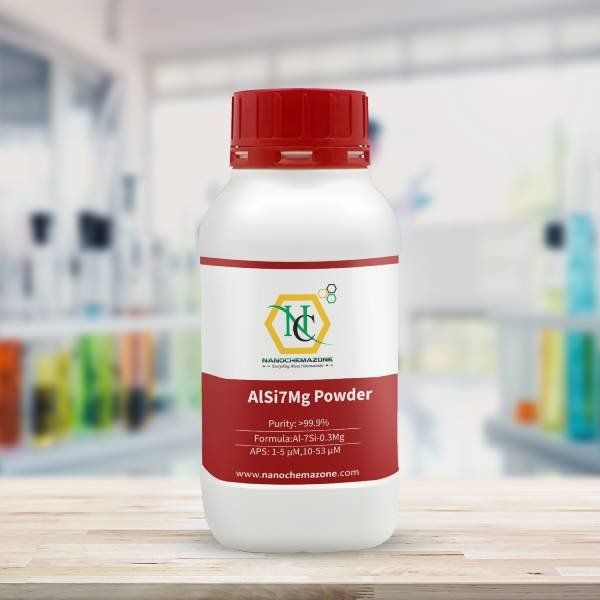
AlSi7Mg Powder
AlSi7Mg Powder
| Product | AlSi7Mg Powder |
| CAS No. | N/A |
| Appearance | Gray Powder |
| Purity | ≥99%, ≥99.9%, ≥95%(Other purities are also available) |
| APS | 1-5 µM, 10-53 µM (Can be customized), Ask for other available size range. |
| Ingredient | Al-7Si-0.3Mg |
| Density | 2.68g/cm3 |
| Molecular Weight | N/A |
| Product Codes | NCZ-DCY-306/25 |
AlSi7Mg Description:
AlSi50 Powder is one of the numerous advanced ceramic materials manufactured by Nanochemazone. Nanochemazone produces too many standard grades when applicable, including Mil Spec (military grade); ACS, Reagent and Technical Grade; Food, Agricultural and Pharmaceutical Grade; Optical Grade, USP and EP/BP (European Pharmacopoeia/British Pharmacopoeia) and follows applicable ASTM testing standards. Typical and custom packaging is available. Additional technical, research and safety (MSDS) information are available. Please request a quote above for more information on lead time and pricing
AlSi7Mg Powder Related Information :
Storage Conditions:
Airtight sealed, avoid light and keep dry at room temperature.
Please contact us for customization and price inquiry
Email: contact@nanochemazone.com
Note: We supply different size ranges of Nano and micron as per the client’s requirements and also accept customization in various parameters.
AlSi7Mg powder
AlSi7Mg powder is an aluminum alloy powder that primarily consists of aluminum (Al), silicon (Si), and magnesium (Mg). The “7” in its name signifies the percentage of silicon, while “Mg” represents the magnesium content. This powder exhibits excellent strength, low density, and impressive thermal properties, making it a preferred choice in multiple industries.
Overview of AlSi7Mg Powder
AlSi7Mg or A357 alloy is a versatile foundry alloy that possesses properties between pure aluminum and high-silicon hypereutectic alloys. The silicon additions improve castability and enhance mechanical properties while magnesium improves strength.
Key characteristics of AlSi7Mg powder include:
Good strength and hardness
Excellent fluidity and castability
Good machinability and polishability
High thermal conductivity
Good corrosion resistance
Low coefficient of thermal expansion
Available in range of particle sizes
AlSi7Mg powder is used for producing automotive components, hydraulic parts, and other precision castings needing balanced properties.
Chemical Composition of AlSi7Mg Powder
The typical chemical composition of AlSi7Mg powder is:
| Element | Weight % |
| Aluminum (Al) | Balance |
| Silicon (Si) | 6-8% |
| Magnesium (Mg) | 0.4-0.8% |
| Iron (Fe) | 0.15-0.5% |
| Manganese (Mn) | 0.1% max |
| Copper (Cu) | 0.1% max |
| Zinc (Zn) | 0.1% max |
| Titanium (Ti) | 0.25% max |
Properties of AlSi7Mg Powder
AlSi7Mg powder possesses the following properties:
| Property | Value |
| Density | 2.68 g/cm3 |
| Melting Point | ~600°C |
| Thermal Conductivity | 130-160 W/mK |
| Electrical Resistivity | 3-5 μΩ.cm |
| Young’s Modulus | 70-80 GPa |
| Poisson’s Ratio | 0.33 |
| Tensile Strength | 250-300 MPa |
| Yield Strength | 140-180 MPa |
| Elongation | 4-8% |
| Hardness | 80-100 Brinell |
The silicon additions increase the strength while retaining good ductility and machinability. The alloy has excellent castability and thermal properties.
Production Method of AlSi7Mg Powder
Commercial production processes used for AlSi7Mg powder include:
Gas Atomization – Molten alloy stream broken into fine droplets by inert gas jets. Produces spherical powder.
Water Atomization – High pressure water jet impacts molten metal to yield fine powders. Cost effective but higher oxygen pickup.
Mechanical Alloying – Ball milling of aluminum and silicon powders followed by cold compaction and sintering.
Gas atomization provides the most control over powder characteristics like particle size distribution, morphology, and microstructure.
Applications of AlSi7Mg Powder
The key applications of AlSi7Mg powder include:
Metal Injection Molding – To manufacture small intricate parts with tight tolerances and good mechanical properties.
Additive Manufacturing – Used in binder jetting, laser melting and other AM processes to produce complex components.
Castings – Added to melts to improve fluidity. Used to manufacture automotive parts requiring durability.
Powder Metallurgy – Press and sinter process to create high performance parts.
Thermal Spraying – Deposited as protective coatings on metal surfaces to provide wear and corrosion resistance.
Welding Filler – For joining aluminum components while retaining weld strength.
Pyrotechnics – Added to pyrotechnic compositions as a fuel constituent.
Specifications of AlSi7Mg Powder
AlSi7Mg powder is available under different size ranges, grades and purity levels:
Particle Size: From 10 – 150 microns for AM, under 45 microns for MIM.
Morphology: Spherical, granular and irregular particle shapes. Smooth powder flows better.
Purity: From commercial to high purity (99.9%) grades.
Oxygen Content: Levels range from 400 – 1500 ppm for different production methods.
Flowability: Powder customized for excellent flow rates of 25 s/50 g or better.
Grades: Custom alloy chemistry and powder characteristics offered.
Handling and Storage of AlSi7Mg Powder
AlSi7Mg powder should be properly handled and stored to prevent:
Moisture contact leading to oxidation
Fire hazards from dust accumulation
Health hazards from inhaling fine powders
Safety practices recommended by supplier should be followed
Sealed containers under inert atmosphere along with proper grounding and PPE is recommended.
Testing and Characterization Methods
Key test methods for AlSi7Mg powder include:
Chemical analysis using OES or XRF for composition
Particle size distribution as per ASTM B822 standard
Morphology analysis through SEM
Flow rate measurement using Hall flowmeter
Density determination by helium pycnometry
Impurity levels tested by ICP-MS
Microstructure examined by XRD phase analysis
Thorough testing ensures powder quality for application requirements is met.
Comparison of AlSi7Mg and AlSi10Mg Powders
AlSi7Mg and AlSi10Mg are two aluminum alloy powders compared:
| Parameter | AlSi7Mg | AlSi10Mg |
| Silicon content | 6-8% | 9-11% |
| Strength | Lower | Higher |
| Castability | Comparable | Comparable |
| Corrosion resistance | Good | Excellent |
| Cost | Lower | Higher |
| Applications | Castings, MIM | Aerospace, AM parts |
| Availability | Readily available | Moderate |
AlSi10Mg offers higher strength but at increased cost. AlSi7Mg provides well-balanced properties at lower cost where high strength is not critical.
AlSi7Mg Powder FAQs
Q: How is AlSi7Mg powder produced?
A: AlSi7Mg powder is commercially produced using gas atomization, water atomization, or mechanical alloying followed by sintering. Gas atomization offers better control over particle characteristics.
Q: What are the main applications for AlSi7Mg powder?
A: The key applications for AlSi7Mg powder include metal injection molding, aluminum die casting, additive manufacturing, powder metallurgy, thermal spray coatings, and filler welding wire.
Q: What is the typical particle size used for AlSi7Mg powder in AM?
A: For most metal 3D printing processes like DMLS and binder jetting, the common particle size range for AlSi7Mg powder is 20-45 microns.
Q: Does AlSi7Mg powder require any special handling precautions?
A: Yes, it is recommended to handle aluminum powders under inert atmosphere using proper grounding, ventilation, and PPE to prevent fire and explosion hazards.
Q: Where can I buy AlSi7Mg powder suitable for making precision castings?
A: Leading powder suppliers like Nanochemazone provide AlSi7Mg powder suitable for foundry applications like precision castings.

AlSiCu Powder
AlSiCu Powder
| Product | AlSiCu Powder |
| CAS No. | N/A |
| Appearance | Silvery-White Powder |
| Purity | ≥99%, ≥99.9%, ≥95%(Other purities are also available) |
| APS | 1-5 µM, 10-53 µM (Can be customized), Ask for other available size range. |
| Ingredient | Al-Si-Cu |
| Density | 2.68g/cm3 |
| Molecular Weight | N/A |
| Product Codes | NCZ-DCY-308/25 |
AlSiCu Description:
AlSi50 Powder is one of the numerous advanced ceramic materials manufactured by Nanochemazone. Nanochemazone produces too many standard grades when applicable, including Mil Spec (military grade); ACS, Reagent and Technical Grade; Food, Agricultural and Pharmaceutical Grade; Optical Grade, USP and EP/BP (European Pharmacopoeia/British Pharmacopoeia) and follows applicable ASTM testing standards. Typical and custom packaging is available. Additional technical, research and safety (MSDS) information are available. Please request a quote above for more information on lead time and pricing
AlSiCu Powder Related Information :
Storage Conditions:
Airtight sealed, avoid light and keep dry at room temperature.
Please contact us for customization and price inquiry
Email: contact@nanochemazone.com
Note: We supply different size ranges of Nano and micron as per the client’s requirements and also accept customization in various parameters.
AlSiCu Powder(AlSi10)
AlSi10 is an aluminum alloy powder containing 10% silicon and remainder aluminum. It offers an excellent combination of strength, low density, thermal properties, corrosion resistance and weldability.
AlSi10 is an aluminum alloy powder containing 10% silicon and remainder aluminum. It offers an excellent combination of strength, low density, thermal properties, corrosion resistance and weldability.
AlSi10 Powder Composition
The typical composition of AlSi10 alloy powder is:
| Element | Composition |
| Aluminum (Al) | Balance |
| Silicon (Si) | 9-11% |
Aluminum forms the matrix providing low density, ductility and corrosion resistance.
Silicon provides solid solution strengthening and improves castability.
Strict control of the aluminum to silicon ratio is critical to achieve optimal strength and physical properties. Other minor alloying elements like magnesium, iron, copper or zinc may also be present in certain grades.
Properties of AlSi10 Powder
AlSi10 powder possesses an excellent combination of properties making it suitable for various demanding applications:
| Property | Value |
| Density | 2.7 g/cm3 |
| Melting Point | ~600°C |
| Thermal Conductivity | 150-180 W/m-K |
| Electrical Conductivity | 35-40% IACS |
| Coefficient of Thermal Expansion | 21-23 x 10<sup>-6</sup> /°C |
| Modulus of Elasticity | 80-85 GPa |
| Tensile Strength | 240-300 MPa |
| Elongation | 1-5% |
| Hardness | 80-90 Brinell |
| Corrosion Resistance | Excellent |
Low density – Up to 65% lighter than copper alloys and steels.
High thermal conductivity – Enables rapid dissipation of heat in electronics.
High strength-to-weight ratio – Strength comparable to titanium alloys with lower density.
Excellent weldability and castability – High fluidity when molten allowing easy casting and welding.
Resistant to corrosion and oxidation – Protective oxide layer prevents corrosion in many environments.
This exceptional property profile makes AlSi10 suitable for lightweight structural applications across aviation, space, automotive and other sectors.
Applications of AlSi10 Powder
Owing to its lightweight, strength and thermal properties, AlSi10 powder is ideal for:
| Applications | Benefits |
| Aerospace components | Low density combined with high strength. |
| Automotive parts | Weight reduction without compromising mechanical performance. |
| Electronic housings | Thermal management for heat dissipation combined with low weight. |
| Medical implants | Biocompatible, non-toxic, corrosion resistant. |
| Thermal management | High thermal conductivity to dissipate heat. |
Used extensively in aircraft and rocket components like engine mounts to reduce weight.
Automotive industry uses AlSi10 for pistons, transmission casings, suspension parts to improve fuel efficiency through light weighting.
Electronic enclosures and heat sinks leverage high thermal conductivity for efficient cooling.
Rewards excellent strength-to-weight ratio with lower density compared to titanium alloys.
Provides excellent biocompatibility, corrosion resistance for medical implants like orthopedic devices.
AlSi10 delivers maximum performance in demanding applications where low mass and high strength are critical.
AlSi10 Powder Specifications
AlSi10 powder is available in various size fractions, shapes and purity levels:
| Parameter | Options |
| Particle size | 5-150 microns |
| Particle shape | Spherical, irregular |
| Apparent density | Up to 2.7 g/cm3 |
| Flow rate | Up to 25 s/50g |
| Purity | Up to 99.7% |
| Alloy variants | AlSi12, AlSi5 |
Smaller particles promote better sintering while larger sizes provide higher flowability.
Spherical morphology improves flow and packaging density. Irregular particles offer cost benefits.
Higher apparent density increases effective loading in composites manufacturing.
Higher flow rates enhance ease of powder handling and processing.
High purity reduces contamination issues during processing and improves final properties.
Range of silicon levels between 5-12% available to balance fluidity and strength.
Powder attributes are customized based on specific application requirements and processing methods.
Consolidation Methods for AlSi10 Powder
AlSi10 powder can be transformed into full density components using techniques like:
| Method | Benefits |
| Additive manufacturing | Excellent geometric freedom for complex shapes. |
| Metal injection molding | High precision net shape capability. |
| Pressing and sintering | Economical for high volume simpler geometries. |
| Extrusion | Continuous production of rods and tubes. |
| Isostatic pressing | Achieves full density and improves properties. |
Powder bed fusion additive manufacturing methods like selective laser melting are popular for prototypes or low volume production.
Metal injection molding offers closest tolerances and excellent surface finish.
Pressing followed by liquid phase sintering is commonly used but secondary processing like extrusion is needed.
Extrusion leverages excellent castability to produce rods, tubes and profiles.
Cold and hot isostatic pressing reduce porosity and increase density.
The consolidation technique influences the microstructure, final properties, geometrical capabilities and productivity.
Heat Treatment of AlSi10 Parts
Solution heat treatment and artificial aging are used to tailor the strength of AlSi10 components:
| Heat Treatment | Details | Purpose |
| Solutionizing | 530-550°C, quench | Dissolve soluble phases |
| Artificial Aging | 150-180°C, 5-10 hrs | Precipitation hardening |
| Annealing | 350°C, slow cooling | Restores ductility |
Solution heat treatment dissolves alloying elements like silicon in the aluminum matrix followed by rapid cooling or quenching.
Subsequent aging treatment causes fine precipitation resulting in considerable hardening.
Annealing helps recover ductility after extensive prior cold working.
Careful control of time and temperature of solutionizing and aging allows customizing mechanical properties as per specific requirements.
Comparison of AlSi10 Powder with Alternatives
Here is how AlSi10 compares to other aluminum alloy powders:
| Alloy | AlSi10 | AlSi12 | Al6061 | Al7075 |
| Strength | High | Highest | Medium | Very High |
| Weldability | Excellent | Poor | Good | Poor |
| Corrosion Resistance | Excellent | Excellent | Excellent | Good |
| Thermal Conductivity | High | Medium | Medium | Low |
| Density | Low | Low | Low | Low |
| Cost | Low | High | Medium | High |
AlSi12 has the highest strength but poorer weldability and thermal conductivity.
6061 is a popular general purpose alloy with medium strength and good corrosion resistance.
7075 excels in very high strength but has poor weldability and only moderate corrosion resistance.
AlSi10 provides the best all-round properties with added cost benefits.
For most applications, AlSi10 offers the optimum balance of performance, weldability and cost.
AlSi10 Powder Manufacturers
As a widely used alloy, AlSi10 powder is produced by major global suppliers:
| Manufacturer | Country |
| Hoeganaes Corporation | USA |
| Sandvik Osprey | UK |
| CNPC Powder | China |
| Rio Tinto Metal Powders | Canada |
| Toyal America | USA |
| ECKA Granules | Germany |
Reputable manufacturers have stringent quality control and conform to specifications of international standards organizations. They also customize powder characteristics based on application requirements.
Health and Safety Considerations for AlSi10 Powder
Like any metal powder, AlSi10 powder requires safe handling:
| Hazard | Precautions | PPE |
| Skin/eye contact | Avoid direct contact. Rinse if exposed. | Gloves, goggles |
| Inhalation | Avoid breathing dust. Ensure ventilation. | Respirator |
| Ingestion | Avoid hand-mouth transfer. Wash hands. | – |
| Fire | Use sand. Do not use water. | Protective gear |
Wear gloves, goggles, mask when handling powder.
Avoid skin contact. Wash after exposure.
Store in cool, dry place away from sparks, flames.
Ensure proper ventilation and dust collection.
Refer SDS and local regulations for complete guidelines.
With proper precautions and PPE, AlSi10 powder can be safely handled during storage, processing and operation.
Inspection and Testing of AlSi10 Powder
To ensure quality requirements are met, AlSi10 powder should be tested for:
| Parameter | Method | Specification |
| Chemical composition | OES, XRF, wet chemistry | Conformance to Al, Si, Mg content |
| Particle size distribution | Laser diffraction, sieving | D10, D50, D90 within range |
| Powder morphology | SEM imaging | Spherical shape and flowability |
| Apparent density | Hall flowmeter test | Minimum specified density |
| Flow rate | Hall flow meter test | Maximum flow seconds |
| Impurity levels | ICP or LECO analysis | Low oxygen, moisture content |
Routine testing as per ASTM standards ensures consistency and high quality powder suitable for critical applications.
FAQs
What is AlSi10 alloy used for?
AlSi10 is widely used in aerospace, automotive, and electronics applications where low weight and high strength are critical such as engine mounts, pistons, housings, heat sinks.
Does AlSi10 require heat treatment?
Yes, solution heat treatment followed by aging can significantly enhance the tensile strength by precipitating alloying elements like silicon.
What methods can consolidate AlSi10 powder?
AlSi10 powder can be consolidated to full density using additive manufacturing, metal injection molding, extrusion, and powder compact forging.
Is AlSi10 weldable?
Yes, AlSi10 has excellent weldability owing to the silicon alloying addition which improves fluidity in the molten state. This allows easy fusion welding.
Is AlSi10 powder safe to handle?
Like any fine metal powder, standard safety precautions should be taken during storage, handling and processing of AlSi10 powder to minimize health and safety risks.
AlSiMg Powder
AlSiMg Powder
| Product | AlSiMg Powder |
| CAS No. | 7429-90-5 |
| Appearance | Silvery-White Powder |
| Purity | ≥99%, ≥99.9%, ≥95%(Other purities are also available) |
| APS | 1-5 µM, 10-53 µM (Can be customized), Ask for other available size range. |
| Ingredient | Al-7Si-0.3Mg |
| Density | 2.7g/cm3 |
| Molecular Weight | N/A |
| Product Codes | NCZ-DCY-309/25 |
AlSiMg Description:
AlSi50 Powder is one of the numerous advanced ceramic materials manufactured by Nanochemazone. Nanochemazone produces too many standard grades when applicable, including Mil Spec (military grade); ACS, Reagent and Technical Grade; Food, Agricultural and Pharmaceutical Grade; Optical Grade, USP and EP/BP (European Pharmacopoeia/British Pharmacopoeia) and follows applicable ASTM testing standards. Typical and custom packaging is available. Additional technical, research and safety (MSDS) information are available. Please request a quote above for more information on lead time and pricing
AlSiMg Powder Related Information :
Storage Conditions:
Airtight sealed, avoid light and keep dry at room temperature.
Please contact us for customization and price inquiry
Email: contact@nanochemazone.com
Note: We supply different size ranges of Nano and micron as per the client’s requirements and also accept customization in various parameters.
AlSiMg Powder
Our company’s gas atomized AlSiMg powder, good sphericity, low oxygen content, good fluidity.at present, aluminum alloys used in metal 3D printing mainly include AlSi12 and AlSi10Mg,they are lightweight additive metal powders with good thermal properties. It can be applied to thin-wall parts such as heat exchangers and other automotive parts, and also can be applied to aerospace and aerospace industrial grade prototype and production parts.
Our company’s gas atomized AlSiMg powder, good sphericity, low oxygen content, good fluidity.at present, aluminum alloys used in metal 3D printing mainly include AlSi12 and AlSi10Mg,they are lightweight additive metal powders with good thermal properties. It can be applied to thin-wall parts such as heat exchangers and other automotive parts, and also can be applied to aerospace and aerospace industrial grade prototype and production parts; The silicon/magnesium combination gives aluminum alloy strength and hardness, making it suitable for thin-walled and complex geometries, especially in applications with good thermal properties and low weight.
Due to its superior performance of light weight and high strength, magnesium aluminum alloy has been widely used in the lightweight demand of manufacturing industry. In 3D printing technology, it has also become the preferred candidate material of various manufacturers without exception
| Component | Al | Si | Mg | Fe | Pb | Ni |
| Standard % | Bal, | 9.0-12.0 | 0.25-0.45 | ≤0.55 | ≤0.05 | ≤0.05 |
| Test% | Bal. | 10.26 | 0.37 | 0.13 | 0.02 | 0.01 |
| Component | Ti | Mn | Cu | Zn | O | |
| Standard % | ≤0.01 | <0.01 | − | − | − | |
| Test% | 0.005 | 0.005 | 0.01 | 0.01 | 0.059 |
Remark:Supporting customized according to customer requirements
| Size (um) | Flowability(s/50g) | PSD (um) | ||
| D10 | D50 | D90 | ||
| 15-45um | <90 | 15-25 | 30-35 | 40-50 |
| 15-53um | <90 | 15-21 | 25-30 | 45-55 |
| 45-120um | <50 | 53-57 | 89-93 | 144-152 |
Product features
Good thermal conductivity and wear resistance;
Low thermal expansion coefficient;
Light weight;
High strength.
Application
Gas atomized spherical powder can be used for 3D Printing, Spraying, Brazing, Electronic, Powder metallurgy industry, Solar industry, The lithium battery and other processing technology.
Pulverizing Process:
Alloy ingredient batching, intermediate frequency induction furnace melting, metal solution pouring out of the bag, atomization, steel powder collection, detection, screening, mixing, weighing, packing out of the warehouse.

Reviews
There are no reviews yet.