

Shop

Copper Hydroxide Nanowires
$0.00| Chemical Formula | Cu(OH)2 |
| Stock No. | NCZNW104-19 |
| Molar Mass | 97.561 g/mol |
| Density | 3.368 g/cm3 |
| Melting point | 80 ˚C |
| CAS Number | 20427-59-2 |
| Diameter | 10 nm (customization available) |
| Length | 5 µm (customization available) |
Please contact us for customization and price inquiry.
Note: We supply different size ranges of Copper Hydroxide Nanowires as per the client’s requirements and also accept customization in various parameters.

Copper Indium Alloy Nanopowder
$0.00Cu-In Alloy Nanoparticles/Nanopowder (Particle Size Less than ≤ 80 nm, 99.9%)
Copper Indium Alloy Nanopowder
| Product Formula | Cu: In |
| Product Number | NCZ-A-115-19 |
| CAS Number | 7440-50-8/7440-74-6 |
| Molecular Weight | 178.36 g/moL |
| APS | ≤ 80 nm (can be customized) |
| Purity | 99.9% |
| Color | Grayish Black |
| Form | Nanopowder |
| Density | 1.2 to 1.5 g/cm3 |
| Melting Point | 940 °C |
| Boiling Point | 1351 °C |
Note: We can manufacture and supply different particle sizes (Nano size range, Micron, Submicron, and different Mesh size) products of Alloy powders (Multi-Element, Multi-Element Oxide and Mixture of Rare Earth Elements) according to client’s requirements. Kindly ask for the customization in size and Element ratio composition.


Copper Indium Gallium Alloy Nanopowder
$0.00Cu-In-Ga Alloy Nanoparticles/Nanopowder (Particle Size Less than ≤ 80 nm, 99.9%)
Copper Indium Gallium Alloy Nanopowder
| Product Formula | Cu: In: Ga |
| Product Number | NCZ-A-116-19 |
| CAS Number | 7440-50-8/7440-74-6/7440-55-3 |
| Molecular Weight | 248.08 g/moL |
| APS | ≤ 80 nm (can be customized) |
| Purity | 99.9% |
| Color | Grayish Black |
| Form | Nanopowder |
| Density | 1.5 to 1.6 g/cm3 |
| Melting Point | 1145 °C |
| Boiling Point | 1412 °C |
Note: We can manufacture and supply different particle sizes (Nano size range, Micron, Submicron, and different Mesh size) products of Alloy powders (Multi-Element, Multi-Element Oxide and Mixture of Rare Earth Elements) according to client’s requirements. Kindly ask for the customization in size and Element ratio composition.
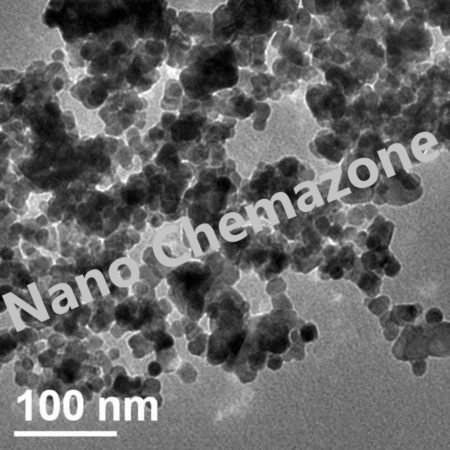
Copper Indium Sulphur Alloy Nanopowder
$0.00Cu-In-S Alloy Nanoparticles/Nanopowder (Particle Size Less than ≤ 80 nm, 99.9%)
Copper Indium Sulphur Alloy Nanopowder
| Product Formula | Cu: In: S |
| Product Number | NCZ-A-117-19 |
| CAS Number | 7440-50-8/7440-74-6/7440-34-9 |
| Molecular Weight | 210.42 g/moL |
| APS | ≤ 80 nm (can be customized) |
| Purity | 99.9% |
| Color | Grayish Black |
| Form | Nanopowder |
| Density | 1.5 to 1.8 g/cm3 |
| Melting Point | 1145 °C |
| Boiling Point | 1354 °C |
Note: We can manufacture and supply different particle sizes (Nano size range, Micron, Submicron, and different Mesh size) products of Alloy powders (Multi-Element, Multi-Element Oxide and Mixture of Rare Earth Elements) according to client’s requirements. Kindly ask for the customization in size and Element ratio composition.

Copper Iodide Inorganic Salts Crystal Powder
$0.00Product Name: Copper Iodide Inorganic Salts Crystal Powder
| Product | Copper Iodide Inorganic Salts Crystal Powder |
| CAS No. | 7681-65-4 |
| Appearance | Powder |
| Purity | 99.9% |
| APS | 1 – 5 Microns (Can be customized) |
| Ingredient | Cul2 |
| Product Code | NCZ-AE-169 |
RELATED INFORMATION
Storage Conditions:
Airtight sealed, avoid light, and keep dry at room temperature.
Please email us for the customization.
Email: contact@nanochemazone.com

Copper Iron Oxide Nano powder
$0.00Product Name: Copper Iron Oxide Nanopowder
Copper Iron Oxide Nanopowder
| Product | Copper Iron Oxide Nanopowder |
| Colour | Brown |
| Purity | ≥ 99.99% |
| Particle size | 1-10 µM (customizable) |
| Ingredient/MF | CuFe2O4 |
| Product Code | NCZ-CK-187/20 |
| CAS Number | 12018-79-0 |
Please email us for the customization.
Email: contact@nanochemazone.com
Please contact us for customization and price inquiry
Note: We supply different size ranges of Nano and micron as per the client’s requirements and also accept customization in various parameters.


Copper Metal Organic Framework (Cu (HKUST-1)
$0.00Copper Metal Organic Framework
Product: Copper Metal Organic Framework (Cu (HKUST-1), Purity: 99%, APS: 30-40 µm)
| Product Name | Copper Metal Organic Framework |
| Stock No. | NCZMOF105 |
| CAS | 7440-50-8 |
| Purity | 99% |
| APS | 30-40 µm |
| Molecular Formula | C18H6Cu3O12 |
| Molecular Weight | 604.87 g/ mol |
| Odour | Odorless |
| Color | Deep Sky Blue |
| Density | 0.35 g/ cm3 |
| Pore Size | ~10Å |
| SSA | ~1300 m2/g (BET) |
| Solubility | Ethanol |
| Application | Gas Separation, Gas Storage, Drug Delivery, Catalysis, and Sensing. |
| Linker | Benzene-1, 3, 5-tricarboxylic acid (H3BTC) and 4, 4’, 4”, s-triazine- 3, 4, 6- triyltribenzoic acid (H3TATB) |
Please contact us for customization and price inquiry.
Note: We supply different size products of micro and Nano Size range powder according to client’s requirements.

Copper Monosulfide Powder
$0.00Product Name: Copper Monosulfide Powder
| Product Name | Copper Monosulfide Powder |
| Stock No | NCZ-NSC302/20 |
| CAS No | 1317-40-4 |
| Purity | 99.9% |
| APS | 15µm (Can be customized) |
| Molecular Formula | CuS |
| Form | Powder |
| Color | Black Powder |
| Molar Mass | 95.611 g/mol |
| Density | 4.76 g/cm3 |
Copper Monosulfide Powder Description:
Copper monosulfide Powder is a chemical compound of copper and sulfur. It occurs in nature as the dark indigo blue mineral covellite.
It is a moderate conductor of electricity. A black colloidal precipitate of CuS is formed when hydrogen sulfide, H2S, is bubbled through solutions of Cu salts.
It is one of several binary compounds of copper and sulfur see copper sulfide for an overview of this subject and has attracted interest because of its potential uses in catalysis and photovoltaics Copper sulfide crystallizes in the hexagonal crystal system, and this is the form of the mineral covellite.
There is also an amorphous high-pressure form which based on the Raman spectrum has been described as having a distorted covellite structure. An amorphous room temperature semiconducting form produced by the reaction of an ethylenediamine complex with thiourea has been reported, which transforms into the crystalline covellite form at 30 °C.
The crystal structure of covellite has been reported several times, and whilst these studies are in general agreement on assigning the space group P63/mmc there are small discrepancies in bond lengths and angles between them.
The structure was described as “extraordinary” by Wells and is quite different from copper oxide, but similar to CuSe (klockmannite). The covellite unit cell contains 6 formula units 12 atoms.
Copper Monosulfide Powder Related Information:
Storage Conditions:
Airtight sealed, avoid light and keep dry at room temperature.
Please contact us for customization and price inquiry
Email: contact@nanochemazone.com
Note: We supply different size ranges of Nano and micron as per the client’s requirements and also accept customization in various parameters.


Copper Nanoparticles
$0.00Copper Nanoparticles Powder
| MF: | Cu |
| Chemical Name: |
Copper Nanoparticles |
| Purity: | > 99.99% |
| APS: | 25 nm (Size Customization possible) |
| Form: | Nanopowder/Dispersion |
| Product Number: | #NCZ2101 |
| CAS Number | 7440-50-8 |
Application:
The key applications of copper nanoparticles are listed below:
Copper nanoparticles based ink for screen printed circuits and electrode fabrication for electrochemistry.
Acts as an antibiotic, anti-microbial, and anti-fungal agent when added to plastics, coatings, and textiles. Copper diet supplements with efficient delivery characteristics. High strength metals and alloys.
Copper plays an important role in electronic circuits because of its excellent electrical conductivity and ideal material for Thermal, electronic, and biomedical applications such as antimicrobial, Dental Health care and antiviral mask, and gloves coating.
Please contact us for customization and price inquiry.
Note: We supply different size products of micro and Nano Size range dispersion according to the client’s requirements.


Copper Nanoparticles Dispersion
$0.00Copper Nanoparticles Dispersion
| MF: | Cu |
| Chemical Name: | Copper Dispersion |
| Purity: | >99.99% |
| APS: | 50 nm (Size Customization possible) |
| Form: | Nano dispersion |
| Product Number: | NCZD401 |
| CAS Number | 7440-22-4 |
Copper Nanoparticles Applications:
The key applications of copper nanoparticles are listed below:
Copper nanoparticles based ink for screen printed circuits and electrode fabrication for electrochemistry.
Acts as an anti-biotic, anti-microbial, and anti-fungal agent when added to plastics, coatings, and textiles. Copper diet supplements with efficient delivery characteristics. High strength metals and alloys.
Copper plays an important role in electronic circuits because of its excellent electrical conductivity and ideal material for Thermal, electronic, and biomedical applications such as antimicrobial, Dental Health care and antiviral mask, and gloves coating.
Please contact us for customization and price inquiry.
Note: We supply different size products of micro and Nano Size range dispersion according to the client’s requirements.


Copper Nanoparticles Ink
$0.00Copper Nanoparticles Ink
Copper Nanoparticles Paste
| MF: | Cu |
| Chemical Name: | Copper Nanoparticles ink |
| Purity: | >99.99% |
| APS: | < 80 nm (Size Customization possible) |
| Form: | viscous liquid |
| Product Number: | NCZD501 |
| CAS Number | 7440-50-8 |
Copper Nanoparticles Applications:
The key applications of copper nanoparticles are listed below:
Copper nanoparticles based ink for screen printed circuits and electrode fabrication for electrochemistry.
Acts as an anti-biotic, anti-microbial, and anti-fungal agent when added to plastics, coatings, and textiles. Copper diet supplements with efficient delivery characteristics. High strength metals and alloys.
Copper plays an important role in electronic circuits because of its excellent electrical conductivity and ideal material for Thermal, electronic, and biomedical applications such as antimicrobial, Dental Health care and antiviral mask, and gloves coating.
Please contact us for customization and price inquiry.
Note: We supply different size products of micro and Nano Size range dispersion according to the client’s requirements.


Copper Nanowire
$0.00| MF: | Cu |
| Chemical Name: | Copper Nanowires |
| Purity: | > 99.99% |
| Diameter: | 40-50 nm |
| Length: | 40-50 µm |
| Form: | Nanowire |
| Product Number: | NCZW105 |
| CAS Number | 7440-50-8 |
Please contact us for customization and price inquiry.
Note: We supply different size ranges of Copper Nanowire as per the client’s requirements and also accept customization in various parameters.
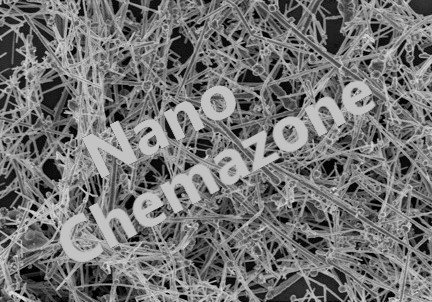
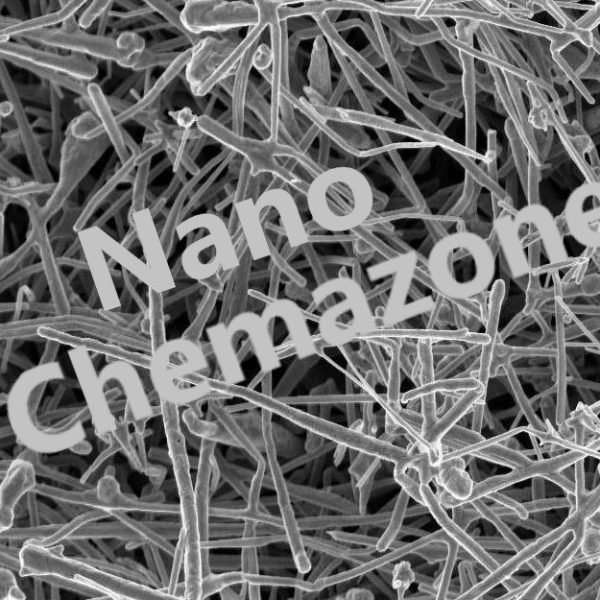
Copper Nanowires
$0.00| MF: | Cu |
| Chemical Name: | Copper Nanowires |
| Purity: | > 99.99% |
| Diameter: | 100-200 nm (Customization is possible) |
| Length: | 5-10 µm (Customization is possible) |
| Form: | Nanowire |
| Product Number: | NCZW104 |
| CAS Number | 7440-50-8 |
Please contact us for customization and price inquiry.
Note: We supply different size ranges of Copper Nanowires as per the client’s requirements and also accept customization in various parameters.
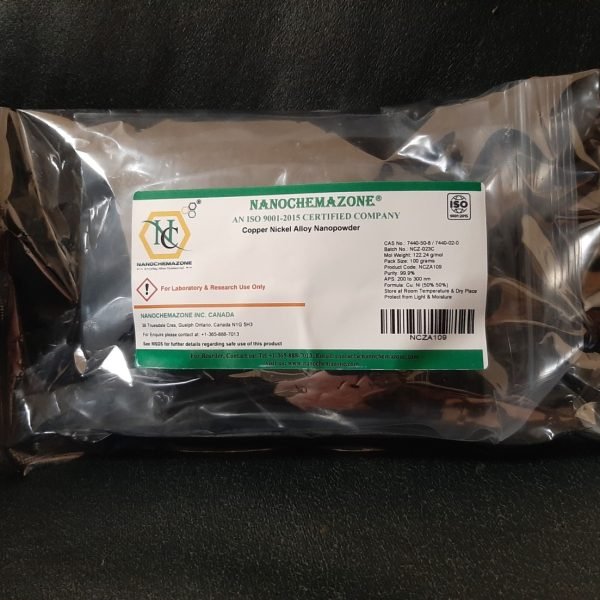
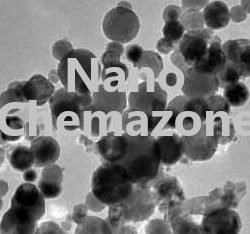
Copper Nickel Alloy Nanopowder
$0.00Copper Nickel Alloy Nanopowder
Copper Nickel (Cu: Ni) Alloy Nanoparticles
| MF: | Cu:Ni |
| Chemical Name: | Copper Nickel Alloy Nanopowder |
| Purity: | > 99.99% |
| APS: | <100 nm (Size Customization possible) |
| Form: | Nanopowder |
| Product Number: | NCZA109 |
| CAS Number: | 7440-50-8 / 7440-02-0 |
Copper Nickel Alloy Nanoparticles Powder Size Options: also available in the submicron size range and 325 Mesh, 200 Mesh, etc. (Ask for the customization)

Copper Nickel Micron Powder
$0.00Copper Nickel Micron Powder
Product Name: Copper-Nickel Micron Powder
| Product | Copper Nickel Powder |
| CAS No. | 12357-13-0 |
| Appearance | Black Powder |
| Purity | 99.9% |
| APS | 1 – 5 Microns (Can be customized) |
| Ingredient | Cu-Ni |
| Product Code | NCZ-NSC-193/20 |
Copper Nickel Micron Powder Description:
- powder metallurgy for copper-based or nickel-based alloy
- the surface coating of maritime vessels seawater corrosion-resistant materials
- lubricant wear-resistant, anti-wear additives
- conductive, thermally conductive filler material
Copper Nickel Micron Powder RELATED INFORMATION
Storage Conditions:
Airtight sealed, avoid light and keep dry at room temperature.
Please contact us for customization and price inquiry
Email: contact@nanochemazone.com
Note: We supply different size ranges of Nano and micron as per the client’s requirements and also accept customization in various parameters.

Copper Nickel Micron Powder
$0.00Product Name: Copper Nickel Micron Powder
| Product | Copper Nickel |
| CAS No. | 12357-13-0 |
| Appearance | Black Powder |
| Purity | 99.9% |
| APS | 1 – 5 Microns (Can be customized) |
| Ingredient | Cu-Ni |
| Product Code | NCZ-NSC-193/20 |
Description :
- powder metallurgy for copper-based or nickel-based alloy
- the surface coating of maritime vessels seawater corrosion resistant materials
- lubricant wear-resistant, anti-wear additives
- conductive, thermally conductive filler material
RELATED INFORMATION
Storage Conditions:
Airtight sealed, avoid light and keep dry at room temperature.
Please contact us for customization and price inquiry
Email: contact@nanochemazone.com
Note: We supply different size ranges of Nano and micron as per the client’s requirements and also accept customization in various parameters.

Copper Oleate Powder
$0.00Product Name: Copper Oleate Powder
| Product | Copper Oleate Powder |
| CAS No. | 7440-50-8 |
| Appearance | Powder |
| Purity | 99.9% |
| APS | 1 – 5 microns (can be customized) |
| Ingredient | C36H66CuO4 |
| Product Code | NCZ-AE-192 |
RELATED INFORMATION
Storage Conditions:
Airtight sealed, avoid light, and keep dry at room temperature.
Please email us for the customization.
Email: contact@nanochemazone.com

Copper Oxide Black Powder
$0.00Product Name: Copper Oxide Black Powder
| Product | Copper Oxide Black Powder |
| CAS No. | 1317-38-0 |
| Appearance | Powder |
| Purity | 99.9% |
| APS | 1 – 5 Microns (Can be customized) |
| Ingredient | CuO |
| Product Code | NCZ-AE-113 |
RELATED INFORMATION
Storage Conditions:
Airtight sealed, avoid light, and keep dry at room temperature.
Please email us for the customization.
Email: contact@nanochemazone.com


Copper oxide nanoparticles
$0.00Copper Oxide Nanopowder
Copper Oxide Nanoparticles
Nano Copper Oxide Powder
| MF: | CuO |
| Chemical Name: | Copper Oxide |
| Purity: | > 99.99% |
| APS: | 30-50 nm (Size Customization possible) |
| Form: | Nanopowder/Dispersion |
| Product Number: | #NCZ2301 |
| CAS Number | 1317-38-0 |
Note: We can supply different size products of microparticles and Nanoparticles Size range powder according to client’s requirements.

Copper Oxide Nanopowder Dispersion
$0.00Copper Oxide Nanopowder Dispersion
| Product | Copper Oxide Water Dispersion |
| CAS No. | 7440-50-8 |
| Appearance | Black |
| Purity | 99.9% |
| APS | 25-55 nm (Can be customized) |
| Ingredient | CuO |
| Product Code | NCZ-NSC451/20 |
Copper Oxide Dispersion Description
Copper Oxide Water Dispersion antifungal/antibacterial activities that are not observed in commercial copper. First of all, copper nanoparticles demonstrate a very strong catalytic activity, a property that can be attributed to their large catalytic surface area. With the small size and great porosity.
The nanoparticles are able to achieve a higher reaction yield and a shorter reaction time when utilized as reagents in organic and organometallic synthesis. In fact, copper nanoparticles that are used in a condensation reaction of iodobenzene attained about 88% conversion to biphenyl, while the commercial copper exhibited only a conversion.
Copper Oxide Water Dispersion that is extremely small and has a high surface to volume ratio can also serve as an antifungal/antibacterial agents. The antimicrobial activity is induced by their close interaction with microbial membranes and their metal ions released in solutions.
Copper Oxide Water Dispersion slowly in solutions, cupric ions are released from them and they can create toxic hydroxyl free radicals when the lipid membrane is nearby. Copper Oxide Water Dispersion radicals disassemble lipids in cell membranes through oxidation to degenerate the membranes. As a result, the intracellular substances seep out of cells through the destructed membranes.
The cells are no longer able to sustain fundamental biochemical processes. In the end, all these alterations inside of the cell caused by the free radicals lead to cell death.
Copper Oxide Water Dispersion with great catalytic activities can be applied to biosensors and electrochemical sensors. Redox reactions utilized in those sensors are generally irreversible and also require high overpotentials (more energy) to run. In fact, the nanoparticles have the ability to make the redox reactions reversible and to lower the overpotentials when applied to the sensors.
Copper Oxide Dispersion Related Information
Storage Conditions:
Airtight sealed, avoid light and keep dry at room temperature.
Please contact us for customization and price inquiry
Email: contact@nanochemazone.com
Note: We supply different size ranges of Nano and micron as per the client’s requirements and also accept customization in various parameters.


Copper Paste
$0.00Copper Conductor Paste
Copper Paste for Screen Printing Applications
| Linear Formula: | Cu |
| Chemical Name | Copper Conductor Paste |
| Purity: | >99.99% |
| Molecular Weight | 63.55 |
| Melting Point | 1085 ºC |
| Product Number: | NCZ-P-105 |
| Appearance: | Reddish |
| CAS No: | 7440-50-8 |
Pack Size: 10 mL, 25 mL, 50 mL and 100 mL
Bulk Pack Size: 250 mL, 500 mL, and 1000 mL
Please send an email for customization at contact@nanochemazone.com


Copper Powder
$0.00Copper Powder
Copper Powder Nano and Micro size range
| MF: | Cu |
| Chemical Name: | Copper Powder |
| Purity: | > 99.99% |
| APS: | 40-50 µm (Size Customization possible) |
| Form: | Micro powder |
| Product Number: | NCZM108 |
| CAS Number | 7440-50-8 |
Copper Powder Applications:
The key applications of copper metal particles are listed below:
Copper micro and nanoparticles based ink for screen printed circuits and electrode fabrication for electrochemistry.
Acts as an anti-biotic, anti-microbial, and anti-fungal agent when added to plastics, coatings, and textiles. Copper diet supplements with efficient delivery characteristics. High strength metals and alloys.
Copper plays an important role in electronic circuits because of its excellent electrical conductivity and ideal material for Thermal, electronic, and biomedical applications such as antimicrobial, Dental Health care and antiviral mask, and gloves coating.
Note: We can supply different size products of micro and Nano Size range powder according to the client’s requirements.


Copper Silica core/shell Nanoparticles
$0.00Copper Silica Core-Shell Nanoparticles
| MF: | Cu/SiO2 |
| Chemical Name: | Copper Silica Core-Shell Nanoparticles |
| Purity: | > >99.99% |
| APS: | 80-100 nm (Size Customization possible) |
| Form: | Nanopowder/Nanodispersion |
| Product Number: | NCZCS109 |
| CAS Number: | 7440-50-8/7631-86-9 |
Note: We supply different products of microparticles and Nanoparticles powder in all size range according to client’s requirements.
Please enquire for other core-shell particles having different thicknesses, porosities, and sizes.
If the item shown is not exactly what you require please let us know by sending us a message

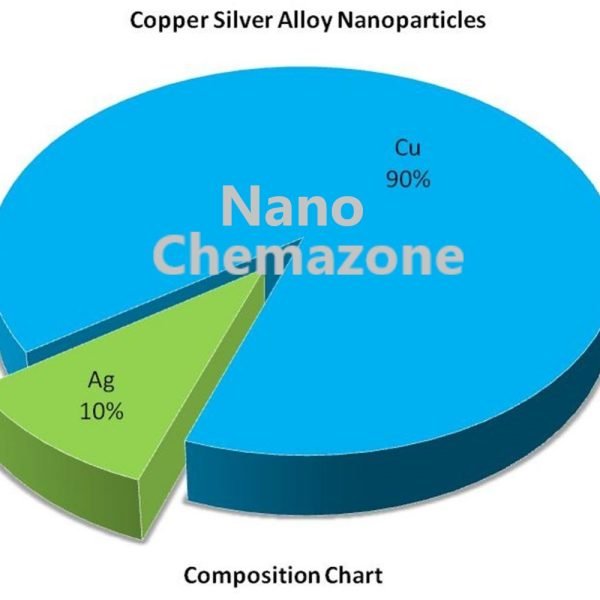
Copper Silver Alloy Nanopowder
$0.00| MF: | Cu:Ag |
| Chemical Name: |
Copper Silver Alloy Nanoparticles |
| Purity: | > 99.99% |
| APS: | <100nm (Size Customization possible) |
| Form: | Nanopowder |
| Product Number: | NCZA111 |
| CAS Number: | 11144-43-7 |
Size Options: also available in the micro size range and 325 Mesh, 200 Mesh, etc. (Ask for the customization)
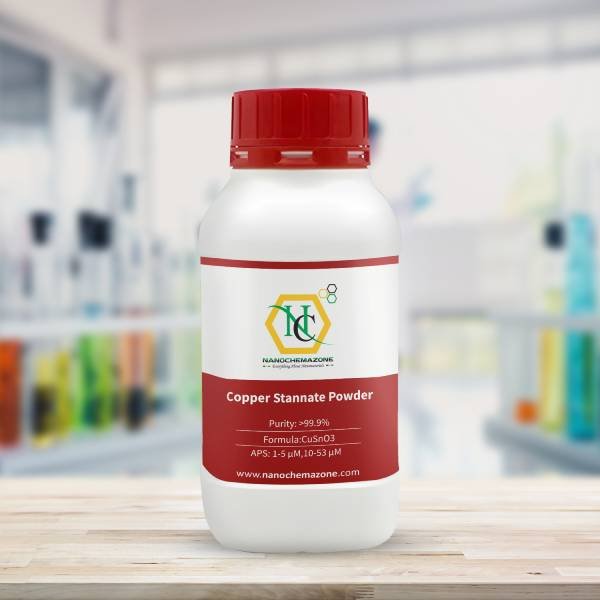
Copper Stannate Powder
$0.00Copper Stannate Powder
| Product | Copper Stannate Powder |
| CAS No. | 12019-07-7 |
| Appearance | Off-White Powder |
| Purity | ≥99%, ≥99.9%, ≥95%
(Other purities are also available) |
| APS | 1-5 µM, 10-53 µM (Can be customized), Ask for other available size range. |
| Ingredient | CuSnO3 |
| Density | N/A |
| Molecular Weight | 230.25g/mol |
| Product Codes | NCZ-MNO-198/25 |
Copper Stannate Description:
Copper Stannate Powder is one of the numerous advanced ceramic materials manufactured by Nanochemazone. Nanochemazone produces too many standard grades when applicable, including Mil Spec (military grade); ACS, Reagent and Technical Grade; Food, Agricultural and Pharmaceutical Grade; Optical Grade, USP and EP/BP (European Pharmacopoeia/British Pharmacopoeia) and follows applicable ASTM testing standards. Typical and custom packaging is available. Additional technical, research and safety (MSDS) information are available. Please request a quote above for more information on lead time and pricing.
Copper Stannate Powder Related Information:
Storage Conditions:
Airtight sealed, avoid light and keep dry at room temperature.
Please contact us for customization and price inquiry
Email: contact@nanochemazone.com
Note: We supply different size ranges of Nano and micron as per the client’s requirements and also accept customization in various parameters.
Copper Stannate Powder (CAS 12019-07-7)
| Catalog No. | NCZ-MNO-198/25 |
| CAS Number | 12019-07-7 |
| Molecular Formula | CuSnO3 |
| Molecular Weight | 230.25 |
| Appearance | Solid |
| Purity | 99.5% |
Copper Stannate Powder Description
Copper Stannate Powder (CuSnO3) (CAS 12019-07-7) is available. Copper Stannate is generally immediately available in most volumes. High purity, submicron and nano-powder forms may be considered. It is a leading supplier of Copper Stannate across the world, and can provide customers with high-quality Copper Stannate Powder at a very competitive price.
Copper Stannate Powder Specifications
| Physicochemical Information | |
| Density | N/A |
| Melting Point | N/A |
| Water Solubility | N/A |
| InChIKey | SANVPINBICRLAX-UHFFFAOYSA-N |
Copper Stannate Powder Application
Copper Stannate Powder can be used in ceramic capacitors.
Copper Stannate Powder Safety Information
| Symbol | GHS07 |
| Signal word | Warning |
| Hazard statements | N/A |
| Precautionary statements | P261-P304+P340-P405-P403+P233-P501 |
| Personal protective equipment | N/A |
| RIDADR | UN 2291 6.1/PG 3 |
| WGK Germany | WGK 3 |

Copper Stannate Powder
$0.00Copper Stannate Powder
| Product | Copper Stannate Powder |
| CAS No. | 12019-07-7 |
| Appearance | Off- White Powder |
| Purity | ≥99%, ≥99.9%, ≥95%(Other purities are also available) |
| APS | 1-5 µM, 10-53 µM (Can be customized), Ask for other available size range. |
| Ingredient | CuSnO3 |
| Density | N/A |
| Molecular Weight | 330.25g/mol |
| Product Codes | NCZ-DCY-141/25 |
Copper Stannate Description:
Copper Stannate Powder is one of the numerous advanced ceramic materials manufactured by Nanochemazone. Nanochemazone produces too many standard grades when applicable, including Mil Spec (military grade); ACS, Reagent and Technical Grade; Food, Agricultural and Pharmaceutical Grade; Optical Grade, USP and EP/BP (European Pharmacopoeia/British Pharmacopoeia) and follows applicable ASTM testing standards. Typical and custom packaging is available. Additional technical, research and safety (MSDS) information are available. Please request a quote above for more information on lead time and pricing
Copper Stannate Powder Related Information :
Storage Conditions:
Airtight sealed, avoid light and keep dry at room temperature.
Please contact us for customization and price inquiry
Email: contact@nanochemazone.com
Note: We supply different size ranges of Nano and micron as per the client’s requirements and also accept customization in various parameters.
Other Name: Cupric Stannate
CAS: 12019-07-7
Formula: CuSnO3
| Item | Unit | Spec |
| Purity | wt% | ≥99 |
| Particle size (D50 ) | μm | <0.3 |
| Fe2O3 | wt% | <0.01 |
| Pb | wt% | <0.01 |
| S | wt% | <0.01 |
| Cl | wt% | <0.01 |
| H20 | wt% | <0.5 |
| Ignition loss | wt% | <1.0 |

Copper Stearate Powder
$0.00Product Name: Copper Stearate Powder
Product |
Copper Stearate Powder |
| CAS No. | 660-60-6 |
| Appearance | Blue Powder |
| Purity | 99.9% |
| APS | 1 – 5 Microns (Can be customized) |
| Ingredient | C18H35CuO2 |
| Product Code | NCZ-NSC-156/20 |
Copper Stearate Powder Description:
as surfactants, catalysts of tertiary amine production, an antifouling agent of antifouling paint, bio-medicine, etc.
RELATED INFORMATION
Storage Conditions:
Airtight sealed, avoid light and keep dry at room temperature.
Please email us for the customization.
Email: contact@nanochemazone.com
Note: We supply different size ranges of nano and micron size powder as per the client’s requirements and also accept customization in various parameters.


Copper Tin Alloy Nanopowder
$0.00| MF: | Sn:Cu |
| Chemical Name: |
Copper Tin Alloy Nanopowder |
| Purity: | > 99.99% |
| APS: | <80 nm (Size Customization possible) |
| Form: | Nanopowder |
| Product Number: | NCZA112 |
| CAS Number: | 7440-50-8 / 7440-31-5 |
Size Options: also available in the micro size range and 325 Mesh, 200 Mesh, etc. (Ask for the customization)

Copper Zinc Alloy Nano Dispersion
$0.00Copper Zinc Alloy Nano Dispersion
Product: Copper Zinc Alloy Nano Dispersion (ZnCu, Purity: 99.99%, APS: 50 nm)
| Product Number | NCZ-D-1503N |
| CAS | 53801-63-1 |
| APS | 50 nm (Size Customisation is Possible) |
| Purity | 99.99% |
| Molecular Formula | Zn Cu |
| Molecular Weight | 128.93g/mol |
| Form | Liquid |
| Colour | Dark Gray/brown |
| Concentration | 100 ppm |
Please contact us for customization and price inquiry.
Note: We supply different size products of micro and Nano Size range dispersion according to client’s requirements.
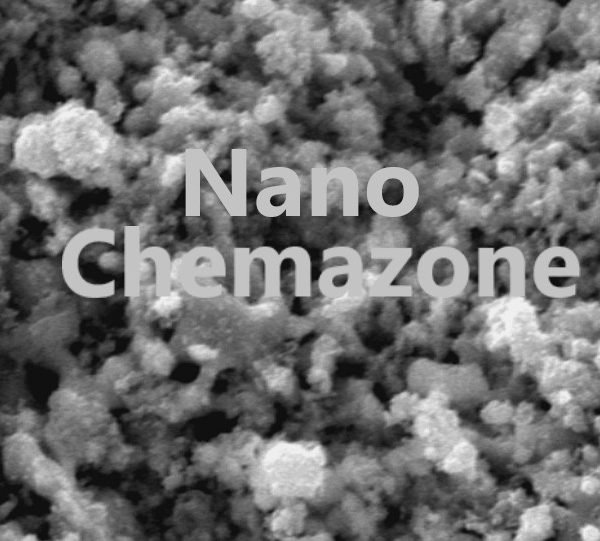
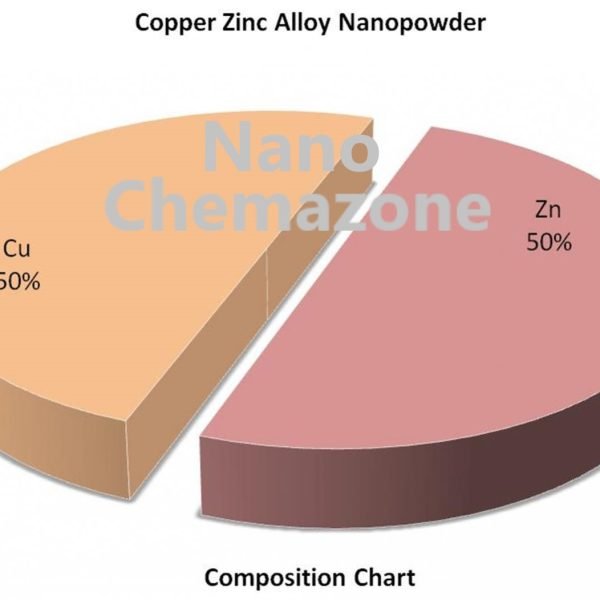
Copper Zinc Alloy Nanoparticles
$0.00| MF: | Cu:Zn |
| Chemical Name: |
Copper Zinc Alloy Nanoparticles |
| Purity: | > 99.99% |
| APS: | <80 nm, APS 10 micron (Size Customization possible) |
| Form: | Nanopowder |
| Product Number: | NCZA113 |
| CAS Number: | 7439-89-6 / 7440-47-3 / 7440-48-4 |
Size Options: also available in the micron size range and 325 Mesh, 200 Mesh, etc. (Ask for the size and ratio customization)

Copper Zinc Iron Oxide Nano powder
$0.00Product Name: Copper Zinc Iron Oxide Nanopowder
Copper Zinc Iron Oxide Nanopowder
| Product |
Copper Zinc Iron Oxide Nanopowder |
| Colour | Brown |
| Purity | ≥ 99.99% |
| Particle size | 1-10 µM(customizable) |
| Ingredient/MF | CuZnFe4O4 |
| Product Code | NCZ-CK-188/20 |
| CAS Number | 66402-68-4 |
Please email us for the customization.
Email: contact@nanochemazone.com
Please contact us for customization and price inquiry
Note: We supply different size ranges of Nano and micron as per the client’s requirements and also accept customization in various parameters.
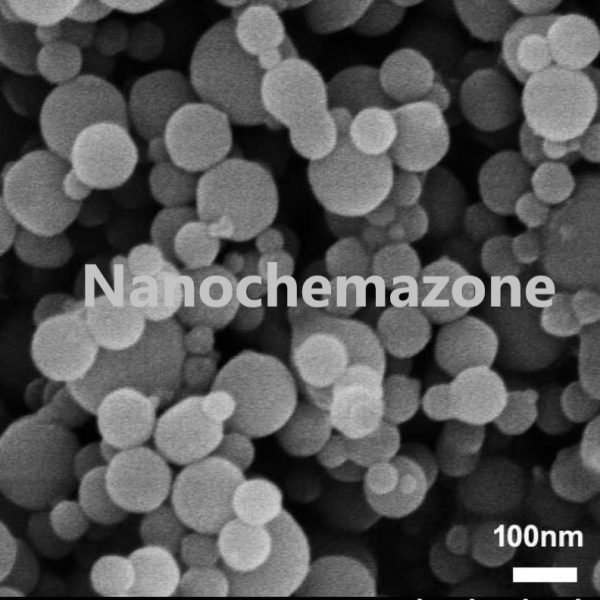
Copper Zirconium Alloy Nanopowder
$0.00Copper Zirconium Alloy Nanopowder
Product Name: Cu-Zr Alloy Nanoparticles/Nanopowder (Particle Size Less than ≤ 80 nm, 99.9%)
| Product Formula | Cu: Zr |
| Product Number | NCZ-A-124-19 |
| CAS Number | 7440-50-8/7440-67-7 |
| Molecular Weight | 154.77 g/moL |
| APS | ≤ 80 nm (can be customized) |
| Purity | 99.9% |
| Color | Grayish |
| Form | Nanopowder |
Note: We can manufacture and supply different particle sizes (Nano size range, Micron, Submicron, and different Mesh size) products of Alloy powders (Multi-Element, Multi-Element Oxide and Mixture of Rare Earth Elements) according to client’s requirements. Kindly ask for the customization in size and Element ratio composition.

Copper-Base Solder Powder
$0.00Copper-Base Solder Powder
| Product | Copper-Base Solder Powder |
| CAS No. | 7440-50-8 |
| Appearance | Reddish-Brown Powder |
| Purity | ≥99%, ≥99.9%, ≥95%(Other purities are also available) |
| APS | 1-5 µM, 10-53 µM (Can be customized), Ask for other available size range. |
| Ingredient | Sn-Ag-Cu |
| Density | 8.96g/cm3 |
| Molecular Weight | 63.55g/mol |
| Product Codes | NCZ-DCY-216/25 |
Copper-Base Solder Description:
Copper-Base Solder Powder is one of the numerous advanced ceramic materials manufactured by Nanochemazone. Nanochemazone produces too many standard grades when applicable, including Mil Spec (military grade); ACS, Reagent and Technical Grade; Food, Agricultural and Pharmaceutical Grade; Optical Grade, USP and EP/BP (European Pharmacopoeia/British Pharmacopoeia) and follows applicable ASTM testing standards. Typical and custom packaging is available. Additional technical, research and safety (MSDS) information are available. Please request a quote above for more information on lead time and pricing
Copper-Base Solder Powder Related Information :
Storage Conditions:
Airtight sealed, avoid light and keep dry at room temperature.
Please contact us for customization and price inquiry
Email: contact@nanochemazone.com
Note: We supply different size ranges of Nano and micron as per the client’s requirements and also accept customization in various parameters.
Copper-base Solder
Copper solder paste is prepared by a special process from copper-based brazing powder, trace active components, solvents, polymer carriers and other additives.
Product description
Copper solder paste is prepared by a special process from copper-based brazing powder, trace active components, solvents, polymer carriers and other additives.
Grades and specifications
| Model | Product Type | Composition(wt%) | Powder Size(M) | Brazing temperature(℃) | Brazing method |
| YTCu-1 | Paste | Cu:93:P:7 | -200 -235 |
743-840 | Furance, flame, resistance, High frequency brazing |
| YTCu-2 | Paste | Cu:92.5;P:7.5 | -200 -235 |
730-830 | |
| YTCu-3 | Paste | Cu:86;P:7;Sn:7 | -200 -235 |
700-750 | |
| YTCu-4 | Paste | Cu:75;Sn;P;Ni, etc. | -200 -235 |
600-650 | |
| 9414 | Powder | Cu:88;Ni:5;Sn:7 | -200 -235 |
890-900 |
- Suitable for flame welding, resistance welding, high frequency welding and furnace welding between various copper and copper alloys.
- Solder paste can be applied manually to the area to be soldered, and can also be used for semi-automatic and automatic template printing and needle injection. It is efficient and simple, and can quantitatively control the amount of solder paste used, which greatly improves work efficiency and product yield, and also improves working environment.
- Copper-phosphorus-based solder paste is widely used in the brazing and manufacturing of copper products such as copper tubes, copper alloy electric heating tubes, hardware parts, and various copper radiators. In the field of resistance brazing, it is widely used in resistance brazing of various electronic components, such as circuit breakers, electric meters and other components.

Copper(I) Acetate Powder
$0.00Copper(I) Acetate Powder
| Product | Copper(I) Acetate Powder |
| CAS No. | 598-54-9 |
| Appearance | White to Green to Brown Powder |
| Purity | ≥99%, ≥99.9%, ≥95%(Other purities are also available) |
| APS | 1-5 µM, 10-53 µM (Can be customized), Ask for other available size range. |
| Ingredient | CuC2H3O2 |
| Density | N/A |
| Molecular Weight | 122.59g/mol |
| Product Code | NCZ-CAS-146/25 |
Copper(I) Acetate Description:
Copper(I) Acetate Powder is one of the numerous advanced ceramic materials manufactured by Nanochemazone. Nanochemazone produces too many standard grades when applicable, including Mil Spec (military grade); ACS, Reagent and Technical Grade; Food, Agricultural and Pharmaceutical Grade; Optical Grade, USP and EP/BP (European Pharmacopoeia/British Pharmacopoeia) and follows applicable ASTM testing standards. Typical and custom packaging is available. Additional technical, research and safety (MSDS) information are available. Please request a quote above for more information on lead time and pricing.
Copper(I) Acetate Powder Related Information:
Storage Conditions:
Airtight sealed, avoid light and keep dry at room temperature.
Please contact us for customization and price inquiry
Email: contact@nanochemazone.com
Note: We supply different size ranges of Nano and micron as per the client’s requirements and also accept customization in various parameters.
CAS #: 598-54-9
Linear Formula:CuCO2CH3
MDL Number:MFCD00058908
EC No.:209-938-7
Copper(I) Acetate Properties (Theoretical)
| Compound Formula | C2H3CuO2 |
| Molecular Weight | 122.59 |
| Appearance | White to green to brown powder or chunks |
| Melting Point | 250°C (dec.) |
| Boiling Point | N/A |
| Density | N/A |
| Solubility in H2O | N/A |
| Exact Mass | 121.942902 |
| Monoisotopic Mass | 121.942902 |

Copper(II) Acetate Hydrate Powder
$0.00Copper(II) Acetate Hydrate Powder
| Product | Copper(II) Acetate Hydrate Powder |
| CAS No. | 66923-66-8 |
| Appearance | Blue Crystal Powder |
| Purity | ≥99%, ≥99.9%, ≥95%(Other purities are also available) |
| APS | 1-5 µM, 10-53 µM (Can be customized), Ask for other available size range. |
| Ingredient | Cu(C2H3O2)2.H2O |
| Density | 1.88g/cm3 |
| Molecular Weight | 199.65g/mol |
| Product Code | NCZ-CAS-148/25 |
Copper(II) Acetate Hydrate Description:
Copper(II) Acetate Hydrate Powder is one of the numerous advanced ceramic materials manufactured by Nanochemazone. Nanochemazone produces too many standard grades when applicable, including Mil Spec (military grade); ACS, Reagent and Technical Grade; Food, Agricultural and Pharmaceutical Grade; Optical Grade, USP and EP/BP (European Pharmacopoeia/British Pharmacopoeia) and follows applicable ASTM testing standards. Typical and custom packaging is available. Additional technical, research and safety (MSDS) information are available. Please request a quote above for more information on lead time and pricing.
Copper(II) Acetate Hydrate Powder Related Information:
Storage Conditions:
Airtight sealed,avoid light and keep dry at room temperature.
Please contact us for customization and price inquiry
Email: contact@nanochemazone.com
Note: We supply different size ranges of Nano and micron as per the client’s requirements and also accept customization in various parameters.
CAS #: 66923-66-8
Linear Formula: Cu(C2H3O2)2 • xH2O
MDL Number:MFCD00149570
EC No.:205-553-3
Copper(II) Acetate Hydrate Properties (Theoretical)
| Compound Formula | C4H8CuO5 |
| Molecular Weight | 199.65 |
| Appearance | Blue Crystals |
| Melting Point | 116 °C |
| Boiling Point | 240 °C |
| Density | 1.88 g/cm3 |
| Solubility in H2O | 72 g/l (20 °C) |
| pH | 5.2-5.5 (20 g/l aq. sol) |
| Vapor Density | 6.8-6.9 (vs. air) |
| Exact Mass | 198.966771 |
| Monoisotopic Mass | 198.966771 |
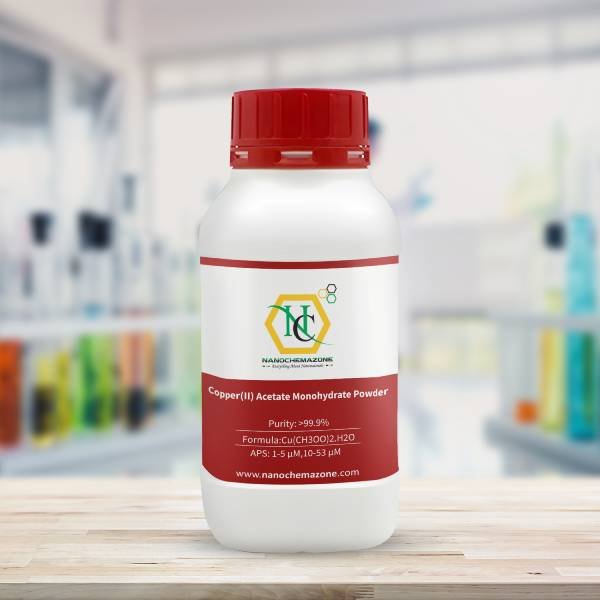
Copper(II) Acetate Monohydrate Powder
$0.00Copper(II) Acetate Monohydrate Powder
| Product | Copper(II) Acetate Monohydrate Powder |
| CAS No. | 6046-93-1 |
| Appearance | Blue Crystal Powder |
| Purity | ≥99%, ≥99.9%, ≥95%(Other purities are also available) |
| APS | 1-5 µM, 10-53 µM (Can be customized), Ask for other available size range. |
| Ingredient | Cu(CH3OO)2.H2O |
| Density | 1.88g/cm3 |
| Molecular Weight | 199.65g/mol |
| Product Code | NCZ-CAS-149/25 |
Copper(II) Acetate Monohydrate Description:
Copper(II) Acetate Monohydrate Powder is one of the numerous advanced ceramic materials manufactured by Nanochemazone. Nanochemazone produces too many standard grades when applicable, including Mil Spec (military grade); ACS, Reagent and Technical Grade; Food, Agricultural and Pharmaceutical Grade; Optical Grade, USP and EP/BP (European Pharmacopoeia/British Pharmacopoeia) and follows applicable ASTM testing standards. Typical and custom packaging is available. Additional technical, research and safety (MSDS) information are available. Please request a quote above for more information on lead time and pricing.
Copper(II) Acetate Monohydrate Powder Related Information:
Storage Conditions:
Airtight sealed, avoid light and keep dry at room temperature.
Please contact us for customization and price inquiry
Email: contact@nanochemazone.com
Note: We supply different size ranges of Nano and micron as per the client’s requirements and also accept customization in various parameters.
Copper(II) Acetate Monohydrate
CAS #: 6046-93-1
Linear Formula: Cu(C2H3O2)2 • H2O
MDL Number:MFCD00149570
EC No.:205-553-3
Copper(II) Acetate Monohydrate Properties (Theoretical)
| Compound Formula | C4H8CuO5 |
| Molecular Weight | 199.65 |
| Appearance | Blue Crystals |
| Melting Point | 116 °C |
| Boiling Point | 240 °C |
| Density | 1.88 g/cm3 |
| Solubility in H2O | 72 g/l (20 °C) |
| pH | 5.2-5.5 (20 g/l aq. sol) |
| Vapor Density | 6.8-6.9 (vs. air) |
| Exact Mass | 198.966771 |
| Monoisotopic Mass | 198.966771 |

Copper(II) Acetate Powder
$0.00Copper(II) Acetate Powder
| Product | Copper(II) Acetate Powder |
| CAS No. | 142-71-2 |
| Appearance | Blue Crystal Powder |
| Purity | ≥99%, ≥99.9%, ≥95%(Other purities are also available) |
| APS | 1-5 µM, 10-53 µM (Can be customized), Ask for other available size range. |
| Ingredient | Cu(OAc)s |
| Density | 1.88g/cm3 |
| Molecular Weight | 181.63g/mol |
| Product Code | NCZ-CAS-147/25 |
Copper(II) Acetate Description:
Copper(II) Acetate Powder is one of the numerous advanced ceramic materials manufactured by Nanochemazone. Nanochemazone produces too many standard grades when applicable, including Mil Spec (military grade); ACS, Reagent and Technical Grade; Food, Agricultural and Pharmaceutical Grade; Optical Grade, USP and EP/BP (European Pharmacopoeia/British Pharmacopoeia) and follows applicable ASTM testing standards. Typical and custom packaging is available. Additional technical, research and safety (MSDS) information are available. Please request a quote above for more information on lead time and pricing.
Copper(II) Acetate Powder Related Information:
Storage Conditions:
Airtight sealed, avoid light and keep dry at room temperature.
Please contact us for customization and price inquiry
Email: contact@nanochemazone.com
Note: We supply different size ranges of Nano and micron as per the client’s requirements and also accept customization in various parameters.
CAS #: 142-71-2
Linear Formula: Cu(C2H3O2)2
MDL Number:MFCD00008690
EC No.:205-553-3
Copper(II) Acetate Properties (Theoretical)
| Compound Formula | C4H6CuO4 |
| Molecular Weight | 181.63 |
| Appearance | Blue Crystals |
| Melting Point | N/A |
| Boiling Point | N/A |
| Density | 1.88 g/cm3 |
| Solubility in H2O | N/A |
| Exact Mass | 180.956 g/mol |
| Monoisotopic Mass | 180.956 g/mol |
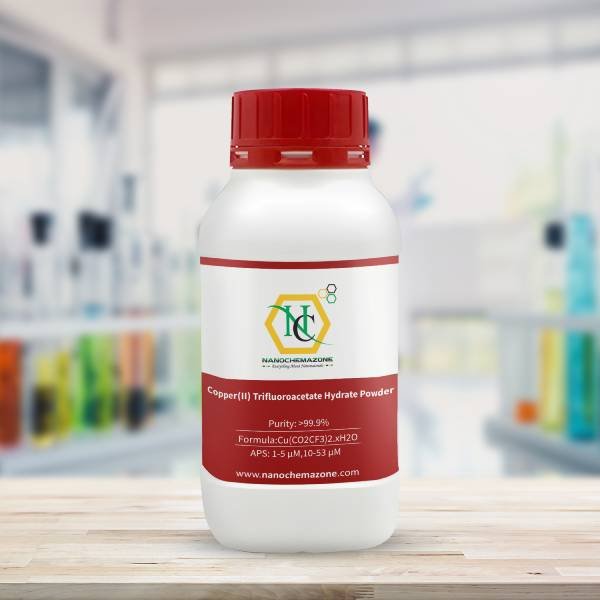
Copper(II) Trifluoroacetate Hydrate Powder
$0.00Copper(II) Trifluoroacetate Hydrate Powder
| Product | Copper(II) Trifluoroacetate Hydrate Powder |
| CAS No. | 123333-88-0 |
| Appearance | Blue Crystal Powder |
| Purity | ≥99%, ≥99.9%, ≥95%(Other purities are also available) |
| APS | 1-5 µM, 10-53 µM (Can be customized), Ask for other available size range. |
| Ingredient | Cu(CO2CF3)2.xH2O |
| Density | N/A |
| Molecular Weight | 309.61g/mol |
| Product Code | NCZ-CAS-150/25 |
Copper(II) Trifluoroacetate Hydrate Description:
Copper(II) Trifluoroacetate Hydrate Powder is one of the numerous advanced ceramic materials manufactured by Nanochemazone. Nanochemazone produces too many standard grades when applicable, including Mil Spec (military grade); ACS, Reagent and Technical Grade; Food, Agricultural and Pharmaceutical Grade; Optical Grade, USP and EP/BP (European Pharmacopoeia/British Pharmacopoeia) and follows applicable ASTM testing standards. Typical and custom packaging is available. Additional technical, research and safety (MSDS) information are available. Please request a quote above for more information on lead time and pricing.
Copper(II) Trifluoroacetate Hydrate Powder Related Information:
Storage Conditions:
Airtight sealed, avoid light and keep dry at room temperature.
Please contact us for customization and price inquiry
Email: contact@nanochemazone.com
Note: We supply different size ranges of Nano and micron as per the client’s requirements and also accept customization in various parameters.
Copper(II) Trifluoroacetate Hydrate
CAS #: 123333-88-0
Linear Formula: Cu(CO2CF3)2• xH2O
MDL Number:MFCD00167308
EC No.:205-553-3
Copper(II) Trifluoroacetate Hydrate Properties (Theoretical)
| Compound Formula | C4H4CuF6O5 |
| Molecular Weight | 309.61 |
| Appearance | Solid |
| Melting Point | N/A |
| Boiling Point | N/A |
| Density | N/A |
| Solubility in H2O | N/A |
| Exact Mass | 308.92589 g/mol |
| Monoisotopic Mass | 308.92589 g/mol |
| Charge | 0 |

CORM-2 Powder
$0.00CORM-2 Powder
| Product | CORM-2 Powder |
| CAS No. | 22594-69-0 |
| Appearance | White to Light Yellow-Green Powder |
| Purity | ≥99%, ≥99.9%, ≥95%
(Other purities are also available) |
| APS& | 1-5 µM, 10-53 µM (Can be customized), Ask for other available size range. |
| Ingredient | [Ru(CO)3Cl2]2 |
| Density | N/A |
| Molecular Weight | 512.02g/mol |
| Product Codes | NCZ-MNO-300/25 |
CORM-2 Description:
Ruthenium(III) Chloride Powder is one of the numerous advanced ceramic materials manufactured by Nanochemazone. Nanochemazone produces too many standard grades when applicable, including Mil Spec (military grade); ACS, Reagent and Technical Grade; Food, Agricultural and Pharmaceutical Grade; Optical Grade, USP and EP/BP (European Pharmacopoeia/British Pharmacopoeia) and follows applicable ASTM testing standards. Typical and custom packaging is available. Additional technical, research and safety (MSDS) information are available. Please request a quote above for more information on lead time and pricing.
CORM-2 Powder Related Information:
Storage Conditions:
Airtight sealed, avoid light and keep dry at room temperature.
Please contact us for customization and price inquiry
Email: contact@nanochemazone.com
Note: We supply different size ranges of Nano and micron as per the client’s requirements and also accept customization in various parameters.
CORM-2 Powder (CAS No.22594-69-0)
| Catalog No. | NCZ-MNO-300/25 |
| Purity | 99.0 % |
| CAS Number | 22594-69-0 |
| Appearance | White to light yellow-green crystalline powder |
| Molecular Formula | [Ru(CO)3Cl2]2 |
| Theoretical Metal Content | 39.49 % |
Carbon monoxide-releasing molecules (CORMs) are chemical compounds designed to release controlled amounts of carbon monoxide (CO). CORMs are being developed as potential therapeutic agents to locally deliver CO to cells and tissues, thus overcoming limitations of CO gas inhalation protocols.
CORM-2 Powder Specifications
| CAS Number | 22594-69-0 |
| Molecular Formula | [Ru(CO)3Cl2]2 |
| Molecular Weight | 512.02 g/mol |
| Synonyms | Tricarbonyldichlororuthenium(II) dimer; Carbon monoxide-releasing molecule |
| Appearance | White powder |
| Density | White to light yellow-green crystalline powder |
| Solubility | Soluble in DMSO |
CORM-2 Powder can be used for pharmacological studies including:
– Enhancement of coagulation and attenuation of vulnerability to fibrinolysis
– Investigations of P2X4 as a possible target
– Possible modification of thrombus growth or disintegration
– Enhances fibrinogen as a substrate for thrombin
– Regulation of ion transport by gasotransmitters
Besides, CORM-2 Powder can also be used as a CO donor for reactive oxygen species-mediated bacterial killing. Tricarbonyldichlororuthenium(II) dimer can be used in the deuteration reaction for labeling secondary amines. It can also be used for the synthesis of racemization catalysts by reacting with cyclopenta[l]phenanthrenyl and cyclopenta[a]acenaphthylenyl ligands.
CORM-2 Powder Safety Information
| Symbol | GHS07 |
| Signal Word | Warning |
| Hazard Statements | H302 + H312 + H332-H315-H319-H335 |
| Precautionary Statements | P261-P280-P305 + P351 + P338 |
| Personal Protective Equipment | dust mask type N95 (US), Eye shields, Gloves |
| RIDADR | NONH for all modes of transport |
| WGK Germany | 3 |
CORM-3 Powder
$0.00CORM-3 Powder
| Product | CORM-3 Powder |
| CAS No. | 475473-26-8 |
| Appearance | White Powder |
| Purity | ≥99%, ≥99.9%, ≥95%
(Other purities are also available) |
| APS | 1-5 µM, 10-53 µM (Can be customized), Ask for other available size range. |
| Ingredient | C5H4ClNO5Ru |
| Density | N/A |
| Molecular Weight | 294.61g/mol |
| Product Codes | NCZ-MNO-304/25 |
CORM-3 Description:
CORM-3 Powder is one of the numerous advanced ceramic materials manufactured by Nanochemazone. Nanochemazone produces too many standard grades when applicable, including Mil Spec (military grade); ACS, Reagent and Technical Grade; Food, Agricultural and Pharmaceutical Grade; Optical Grade, USP and EP/BP (European Pharmacopoeia/British Pharmacopoeia) and follows applicable ASTM testing standards. Typical and custom packaging is available. Additional technical, research and safety (MSDS) information are available. Please request a quote above for more information on lead time and pricing.
CORM-3 Powder Related Information:
Storage Conditions:
Airtight sealed, avoid light and keep dry at room temperature.
Please contact us for customization and price inquiry
Email: contact@nanochemazone.com
Note: We supply different size ranges of Nano and micron as per the client’s requirements and also accept customization in various parameters.
CORM-3 Powder (CAS No.475473-26-8)
| Catalog No. | NCZ-MNO-304/25 |
| Purity | 99.0 % |
| CAS Number | 475473-26-8 |
| Appearance | White powder |
| Molecular Formula | C5H4ClNO5Ru |
| Theoretical Metal Content | 34.31 % |
The enzymatic reaction of heme oxygenase inspired the development of synthetic CORMs. The first synthetic CORMs were typically metal carbonyl complexes. A representative CORM that has been extensively characterized both from a biochemical and pharmacological viewpoint is the ruthenium(II) complex Ru(glycinate)Cl(CO)3, commonly known as CORM-3.
CORM-3 Powder is a water-soluble carbon monoxide (CO) releasing molecule that can be used to study the effects of CO on cellular systems. Carbon monoxide (CO), produced during the degradation of heme by the enzyme heme oxygenase, has recently been found to be an important gaseous signaling mediator in mammalian cells CORM-3 has been shown to have anti-inflammatory and cardioprotective activity.
CORM-3 Powder Specifications
| CAS Number | 475473-26-8 |
| Molecular Formula | C5H4ClNO5Ru |
| Molecular Weight | 294.61 |
| Synonyms | Carbon monoxide releasing molecule 3, Tricarbonylchloro(glycinato)ruthenium (II) |
| Appearance | White powder |
| Solubility | H2O: 20 mg/mL, clear |
CORM-3 (carbon monoxide (CO) releasing molecule-3) has been used to study its effect on NLRP3 (leucine-rich-repeat-containing receptor, pyrin-domain-containing 3) inflammasome activation via glycolysis in macrophages and also on hyperglycemia-induced IL-1β (interleukin-1 β) production. CORM-3 Powder has also been used to study its protective function against H2O2-induced apoptosis using primary rabbit lens epithelial cells.
CORM-3 Powder Safety information
| RIDADR | NONH for all modes of transport |
| WGK Germany | 3 |
Cp*RuCl(PPh3)2 Powder
$0.00Cp*RuCl(PPh3)2 Powder
| Product | Cp*RuCl(PPh3)2 Powder |
| CAS No. | 92361-49-4 |
| Appearance | Yellow-Brown Powder |
| Purity | ≥99%, ≥99.9%, ≥95%
(Other purities are also available) |
| APS | 1-5 µM, 10-53 µM (Can be customized), Ask for other available size range. |
| Ingredient | [(C10H15)Ru(P((C6H5)3))2Cl] |
| Density | N/A |
| Molecular Weight | 796.32g/mol |
| Product Codes | NCZ-MNO-308/25 |
Cp*RuCl(PPh3)2 Description:
Cp*RuCl(PPh3)2 Powder is one of the numerous advanced ceramic materials manufactured by Nanochemazone. Nanochemazone produces too many standard grades when applicable, including Mil Spec (military grade); ACS, Reagent and Technical Grade; Food, Agricultural and Pharmaceutical Grade; Optical Grade, USP and EP/BP (European Pharmacopoeia/British Pharmacopoeia) and follows applicable ASTM testing standards. Typical and custom packaging is available. Additional technical, research and safety (MSDS) information are available. Please request a quote above for more information on lead time and pricing.
Cp*RuCl(PPh3)2 Powder Related Information:
Storage Conditions:
Airtight sealed, avoid light and keep dry at room temperature.
Please contact us for customization and price inquiry
Email: contact@nanochemazone.com
Note: We supply different size ranges of Nano and micron as per the client’s requirements and also accept customization in various parameters.
Cp*RuCl(PPh3)2 Powder (CAS No.92361-49-4)
| Catalog No. | NCZ-MNO-308/25 |
| Purity | 99.0 % |
| CAS Number | 92361-49-4 |
| Appearance | Yellow-brown powder |
| Molecular Formula | [(C10H15)Ru(P((C6H5)3))2Cl] |
| Theoretical Metal Content | 12.7 % |
Cp*RuCl(PPh3)2 Powder Description
Cp*RuCl(PPh3)2 Powder is a catalyst employed in the cycloaddtion of azides with acetylenes giving exclusively the 1,5-disubstitutedtriazoles in contrast to the 1,4-regiochemistry commonly observed with copper catalysis. Ruthenium catalysis also enables the use of internal acetylenes in these “click cycloaddtions”.
Cp*RuCl(PPh3)2 Powder Specifications
| CAS Number | 92361-49-4 |
| Molecular Formula | [(C10H15)Ru(P((C6H5)3))2Cl] |
| Molecular Weight | 796.32 g/mol |
| Synonym | Chloro(pentamethylcyclopentadienyl)bis(triphenylphosphine)ruthenium(II) |
| Appearance | Yellow-brown powder |
| Melting Point | 128 °C |
Cp*RuCl(PPh3)2 Powder Applications
Cp*RuCl(PPh3)2 Powder can be used as a versatile catalyst for living radical polymerization.
Cp*RuCl(PPh3)2 Powder Safety Information
| RIDADR | NONH for all modes of transport |
| WGK Germany | 3 |

CPTi Powder
$0.00CPTi Powder
| Product | CPTi Powder |
| CAS No. | 12083-20-1 |
| Appearance | White -Silvery Powder |
| Purity | ≥99%, ≥99.9%, ≥95%(Other purities are also available) |
| APS | 1-5 µM, 10-53 µM (Can be customized), Ask for other available size range. |
| Ingredient | Cp-Ti |
| Density | 4.51g/cm3 |
| Molecular Weight | 41.86g/mol |
| Product Codes | NCZ-DCY-312/25 |
CPTi Description:
CPTi Powder is one of the numerous advanced ceramic materials manufactured by Nanochemazone. Nanochemazone produces too many standard grades when applicable, including Mil Spec (military grade); ACS, Reagent and Technical Grade; Food, Agricultural and Pharmaceutical Grade; Optical Grade, USP and EP/BP (European Pharmacopoeia/British Pharmacopoeia) and follows applicable ASTM testing standards. Typical and custom packaging is available. Additional technical, research and safety (MSDS) information are available. Please request a quote above for more information on lead time and pricing.
CPTi Powder Related Information :
Storage Conditions:
Airtight sealed, avoid light and keep dry at room temperature.
Please contact us for customization and price inquiry
Email: contact@nanochemazone.com
Note: We supply different size ranges of Nano and micron as per the client’s requirements and also accept customization in various parameters.
CPTi Powder
CPTi (chemically pure titanium) powder is a high purity titanium metal powder used in various applications requiring excellent corrosion resistance, high strength, low weight, and biocompatibility. It offers superior properties compared to other titanium grades and alloy powders.
Overview of CPTi Powder
CPTi (chemically pure titanium) powder is a high purity titanium metal powder used in various applications requiring excellent corrosion resistance, high strength, low weight, and biocompatibility. It offers superior properties compared to other titanium grades and alloy powders.
CPTi powder is produced by gas atomization process to achieve spherical powder morphology with minimal contamination. It has a particle size range of 15-150 microns generally. The high purity and cleanliness result in excellent flowability, packing density and sinterability.
Some key properties and advantages of CPTi powder include:
CPTi Powder Properties and Characteristics
| Properties | Details |
| Composition | 99.5% minimum Titanium. Low O, C, N, H, Fe impurities |
| Density | 4.5 g/cc |
| Flowability | Excellent due to spherical morphology |
| Sinterability | Excellent, achieves near full density |
| Particle shape | Predominantly spherical |
| Particle size range | 15-150 microns |
| Apparent density | 2.7-3.2 g/cc |
| Purity | Up to 99.995% Ti content |
| Impurities | Low oxygen, nitrogen, carbon, iron |
| Color | Dark gray with metallic luster |
CPTi Powder Key Advantages
High purity improves performance and biocompatibility
Spherical powder morphology provides good flow and packing
Widely used for additive manufacturing, metal injection molding
Corrosion resistance superior to stainless steel in many environments
High strength-to-weight ratio
Non-toxic and non-allergenic
Can be alloyed to modify properties like strength
Cost-effective compared to wrought titanium
CPTi powder is an excellent choice for parts and products requiring the optimum combination of strength, low weight, corrosion resistance, fatigue resistance, and biocompatibility.
It is used for diverse applications in aerospace, medical, automotive, chemical, and consumer industries.
CPTi Powder Composition and Purity Grades
CPTi powder composition has a minimum of 99.5% titanium content. The impurity levels of oxygen, nitrogen, carbon, hydrogen and iron are carefully controlled. Higher purity grades up to 99.995% Ti are also produced.
| Element | Weight % |
| Titanium | 99.5% min |
| Oxygen | 0.08% – 0.40% |
| Carbon | 0.03% – 0.08% |
| Nitrogen | 0.01% – 0.05% |
| Hydrogen | 0.005% – 0.015% |
| Iron | 0.05% – 0.25% |
These impurity levels result in retainment of high strength and corrosion resistance associated with titanium metal. Specific alloying additions can also be made to modify properties like strength.
CPTi powder is available in different purity grades depending on requirements:
CPTi Purity Grades
| Grade | Purity | Particle Size | Applications |
| CPTi Grade 1 | 99.5% min | Medium, large | General use |
| CPTi Grade 2 | 99.9% | Fine, medium | Aerospace, medical |
| CPTi Grade 3 | 99.95% | Fine | Medical, dental |
| CPTi Grade 4 | 99.99% | Ultrafine | Implants, high purity uses |
Higher purity reduces risk of toxicity, improves biocompatibility for medical uses. It also improves performance in high temperature applications.
However, higher purity increases cost. So suitable grade is selected based on balanced trade-off for intended application.
CPTi Powder Physical Properties
Key physical properties of CPTi powder which influence its processing and performance:
| Properties | Values |
| Density | 4.5 g/cc |
| Melting point | 1668°C |
| Thermal conductivity | 21.9 W/mK |
| Electrical resistivity | 53.8 ohm-cm |
| Young’s modulus | 107 GPa |
| Poisson’s ratio | 0.33 |
| Mohs hardness | 6 |
| Oxidation resistance | Up to 590°C in air |
Density is quite low compared to other metals providing high strength-to-weight ratio
Melting point is moderately high allowing use for elevated temperature applications
Thermal conductivity is lower than other metals like aluminum or copper
Electrical resistivity is relatively high making it suitable for corrosion resistant fasteners and connectors
Hardness is similar to other titanium alloys but lower than high hardness metals
Oxidation resistance improves with higher purity levels
These properties make CPTi suitable for lightweight structural parts needing high mechanical performance and corrosion resistance.
CPTi Powder Mechanical Properties
Mechanical properties represent the strength, hardness, and workability of the material. Important mechanical properties:
| Properties | Values |
| Tensile strength | 420 – 550 MPa |
| Yield strength | 380 – 470 MPa |
| Elongation | 15 – 30% |
| Hardness | 200-240 HV |
| Fatigue strength | 200-300 MPa |
Tensile and yield strength are moderately high while elongation is reasonable
Fatigue strength is excellent compared to other competing materials
Hardness is similar or slightly lower than titanium alloys
Properties depend on factors like purity, porosity, processing method
Alloying with elements like Al, V, Mo can significantly increase the strength
The combination of good strength, ductility, fatigue life, and hardness provides balanced mechanical performance.
CPTi matches or exceeds the properties of stainless steels at a lower density. It offers the optimum trade-off between high strength and moderate ductility.
CPTi Powder Applications
| Industry | Application Examples |
| Aerospace | Engine components, airframe parts, fasteners |
| Medical | Implants, prosthetics, instruments |
| Automotive | Valves, connecting rods, springs |
| Chemical | Pumps, valves, tanks, pipes |
| 3D printing | Aerospace and medical components |
| Metal injection molding | Dental instruments, hardware |
| Investment casting | Turbine blades, golf club heads |
Some specific product applications include:
Orthopedic and dental implants
Surgical instruments and bio-implants
Lightweight automotive engine parts like connecting rods
Aerospace hydraulic tubing and components like bushings
Food/chemical industry valves, pumps, pipes
Watch cases, jewelry
Sporting goods like golf clubs, bicycle frames
Additive manufacturing of aerospace and medical parts
The non-toxic property allows use in products which come in contact with food, pharmaceuticals, and biological fluids.
Overall, CPTi powder provides the best balance of properties for lightweight structural parts across multiple industries.
CPTi Powder Specifications
Industrial specifications and standards are used to evaluate CPTi powder quality and to ensure performance consistency:
CPTi Powder Standards
| Standard | Description |
| ASTM B348 | Standard specification for titanium and titanium alloy powders |
| ASTM F67 | Standard specification for unalloyed titanium bars for surgical implants |
| ISO 5832-2 | Implant grade wrought titanium materials |
These standards specify requirements for:
Chemical composition – percentages of titanium and impurity levels
Physical properties like particle size distribution, flow rate, density
Mechanical properties like tensile and yield strength
Production method like argon gas atomization
Quality assurance through sampling, testing and inspection
Packaging and identification requirement
Reputable CPTi powder manufacturers produce material per ASTM standards and provide certification of compliance for critical applications.
CPTi Powder Particle Sizes
| Particle size | Typical size range | Applications |
| Fine | 1-25 microns | Investment casting, MIM |
| Medium | 25-45 microns | Press and sinter, HIP |
| Coarse | 45-150 microns | Thermal and cold spraying |
Fine powder provides high sintered density and surface finish
Coarse powder has better flowability and is used for thermal spraying
Medium size range offers a balance suitable for press-and-sinter
Size distribution is optimized based on final part properties needed
Spherical morphology is maintained across all size ranges
Controlling particle size distribution and morphology is critical to achieve high powder packing density and sintered part quality.
CPTi Powder Apparent Density
| Apparent Density | Characteristics |
| 2.7 – 3.0 g/cc | Unalloyed CPTi powder |
| 3.0 – 3.2 g/cc | Alloyed CPTi powder |
| Up to 50% of true density | Due to voids between particles |
Higher apparent density improves powder flow and compressibility
Alloying elements like Al, V increase particle density
Values up to 60% are possible with optimized powder
High apparent density reduces press cycle time and improves part quality
Maximizing apparent density allows efficient powder pressing and sintering to full density. It improves manufacturing productivity.
CPTi Powder Production
| Method | Details |
| Gas atomization | High pressure argon gas disintegrates molten Ti stream into fine droplets, which solidify into spherical powder |
| Vacuum arc melting | High purity Ti input stock is refined to reduce gaseous impurities like O, N, H |
| Multiple melting | Ensures chemical homogeneity of raw material |
| Sieving | Classifies powder into different particle size distributions |
| Blending | Powders with different particle sizes are mixed in optimized ratios |
Gas atomization enables large scale production of spherical CPTi powder
Multiple steps produce high purity powder with controlled size and morphology
Argon gas prevents contamination during atomization
Post-processing provides customized powder grades for clients
Highly automated equipment allows efficient CPTi powder production with tight control over all attributes like purity, particle size distribution, morphology, and apparent density.
CPTi Powder Handling
| Recommendation | Reason |
| Avoid inhalation | Due to small particle size |
| Use protective masks | Prevent ingestion through nose/mouth |
| Conduct handling in ventilated areas | Reduce airborne powder circulation |
| Use hazmat suits in large operations | Minimize skin contact |
| Ensure no ignition sources nearby | Powder can combust in oxygen atmosphere |
| Follow anti-static protocols | Prevent accidental fire due to buildup of static charge |
| Use non-sparking tools | Avoids possibility of ignition during handling |
| Store sealed containers in cool, dry area | Prevents moisture pickup and reactivity |
Although CPTi powder is relatively inert compared to reactive metal powders, following precautions is necessary to mitigate safety and fire risks.
CPTi Powder Testing
| Test | Details |
| Chemistry analysis | ICP spectroscopy verifies elemental composition |
| Particle size distribution | Sieve analysis determines size distribution |
| Apparent density | Measured as per ASTM B212 standard |
| Powder morphology | Scanning electron microscopy verifies spherical shape |
| Flow rate | Time taken for fixed powder quantity to flow through defined nozzle |
| Tap density | Density measured after mechanically tapping powder sample |
| Compressibility | Monitoring of powder bed density change during compression |
Rigorous testing protocols ensure reliable and consistent high performance of CPTi powder for critical applications.
CPTi Powder Storage
| Factor | Effect |
| Air, oxygen | Moderate oxidation risk above 500°C |
| Moisture | Low corrosion rate at room temperature |
| Hydrocarbons | Risk of fire if allowed to contaminate powder |
| Acids, bases | Low corrosion rates in neutral solutions |
| Organic solvents | Some absorption and discoloration if immersed |
| Elevated temperatures | Increased reactivity with oxygen and nitrogen |
Recommendations:
Store in sealed inert gas filled containers
Keep below 30°C temperature
Open containers only in dry, controlled environments
Limit contact with oxidizing acids and chlorinated hydrocarbons
With proper precautions during storage and handling, CPTi powder exhibits excellent stability and low reactivity.
Comparison With Ti-6Al-4V Alloy Powder
Ti-6Al-4V is a popular alpha-beta titanium alloy powder. Comparison with CPTi:
CPTi vs Ti-6Al-4V Powder
| Parameter | CPTi Powder | Ti-6Al-4V Powder |
| Density | 4.5 g/cc | 4.42 g/cc |
| Tensile strength | 420 – 550 MPa | 950 – 1050 MPa |
| Ductility | 15 – 30% | 10 – 18% |
| Fatigue strength | 200 – 300 MPa | 500 – 600 MPa |
| Corrosion resistance | Excellent | Moderate |
| Oxidation resistance | Excellent | Good |
| Cost | Low | Moderate |
| Toxicity | None | Low |
| Uses | Low temperature applications, prosthetics | Aerospace components, automotive parts |
CPTi provides better ductility and oxidation resistance
Ti-6Al-4V is stronger with higher fatigue strength
CPTi has better bio-compatibility and corrosion resistance
Ti-6Al-4V provides higher strength-to-weight ratio
CPTi is more cost effective while Ti-6Al-4V offers higher performance
CPTi Powder Pros and Cons
Advantages of CPTi Powder:
Excellent corrosion resistance
High strength-to-weight ratio
Good ductility and fracture toughness
Non-toxic and biocompatible
Non-magnetic and thermally stable
Cost-effective compared to titanium alloys
Can be alloyed to enhance properties
Suitable for diverse applications across industries
Limitations of CPTi Powder:
Relatively expensive compared to iron/steel powders
Lower strength than titanium alloys
Moderate high temperature oxidation resistance
Requires protective atmospheres during processing
Susceptible to galling and seizure in sliding contact
Harder to machine compared to steels and aluminum alloys
CPTi Powder FAQs
Q: What are the main advantages of CPTi powder?
A: The main advantages are high strength, low density, excellent corrosion resistance, biocompatibility, thermal stability and cost-effectiveness.
Q: What are the typical applications of CPTi powder?
A: Major applications are orthopedic implants, dental implants, aerospace components, automotive parts, sporting goods, jewelry, chemical equipment, and medical devices.
Q: What are the differences between various CPTi powder grades?
A: Higher purity powder grades (grade 3 and 4) are used for medical implants and high performance applications. Lower grades provide adequate properties at lower cost for industrial uses.
CPTi Powder
$0.00CPTi Powder
| Product | CPTi Powder |
| CAS No. | 7440-32-6 |
| Appearance | Dark Gray With Metallic Luster Powder |
| Purity | ≥99%, ≥99.9%, ≥95%(Other purities are also available) |
| APS | 1-5 µM, 10-53 µM (Can be customized), Ask for other available size range. |
| Ingredient | Cp-Ti |
| Density | 2.3-3.2g/cm3 |
| Molecular Weight | 315.9g/mol |
| Product Codes | NCZ-DCY-217/25 |
CPTi Description:
CPTi Powder is one of the numerous advanced ceramic materials manufactured by Nanochemazone. Nanochemazone produces too many standard grades when applicable, including Mil Spec (military grade); ACS, Reagent and Technical Grade; Food, Agricultural and Pharmaceutical Grade; Optical Grade, USP and EP/BP (European Pharmacopoeia/British Pharmacopoeia) and follows applicable ASTM testing standards. Typical and custom packaging is available. Additional technical, research and safety (MSDS) information are available. Please request a quote above for more information on lead time and pricing
CPTi Powder Related Information :
Storage Conditions:
Airtight sealed, avoid light and keep dry at room temperature.
Please contact us for customization and price inquiry
Email: contact@nanochemazone.com
Note: We supply different size ranges of Nano and micron as per the client’s requirements and also accept customization in various parameters.
CPTi Powder
CPTi (chemically pure titanium) powder is a high purity titanium metal powder used in various applications requiring excellent corrosion resistance, high strength, low weight, and biocompatibility. It offers superior properties compared to other titanium grades and alloy powders.
Overview of CPTi Powder
CPTi (chemically pure titanium) powder is a high purity titanium metal powder used in various applications requiring excellent corrosion resistance, high strength, low weight, and biocompatibility. It offers superior properties compared to other titanium grades and alloy powders.
CPTi powder is produced by gas atomization process to achieve spherical powder morphology with minimal contamination. It has a particle size range of 15-150 microns generally. The high purity and cleanliness result in excellent flowability, packing density and sinterability.
Some key properties and advantages of CPTi powder include:
CPTi Powder Properties and Characteristics
| Properties | Details |
| Composition | 99.5% minimum Titanium. Low O, C, N, H, Fe impurities |
| Density | 4.5 g/cc |
| Flowability | Excellent due to spherical morphology |
| Sinterability | Excellent, achieves near full density |
| Particle shape | Predominantly spherical |
| Particle size range | 15-150 microns |
| Apparent density | 2.7-3.2 g/cc |
| Purity | Up to 99.995% Ti content |
| Impurities | Low oxygen, nitrogen, carbon, iron |
| Color | Dark gray with metallic luster |
CPTi Powder Key Advantages
High purity improves performance and biocompatibility
Spherical powder morphology provides good flow and packing
Widely used for additive manufacturing, metal injection molding
Corrosion resistance superior to stainless steel in many environments
High strength-to-weight ratio
Non-toxic and non-allergenic
Can be alloyed to modify properties like strength
Cost-effective compared to wrought titanium
CPTi powder is an excellent choice for parts and products requiring the optimum combination of strength, low weight, corrosion resistance, fatigue resistance, and biocompatibility.
It is used for diverse applications in aerospace, medical, automotive, chemical, and consumer industries.
CPTi Powder Composition and Purity Grades
CPTi powder composition has a minimum of 99.5% titanium content. The impurity levels of oxygen, nitrogen, carbon, hydrogen and iron are carefully controlled. Higher purity grades up to 99.995% Ti are also produced.
CPTi Powder Composition
| Element | Weight % |
| Titanium | 99.5% min |
| Oxygen | 0.08% – 0.40% |
| Carbon | 0.03% – 0.08% |
| Nitrogen | 0.01% – 0.05% |
| Hydrogen | 0.005% – 0.015% |
| Iron | 0.05% – 0.25% |
These impurity levels result in retainment of high strength and corrosion resistance associated with titanium metal. Specific alloying additions can also be made to modify properties like strength.
CPTi powder is available in different purity grades depending on requirements:
CPTi Purity Grades
| Grade | Purity | Particle Size | Applications |
| CPTi Grade 1 | 99.5% min | Medium, large | General use |
| CPTi Grade 2 | 99.9% | Fine, medium | Aerospace, medical |
| CPTi Grade 3 | 99.95% | Fine | Medical, dental |
| CPTi Grade 4 | 99.99% | Ultrafine | Implants, high purity uses |
Higher purity reduces risk of toxicity, improves biocompatibility for medical uses. It also improves performance in high temperature applications.
However, higher purity increases cost. So suitable grade is selected based on balanced trade-off for intended application.
CPTi Powder Physical Properties
Key physical properties of CPTi powder which influence its processing and performance:
CPTi Powder Physical Properties
| Properties | Values |
| Density | 4.5 g/cc |
| Melting point | 1668°C |
| Thermal conductivity | 21.9 W/mK |
| Electrical resistivity | 53.8 ohm-cm |
| Young’s modulus | 107 GPa |
| Poisson’s ratio | 0.33 |
| Mohs hardness | 6 |
| Oxidation resistance | Up to 590°C in air |
Density is quite low compared to other metals providing high strength-to-weight ratio
Melting point is moderately high allowing use for elevated temperature applications
Thermal conductivity is lower than other metals like aluminum or copper
Electrical resistivity is relatively high making it suitable for corrosion resistant fasteners and connectors
Hardness is similar to other titanium alloys but lower than high hardness metals
Oxidation resistance improves with higher purity levels
These properties make CPTi suitable for lightweight structural parts needing high mechanical performance and corrosion resistance.
CPTi Powder Mechanical Properties
Mechanical properties represent the strength, hardness, and workability of the material. Important mechanical properties:
CPTi Powder Mechanical Properties
| Properties | Values |
| Tensile strength | 420 – 550 MPa |
| Yield strength | 380 – 470 MPa |
| Elongation | 15 – 30% |
| Hardness | 200-240 HV |
| Fatigue strength | 200-300 MPa |
Tensile and yield strength are moderately high while elongation is reasonable
Fatigue strength is excellent compared to other competing materials
Hardness is similar or slightly lower than titanium alloys
Properties depend on factors like purity, porosity, processing method
Alloying with elements like Al, V, Mo can significantly increase the strength
The combination of good strength, ductility, fatigue life, and hardness provides balanced mechanical performance.
CPTi matches or exceeds the properties of stainless steels at a lower density. It offers the optimum trade-off between high strength and moderate ductility.
| Industry | Application Examples |
| Aerospace | Engine components, airframe parts, fasteners |
| Medical | Implants, prosthetics, instruments |
| Automotive | Valves, connecting rods, springs |
| Chemical | Pumps, valves, tanks, pipes |
| 3D printing | Aerospace and medical components |
| Metal injection molding | Dental instruments, hardware |
| Investment casting | Turbine blades, golf club heads |
Some specific product applications include:
Orthopedic and dental implants
Surgical instruments and bio-implants
Lightweight automotive engine parts like connecting rods
Aerospace hydraulic tubing and components like bushings
Food/chemical industry valves, pumps, pipes
Watch cases, jewelry
Sporting goods like golf clubs, bicycle frames
Additive manufacturing of aerospace and medical parts
The non-toxic property allows use in products which come in contact with food, pharmaceuticals, and biological fluids.
Overall, CPTi powder provides the best balance of properties for lightweight structural parts across multiple industries.
CPTi Powder Specifications
Industrial specifications and standards are used to evaluate CPTi powder quality and to ensure performance consistency:
CPTi Powder Standards
| Standard | Description |
| ASTM B348 | Standard specification for titanium and titanium alloy powders |
| ASTM F67 | Standard specification for unalloyed titanium bars for surgical implants |
| ISO 5832-2 | Implant grade wrought titanium materials |
These standards specify requirements for:
Chemical composition – percentages of titanium and impurity levels
Physical properties like particle size distribution, flow rate, density
Mechanical properties like tensile and yield strength
Production method like argon gas atomization
Quality assurance through sampling, testing and inspection
Packaging and identification requirement
Reputable CPTi powder manufacturers produce material per ASTM standards and provide certification of compliance for critical applications.
CPTi Powder Particle Sizes
| Particle size | Typical size range | Applications |
| Fine | 1-25 microns | Investment casting, MIM |
| Medium | 25-45 microns | Press and sinter, HIP |
| Coarse | 45-150 microns | Thermal and cold spraying |
Fine powder provides high sintered density and surface finish
Coarse powder has better flowability and is used for thermal spraying
Medium size range offers a balance suitable for press-and-sinter
Size distribution is optimized based on final part properties needed
Spherical morphology is maintained across all size ranges
Controlling particle size distribution and morphology is critical to achieve high powder packing density and sintered part quality.
CPTi Powder Apparent Density
| Apparent Density | Characteristics |
| 2.7 – 3.0 g/cc | Unalloyed CPTi powder |
| 3.0 – 3.2 g/cc | Alloyed CPTi powder |
| Up to 50% of true density | Due to voids between particles |
Higher apparent density improves powder flow and compressibility
Alloying elements like Al, V increase particle density
Values up to 60% are possible with optimized powder
High apparent density reduces press cycle time and improves part quality
Maximizing apparent density allows efficient powder pressing and sintering to full density. It improves manufacturing productivity.
CPTi Powder Production
| Method | Details |
| Gas atomization | High pressure argon gas disintegrates molten Ti stream into fine droplets, which solidify into spherical powder |
| Vacuum arc melting | High purity Ti input stock is refined to reduce gaseous impurities like O, N, H |
| Multiple melting | Ensures chemical homogeneity of raw material |
| Sieving | Classifies powder into different particle size distributions |
| Blending | Powders with different particle sizes are mixed in optimized ratios |
Gas atomization enables large scale production of spherical CPTi powder
Multiple steps produce high purity powder with controlled size and morphology
Argon gas prevents contamination during atomization
Post-processing provides customized powder grades for clients
Highly automated equipment allows efficient CPTi powder production with tight control over all attributes like purity, particle size distribution, morphology, and apparent density.
CPTi Powder Handling
| Recommendation | Reason |
| Avoid inhalation | Due to small particle size |
| Use protective masks | Prevent ingestion through nose/mouth |
| Conduct handling in ventilated areas | Reduce airborne powder circulation |
| Use hazmat suits in large operations | Minimize skin contact |
| Ensure no ignition sources nearby | Powder can combust in oxygen atmosphere |
| Follow anti-static protocols | Prevent accidental fire due to buildup of static charge |
| Use non-sparking tools | Avoids possibility of ignition during handling |
| Store sealed containers in cool, dry area | Prevents moisture pickup and reactivity |
Although CPTi powder is relatively inert compared to reactive metal powders, following precautions is necessary to mitigate safety and fire risks.
CPTi Powder Testing
| Test | Details |
| Chemistry analysis | ICP spectroscopy verifies elemental composition |
| Particle size distribution | Sieve analysis determines size distribution |
| Apparent density | Measured as per ASTM B212 standard |
| Powder morphology | Scanning electron microscopy verifies spherical shape |
| Flow rate | Time taken for fixed powder quantity to flow through defined nozzle |
| Tap density | Density measured after mechanically tapping powder sample |
| Compressibility | Monitoring of powder bed density change during compression |
Rigorous testing protocols ensure reliable and consistent high performance of CPTi powder for critical applications.
CPTi Powder Storage
| Factor | Effect |
| Air, oxygen | Moderate oxidation risk above 500°C |
| Moisture | Low corrosion rate at room temperature |
| Hydrocarbons | Risk of fire if allowed to contaminate powder |
| Acids, bases | Low corrosion rates in neutral solutions |
| Organic solvents | Some absorption and discoloration if immersed |
| Elevated temperatures | Increased reactivity with oxygen and nitrogen |
Recommendations:
Store in sealed inert gas filled containers
Keep below 30°C temperature
Open containers only in dry, controlled environments
Limit contact with oxidizing acids and chlorinated hydrocarbons
With proper precautions during storage and handling, CPTi powder exhibits excellent stability and low reactivity.
Comparison With Ti-6Al-4V Alloy Powder
Ti-6Al-4V is a popular alpha-beta titanium alloy powder. Comparison with CPTi:
CPTi vs Ti-6Al-4V Powder
| Parameter | CPTi Powder | Ti-6Al-4V Powder |
| Density | 4.5 g/cc | 4.42 g/cc |
| Tensile strength | 420 – 550 MPa | 950 – 1050 MPa |
| Ductility | 15 – 30% | 10 – 18% |
| Fatigue strength | 200 – 300 MPa | 500 – 600 MPa |
| Corrosion resistance | Excellent | Moderate |
| Oxidation resistance | Excellent | Good |
| Cost | Low | Moderate |
| Toxicity | None | Low |
| Uses | Low temperature applications, prosthetics | Aerospace components, automotive parts |
CPTi provides better ductility and oxidation resistance
Ti-6Al-4V is stronger with higher fatigue strength
CPTi has better bio-compatibility and corrosion resistance
Ti-6Al-4V provides higher strength-to-weight ratio
CPTi is more cost effective while Ti-6Al-4V offers higher performance
CPTi Powder Pros and Cons
Advantages of CPTi Powder:
Excellent corrosion resistance
High strength-to-weight ratio
Good ductility and fracture toughness
Non-toxic and biocompatible
Non-magnetic and thermally stable
Cost-effective compared to titanium alloys
Can be alloyed to enhance properties
Suitable for diverse applications across industries
Limitations of CPTi Powder:
Relatively expensive compared to iron/steel powders
Lower strength than titanium alloys
Moderate high temperature oxidation resistance
Requires protective atmospheres during processing
Susceptible to galling and seizure in sliding contact
Harder to machine compared to steels and aluminum alloys
CPTi Powder FAQs
Q: What are the main advantages of CPTi powder?
A: The main advantages are high strength, low density, excellent corrosion resistance, biocompatibility, thermal stability and cost-effectiveness.
Q: What are the typical applications of CPTi powder?
A: Major applications are orthopedic implants, dental implants, aerospace components, automotive parts, sporting goods, jewelry, chemical equipment, and medical devices.
Q: What are the differences between various CPTi powder grades?
A: Higher purity powder grades (grade 3 and 4) are used for medical implants and high performance applications. Lower grades provide adequate properties at lower cost for industrial uses.


Cr2AlC MAXene Powder
$0.00Product Name: Cr2AlC MAXene Powder
| Product |
Cr2AlC MAXene |
| Colour | Black Powder |
| Purity | ≥98 wt% |
| Ingredient | Cr2AlC |
| Product Code | NCZ-MX-113 |
Cr2AlC MAXene powder APPLICATION FIELDS
High-temperature coating, MXene precursor, conductive self-lubricating ceramic, lithium-ion battery, supercapacitor, electrochemical catalysis.
RELATED INFORMATION
Storage Conditions:
Airtight sealed, avoid light and keep dry at room temperature.
Please email us for the customization.
Email: contact@nanochemazone.com

Cr2C MXenes
$0.00Product Name: Cr2C MXenes
Product Code: NCZ-MX-201
| Product | Cr2C MXene |
| Colour | Black Powder |
| Purity | ≥98 wt% |
| Ingredient | Cr2C |
| CAS NO | 12316-56-2 |
Cr2C MXenes APPLICATION FIELDS
High-temperature coating, Mxene precursor, conductive self-lubricating ceramic, lithium-ion battery, supercapacitor, electrochemical catalysis.
RELATED INFORMATION
Storage Conditions:
Airtight sealed, avoid light and keep dry at room temperature.
Please email us for the customization.
Email: contact@nanochemazone.com
Cu 99.95 Powder
$0.00Cu 99.95 Powder
| Product | Cu 99.95 Powder |
| CAS No. | 7440-50-8 |
| Appearance | Red and Orange Metallic Luster Powder |
| Purity | ≥99%, ≥99.9%, ≥95%(Other purities are also available) |
| APS | 1-5 µM, 10-53 µM (Can be customized), Ask for other available size range. |
| Ingredient | Cu |
| Density | 8.96g/cm3 |
| Molecular Weight | 66.53g/mol |
| Product Codes | NCZ-DCY-218/25 |
Cu 99.95 Description:
Cu 99.95 Powder is one of the numerous advanced ceramic materials manufactured by Nanochemazone. Nanochemazone produces too many standard grades when applicable, including Mil Spec (military grade); ACS, Reagent and Technical Grade; Food, Agricultural and Pharmaceutical Grade; Optical Grade, USP and EP/BP (European Pharmacopoeia/British Pharmacopoeia) and follows applicable ASTM testing standards. Typical and custom packaging is available. Additional technical, research and safety (MSDS) information are available. Please request a quote above for more information on lead time and pricing
Cu 99.95 Powder Related Information :
Storage Conditions:
Airtight sealed, avoid light and keep dry at room temperature.
Please contact us for customization and price inquiry
Email: contact@nanochemazone.com
Note: We supply different size ranges of Nano and micron as per the client’s requirements and also accept customization in various parameters.
Cu 99.95 Powder
Cu 99.95 powder, also referred to as electrolytic tough pitch (ETP) copper powder, is a high purity copper powder containing a minimum of 99.95% copper. It has excellent electrical and thermal conductivity combined with good mechanical properties. Key applications include electrical contacts, brushes, welding products, brazing, friction materials and diamond tools.
Overview of Cu 99.95 Powder
Cu 99.95 powder, also referred to as electrolytic tough pitch (ETP) copper powder, is a high purity copper powder containing a minimum of 99.95% copper.
It has excellent electrical and thermal conductivity combined with good mechanical properties. Key applications include electrical contacts, brushes, welding products, brazing, friction materials and diamond tools.
Some key properties and advantages of Cu 99.95 powder include:
Cu 99.95 Powder Properties and Characteristics
| Properties | Details |
| Composition | 99.95% minimum copper |
| Density | 8.94 g/cc |
| Particle shape | Irregular, angular |
| Size range | 2-150 microns |
| Apparent density | Up to 50% of true density |
| Flowability | Low to moderate |
| Conductivity | Excellent electrical and thermal conductivity |
| Sinterability | Good sinterability in H2 atmosphere |
| Purity | High purity copper |
Cu 99.95 provides an optimal balance of conductivity, mechanical properties, sintering characteristics and cost for fabrication of parts via pressing and sintering.
Cu 99.95 Powder Composition
Typical composition of Cu 99.95 powder:
Cu 99.95 Powder Composition
| Element | Weight % |
| Copper (Cu) | 99.95% min |
| Oxygen (O) | 0.05% max |
| Lead (Pb) | 0.005% max |
| Other impurities | 0.005% max |
Copper provides excellent conductivity and ductility
Oxygen present as impurity affects conductivity and sintering
Lead and other impurities carefully controlled
High copper content gives excellent electrical and thermal conductivity combined with good mechanical properties after sintering.
Cu 99.95 Powder Physical Properties
| Properties | Values |
| Density | 8.94 g/cc |
| Melting point | 1083°C |
| Thermal conductivity | 400 W/mK |
| Electrical resistivity | 1.72 μΩ-cm |
| Recrystallization temperature | 200-300°C |
| Curie temperature | -269°C |
High density compared to iron and aluminum
Excellent thermal conductivity for heat removal
Low electrical resistivity provides high conductivity
Resistivity increases above Curie temperature
Recrystallization enables sintering and improves ductility
The physical properties make Cu 99.95 suitable for applications like electrical contacts and brushes requiring high conductivity.
Cu 99.95 Powder Mechanical Properties
| Properties | Values |
| Tensile strength | 220-340 MPa |
| Yield strength | 70-190 MPa |
| Elongation | 35-60% |
| Hardness | 45-90 HB |
| Modulus of elasticity | 110-130 GPa |
| Compressive strength | 500-700 MPa |
Good combination of strength and high ductility
Relatively low hardness and high malleability
Moderate strength levels compared to high strength alloys
Properties depend on factors like porosity and grain size
The mechanical properties make Cu 99.95 suitable for softer conductive components that require deformation and compressive strength.
Cu 99.95 Powder Applications
| Industry | Application Examples |
| Electrical and electronics | Contacts, connectors, brushes, RF shielding |
| Automotive | Brushes, bushings, bearings |
| Industrial | Welding electrodes, casting molds, metal matrix composites |
| Manufacturing | Brazing and soldering, tooling components |
| Friction products | Brake pads, clutch discs |
Some specific uses:
Sliding electrical contacts and brushes
Structural components requiring conductivity
Jewelry crafting and artisanal products
Diamond tools with copper metal matrix
Welding rods and brazing paste formulations
Mold liners for casting reactive alloys
The excellent balance of conductivity, mechanical properties, formability and cost make Cu 99.95 suitable for this broad range of applications.
Cu 99.95 Powder Specifications
| Standard | Description |
| ASTM B602 | Standard specification for undeformed, wrought, electrolytic tough pitch copper |
| JIS H3125 | Electrolytic copper and copper alloy powders |
| ISO 3497 | Copper powders for general purposes |
| ASTM B Guidance | Apparent density, flow rate, particle size distribution |
These standards define:
Minimum 99.95% copper content
Limits on impurities like O, Pb
Required powder characteristics
Production method – electrolytic process
Acceptable particle size distribution
Testing methods for powder properties
Compliance ensures the powder meets the required purity and properties for the intended application.
Cu 99.95 Powder Particle Size Distribution
| Particle Size | Characteristics |
| 2-20 microns | Very fine powder used in microelectronics |
| 5-30 microns | Fine powder for sintering and injection molding |
| 15-150 microns | Coarse powder suitable for pressing |
Finer powder sizes provide greater sintered density
Coarse powder has better flowability for automated filling
Size range tailored based on part requirements
Both irregular and spherical powder shapes are available
Controlling particle size distribution allows optimizing pressing characteristics, sintered density and properties.
Cu 99.95 Powder Apparent Density
| Apparent Density | Details |
| Up to 50% of true density | For irregular powder morphology |
| 3.5-5.0 g/cc typical | Compacts to nearly full density after pressing and sintering |
Higher apparent density improves powder flow and compactibility
Irregular morphology limits maximum packing density
Values up to 60% are possible with optimized spherical powder
High green density after compaction enables good sintering
Higher apparent density improves manufacturing productivity and part quality.
Cu 99.95 Powder Production Method
| Method | Details |
| Electrolysis | Copper cathodes dissolved anodically into Cu+ ions which are deposited onto stainless steel cathodes |
| Grinding | Coarse powder broken down and classified into specific size ranges |
| Annealing | Softens the powder particles and improves compressibility |
| Reducing atmosphere | Prevents oxidation of particles during production |
Automated electrolytic process allows high purity powder production
Grinding and sieving provides controlled particle size distribution
Annealing enables easy compaction into high density parts
Strict process control ensures reliable and consistent powder quality
Cu 99.95 Powder Handling and Storage
| Recommendation | Reason |
| Avoid inhalation | Potential respiratory irritation |
| Use masks, gloves | Prevent ingestion |
| Ensure adequate ventilation | Reduce airborne particles |
| Avoid ignition sources | Flammable dust hazard |
| Follow anti-static procedures | Prevent fire from static discharge |
| Use non-sparking tools | Avoid ignition during handling |
| Store in cool, dry location | Prevent oxidation and moisture absorption |
Storage Recommendations
Store in sealed containers away from acids or chlorides
Maintain temperatures below 27°C
Limit exposure to:
Oxidizing acids like nitric acid
Hot sulfuric acid
Hydrogen sulfide
Ammonia solutions
Chlorinated hydrocarbons
Proper handling and storage helps preserve purity and prevent reactivity or fire hazards.
Cu 99.95 Powder Testing
| Test Type | Details |
| Chemical analysis | ICP analysis to verify composition |
| Particle size distribution | Laser diffraction analysis |
| Apparent density | Hall flowmeter test per ASTM B212 |
| Powder morphology | SEM imaging |
| Tap density | Measured after mechanical tapping |
| Flow rate analysis | Gravity flow rate through specified nozzle |
Stringent testing ensures the powder meets chemical, physical and morphological specifications required for the application.
Cu 99.95 Powder Pros and Cons
Excellent electrical and thermal conductivity
Good ductility and malleability
Cost-effective compared to pure silver or gold
Good corrosion resistance and bio-compatibility
Easy to sinter and compress into high density parts
Recyclable and environmentally friendly
Limitations of Cu 99.95 Powder
Lower strength than high strength alloys
Moderate high temperature oxidation resistance
Heavy compared to magnesium and aluminum
Not suitable for highly stressed load-bearing components
Surface tarnishing over time if uncoated
Restricted food contact applications
Comparison With CuCrZr Powder
Cu 99.95 vs CuCrZr Powder
| Parameter | Cu 99.95 | CuCrZr |
| Density | 8.94 g/cc | 8.8 g/cc |
| Strength | 220-340 MPa | 450-650 MPa |
| Conductivity | Excellent | Moderate |
| Thermal stability | Fair | Excellent |
| Cost | Low | High |
| Uses | Electrical, thermal,moderate load | High strength structural parts |
Cu 99.95 has better conductivity and lower cost
CuCrZr provides higher strength and thermal stability
Cu 99.95 suitable for softer conductive components
CuCrZr preferred for high load structural parts
Cu 99.95 Powder FAQs
Q: What are the main applications of Cu 99.95 powder?
A: The main applications include electrical contacts, brushes, welding products, diamond tools, brazing alloys, friction materials, and metal matrix composites. It is widely used in electronics, automotive and industrial products.
Q: What affects the properties of Cu 99.95 powder parts?
A: Key factors affecting properties are apparent density, amount of lubricant, compacting pressure, sintering time/temperature, powder composition, particle size distribution, and presence of impurities.
Q: What precautions should be taken when handling Cu 99.95 powder?
A: Recommended precautions include avoiding inhalation, ensuring proper ventilation, wearing protective gear, controlling static discharge, using non-sparking tools, avoiding ignition sources, and storing in a cool, dry location in sealed containers.
Q: How does Cu 99.95 powder differ from bronze and brass powders?
A: Bronze and brass are copper alloys with tin and zinc while Cu 99.95 is pure copper. It has higher conductivity but lower strength than bronze or brass. Cu 99.95 is more cost-effective.

CuCrZr Powder
$0.00CuCrZr Powder
| Product | CuCrZr Powder |
| CAS No. | N/A |
| Appearance | Metallic Gray or Dark Gray Powder |
| Purity | ≥99%, ≥99.9%, ≥95%(Other purities are also available) |
| APS | 1-5 µM, 10-53 µM (Can be customized), Ask for other available size range. |
| Ingredient | CuCrZr |
| Density | 8.8g/cm3 |
| Molecular Weight | 66.53g/mol |
| Product Codes | NCZ-DCY-219/25 |
CuCrZr Description:
CuCrZr Powder is one of the numerous advanced ceramic materials manufactured by Nanochemazone. Nanochemazone produces too many standard grades when applicable, including Mil Spec (military grade); ACS, Reagent and Technical Grade; Food, Agricultural and Pharmaceutical Grade; Optical Grade, USP and EP/BP (European Pharmacopoeia/British Pharmacopoeia) and follows applicable ASTM testing standards. Typical and custom packaging is available. Additional technical, research and safety (MSDS) information are available. Please request a quote above for more information on lead time and pricing
CuCrZr Powder Related Information :
Storage Conditions:
Airtight sealed, avoid light and keep dry at room temperature.
Please contact us for customization and price inquiry
Email: contact@nanochemazone.com
Note: We supply different size ranges of Nano and micron as per the client’s requirements and also accept customization in various parameters.
CuCrZr Powder for metal 3d Printing
CuCrZr powder is an alloy powder composed of copper (Cu), chromium (Cr) and zirconium (Zr). It offers a unique combination of properties that make it suitable for high performance applications requiring high strength, good conductivity and resistance to softening at elevated temperatures.
CuCrZr Powder Overview
CuCrZr powder is an alloy powder composed of copper (Cu), chromium (Cr) and zirconium (Zr). It offers a unique combination of properties that make it suitable for high performance applications requiring high strength, good conductivity and resistance to softening at elevated temperatures.
Composition of CuCrZr Powder
CuCrZr is a precipitation hardened alloy meaning its high strength comes from coherent precipitates formed in the metal matrix. The composition plays a key role in achieving optimal precipitation hardening response. Here are the typical composition ranges:
| Element | Composition Range |
| Copper (Cu) | Remainder |
| Chromium (Cr) | 0.5 – 1.2 wt% |
| Zirconium (Zr) | 0.03 – 0.3 wt% |
Copper forms the matrix and provides thermal and electrical conductivity.
Chromium contributes to solid solution strengthening and forms precipitates to impede dislocation motion.
Zirconium forms coherent precipitates with copper enabling precipitation hardening.
The chromium and zirconium content is optimized to maximize strength through precipitation hardening while still retaining decent conductivity.
Properties of CuCrZr Powder
CuCrZr powder offers an exceptional combination of strength, conductivity and heat resistance owing to its precipitation hardened nature. Here are some key properties:
| Property | Value |
| Density | 8.8 g/cm3 |
| Electrical Conductivity | 22 – 48% IACS |
| Thermal Conductivity | 200 – 300 W/m-K |
| Melting Point | 1065°C |
| Coefficient of Thermal Expansion | 16.5 x 10<sup>-6</sup> /°C |
| Elastic Modulus | 124 GPa |
| Yield Strength | 350 – 650 MPa |
| Elongation | 8-15% |
| Oxidation Resistance | Good up to 900°C |
It has high strength coming from precipitation hardening while still retaining moderate conductivity. Strength can be tailored via heat treatment.
Excellent conductivity compared to precipitation hardened stainless steels due to higher copper content in matrix.
Good heat resistance with strength and conductivity retention up to 400-500°C. Less prone to softening compared to other Cu alloys.
Resistant to oxidation and corrosion due to the formation of protective Cr2O3 oxide scale.
This unique property profile makes CuCrZr suitable for applications like resistance welding electrodes, thermal management components and high temperature springs.
Applications and Uses of CuCrZr Powder
The balanced properties of CuCrZr powder make it suitable for the following applications:
| Application | Reason for Use |
| Resistance Welding Electrodes | High strength, good conductivity, resistance to deformation at elevated temperatures |
| Heat Sinks and Heat Pipes | High thermal conductivity combined with high temperature strength |
| Electrical Contacts and Connectors | Good conductivity, high strength enables miniaturization |
| High Temperature Springs | Strength retention at elevated temperatures |
| Glass Sealing Alloys | Close match of CTE with borosilicate glass |
Resistance welding electrodes – Its excellent conductivity generates less heat while welding allowing faster weld times. High strength resists mushrooming of electrode tips.
Thermal management – Used in heat exchangers, heat sinks, heat pipes etc. where high thermal conductivity rapidly dissipates heat while maintaining mechanical integrity.
Electrical contacts – Can replace beryllium copper contacts in many applications due to superior strength and similar conductivity.
High temperature springs – Used for springs operating up to 500°C without losing load capacity unlike steel springs.
Glass-to-metal seals – Its CTE matches borosilicate glass enabling low stress glass sealing applications.
The precipitation hardening ability of CuCrZr allows tailoring strength as per the specific application requirements simply by modifying heat treatment parameters.
CuCrZr Powder Specifications
CuCrZr powder is available in various size ranges, purities and can be customized as per application needs. Here are some common specifications:
| Specification | Details |
| Size range | 10 – 150 microns |
| Purity | Up to 99.9% |
| Carbon content | <100 ppm |
| Oxygen content | <500 ppm |
| Particle shape | Spherical, irregular |
| Apparent density | Up to 80% of theoretical density |
| Flow rate | Up to 25 s/50 g |
Powder size directly affects density and surface finish of finished parts. Finer powder produces higher density and better surface finish.
High purity reduces contamination issues during consolidation and improves final properties.
Gas atomized powder has smooth spherical morphology ideal for additive manufacturing. Water atomized powder has irregular shape useful for press and sinter applications.
Apparent density indicates how tightly powder can be packed. Higher densities improve sintering.
Flow rate affects ease of powder handling and uniform die filling in press and sinter process.
Powder attributes can be customized like particle size distribution, shape, apparent density etc. as per application requirements.
Consolidation Methods for CuCrZr Powder
CuCrZr powder can be consolidated into fully dense components using methods like:
| Consolidation Method | Details |
| Additive Manufacturing | Selective laser melting, Electron beam melting |
| Press and Sinter | Followed by infiltration or further heat treatment |
| Hot Isostatic Pressing | Full densification of encapsulated powder |
| Extrusion | Forging of powder blended with lubricants |
| Spark Plasma Sintering | Rapid densification using pulsed current |
Additive manufacturing methods like selective laser melting and electron beam melting are commonly used to produce complex, net-shape CuCrZr parts with fine microstructure directly from powder.
Press and sinter method is economical for high volume production but involves multiple steps. Final properties depend on sintering temperature, time, atmosphere etc.
Hot isostatic pressing applies high pressure allowing full densification at lower temperatures. It reduces porosity in additively manufactured parts and improves fatigue life.
Extrusion and spark plasma sintering are alternate methods suitable for simpler geometries. The consolidation process influences final microstructure, properties and performance.
Heat Treatment of CuCrZr Alloy
A key benefit of CuCrZr alloy is its precipitation hardening response. Solutionizing and aging heat treatments can significantly alter its strength as per requirements:
| Heat Treatment | Details |
| Solution Annealing | 850-980°C, water quench. Dissolves precipitates, softens alloy |
| Aging | 350-500°C for 1-4 hours. Controls precipitation and hardening. |
| Stress Relieving | 350°C for 1 hour. Removes residual stresses. |
Solution annealing dissolves chromium and zirconium in solid solution followed by rapid quenching to form a supersaturated solid solution. Subsequent aging treatment nucleates fine coherent precipitates resulting in precipitation hardening.
Aging time and temperature directly controls the hardening response. Lower aging temperature and shorter times preserve conductivity. Precipitation hardening can triple the strength compared to solutionized condition.
Stress relieving helps reduce residual stresses from prior cold or hot working to minimize distortion during machining.
Comparison of CuCrZr Powder with Alternatives
CuCrZr competes against alloys like precipitation hardened stainless steels, beryllium copper and nickel silver:
| Alloy | CuCrZr | 17-4PH SS | Be-Cu | Ni-Ag |
| Strength | Excellent | Excellent | Fair | Good |
| Conductivity | Good | Poor | Excellent | Good |
| Workability | Fair | Good | Excellent | Excellent |
| Weldability | Fair | Fair | Excellent | Good |
| Cost | Moderate | High | Very High | Moderate |
17-4PH stainless has comparable strength but significantly lower conductivity due to higher Cr and Ni content.
Beryllium copper has excellent conductivity but lower strength levels. Expensive and toxicity issues.
Nickel silver has good strength but lower operating temperatures. Excellent formability.
CuCrZr offers the best balance of strength, conductivity, workability and cost for many applications.
For strength plus conductivity combination, CuCrZr provides higher performance and lower cost compared to precipitation hardened stainless steels or beryllium copper alloys.
CuCrZr Powder: Health and Safety
Like most metal powders, CuCrZr powder requires careful handling to minimize health and safety risks:
| Hazard | Precautions | PPE |
| Eye contact | Avoid direct contact. Do not rub eyes after exposure. Rinse with water if contacted. | Safety goggles |
| Skin contact | Avoid direct contact. Wash affected areas thoroughly with soap and water. | Gloves |
| Inhalation | Avoid breathing powder dust. Ensure adequate ventilation. | Approved respirators |
| Ingestion | Avoid hand to mouth contact. Wash hands after handling. | – |
| Fire | Use dry sand to extinguish metal powder fire. Do not use water. | Fire safety gear |
Wear PPE – goggles, gloves, respirator when handling powder to minimize contact.
Practice good hygiene after working with powder.
Prevent accumulation of powder dust on surfaces.
Store sealed containers in cool, dry area away from sources of ignition.
Refer to SDS for complete safety information. Get medical assistance if exposure causes irritation. Having proper safety protocols minimizes risks when handling CuCrZr powder.
Inspection and Testing of CuCrZr Powder
To ensure high quality and consistency, CuCrZr powder should be inspected and tested for:
| Parameter | Method | Specification |
| Chemical composition | XRF, wet chemistry | Conformance to specified Cu, Cr and Zr content |
| Particle size distribution | Laser diffraction, sieving | Median size, D10, D90 within specified range |
| Powder morphology | SEM imaging | Spherical shape, minimal satellites for AM powder |
| Apparent density | Hall flowmeter | As specified for application |
| Flow rate | Hall flowmeter | As specified for application |
| Impurities | ICP, LECO analysis | Low oxygen and nitrogen content |
Proper in-process QC testing and final inspection ensures the powder meets the chemical, physical and morphological attributes required for the intended application. Routine testing should be implemented by both powder producer and user.
FAQs
- What is CuCrZr alloy used for?
- CuCrZr is used in applications requiring high strength combined with good electrical and thermal conductivity like resistance welding electrodes, heat sinks, and high temperature springs.
- How is CuCrZr powder made?
- CuCrZr is produced via gas atomization or water atomization of the molten alloy to create fine spherical or irregular powder particles optimally sized for AM or press and sinter use.
- What affects the properties of CuCrZr parts?
- Properties depend on composition, powder quality, consolidation method and parameters, heat treatment, and microstructure. The precipitation hardening ability of CuCrZr also allows customization of strength.
- What is the difference between gas atomized and water atomized CuCrZr powder?
- Gas atomized powder has a spherical morphology ideal for AM processing whereas water atomized powder has an irregular shape suitable for press and sinter application.
- Does CuCrZr alloy need heat treatment?
- Yes, solution annealing and aging heat treatments allow optimizing the strength and conductivity by controlling precipitation in the alloy microstructure.
- What is the typical price for CuCrZr powder?
- CuCrZr powder ranges from $50/kg for press and sinter grade to $250/kg for high purity AM grade powder. Finer size fractions and higher purity increase cost.

Cuprous Telluride Powder
$0.00Cuprous Telluride Powder
Product Name: Cuprous Telluride Powder
Product |
Cuprous Telluride Powder |
| CAS No. | 12019-52-2 |
| Appearance | Blue-Black |
| Purity | 99.9% |
| APS | 1 – 5 Microns (Can be customized) |
| Ingredient | Cu2Te |
| Product Code | NCZ-NSC-139/20 |
Description :
Cuprous Telluride is a kind of important organic and fine chemical raw materials, it is widely used in pharmaceutical, chemical, feed additive, food additive, and other fields.
RELATED INFORMATION
Storage Conditions:
Airtight sealed, avoid light, and keep dry at room temperature.
Please email us for the customization.
Email: contact@nanochemazone.com
Note: We supply different size ranges of nano and micron size powder as per the client’s requirements and also accept customization in various parameters.

CuSn10 Powder
$0.00CuSn10 Powder
| Product | CuSn10 Powder |
| CAS No. | 7440-50-8 |
| Appearance | Metallic Gray or Dark Gray Powder |
| Purity | ≥99%, ≥99.9%, ≥95%(Other purities are also available) |
| APS | 1-5 µM, 10-53 µM (Can be customized), Ask for other available size range. |
| Ingredient | CuSn |
| Density | 8.8g/cm3 |
| Molecular Weight | 63.5-118.7g/mol |
| Product Codes | NCZ-DCY-220/25 |
CuSn10 Description:
CuSn10 Powder is one of the numerous advanced ceramic materials manufactured by Nanochemazone. Nanochemazone produces too many standard grades when applicable, including Mil Spec (military grade); ACS, Reagent and Technical Grade; Food, Agricultural and Pharmaceutical Grade; Optical Grade, USP and EP/BP (European Pharmacopoeia/British Pharmacopoeia) and follows applicable ASTM testing standards. Typical and custom packaging is available. Additional technical, research and safety (MSDS) information are available. Please request a quote above for more information on lead time and pricing
CuSn10 Powder Related Information :
Storage Conditions:
Airtight sealed, avoid light and keep dry at room temperature.
Please contact us for customization and price inquiry
Email: contact@nanochemazone.com
Note: We supply different size ranges of Nano and micron as per the client’s requirements and also accept customization in various parameters.
and micron as per the client’s requirements and also accept customization in various parameters.
CuSn10 Powder
CuSn10 powder is a copper-tin alloy containing approximately 10% tin and the remainder copper. It offers an excellent combination of strength, ductility, corrosion resistance, wear resistance, and antifriction properties.
Overview of CuSn10 Powder
CuSn10 powder is a copper-tin alloy containing approximately 10% tin and the remainder copper. It offers an excellent combination of strength, ductility, corrosion resistance, wear resistance, and antifriction properties.
Key properties and applications of CuSn10 powder include:
CuSn10 Powder Properties and Characteristics
| Properties | Details |
| Composition | 90% copper, 10% tin |
| Density | 8.8 g/cc |
| Particle shape | Irregular, angular |
| Size range | 5-150 microns |
| Apparent density | Up to 50% of true density |
| Flowability | Moderate |
| Strength | Excellent for Cu alloy powder |
| Ductility | Good |
| Corrosion resistance | Very good |
CuSn10 is widely used in bearing cages, bushings, welding rods, and wear parts across the automotive, electrical, and industrial sectors.
CuSn10 Powder Composition
Typical composition of CuSn10 powder:
CuSn10 Powder Composition
| Element | Weight % |
| Copper (Cu) | Remainder |
| Tin (Sn) | 9-11% |
| Lead (Pb) | 0.2% max |
| Zinc (Zn) | 0.5% max |
| Other impurities | 0.1% max |
Copper provides excellent conductivity, corrosion resistance, ductility
Tin improves strength, hardness, and wear resistance
Lead, zinc, and other impurities carefully controlled
CuSn10 Powder Physical Properties
| Property | Value |
| Density | 8.8 g/cc |
| Melting point | 1020-1040°C |
| Thermal conductivity | 55 W/mK |
| Electrical resistivity | 7-9 μΩ-cm |
| Recrystallization temperature | 150-250°C |
| Maximum service temperature | 250°C |
Density is higher than copper
Melting point reduced compared to pure copper
Maintains good conductivity
Recrystallization enables powder compaction
Can withstand moderately high operating temperatures
The physical properties allow use of CuSn10 in electrical components needing good conductivity and strength.
CuSn10 Powder Mechanical Properties
| Property | Values |
| Hardness | 80-110 HB |
| Tensile strength | 350-550 MPa |
| Yield strength | 220-320 MPa |
| Elongation | 10-20% |
| Modulus of elasticity | 110-140 GPa |
Excellent strength for a copper alloy powder
Significantly higher than pure copper powder
Good ductility for 10% tin composition
Hardness values suitable for wear applications
Properties depend on production method and porosity
The mechanical properties allow use of CuSn10 powder in high strength electrical and friction components.
CuSn10 Powder Applications
| Industry | Application Examples |
| Automotive | Bearings, bushings, brake linings |
| Electrical | Welding electrodes, connectors, contacts |
| Industrial | Bearing cages, seals, impellers |
| Manufacturing | Sintered tooling components |
| Oil and gas | Bushings, ball valves |
Some specific product uses:
Bearing cages requiring antifriction properties
Bushing and thrust washers in high load applications
Automotive brake pads and clutch linings
Electrical connectors and pins
Welding rods and solder paste filler metal
Piping components like valves and flanges
Its excellent combination of strength, ductility, and cost make CuSn10 a popular choice for these applications.
CuSn10 Powder Specifications
| Standard | Description |
| ISO 44001 | Copper and copper alloy powders – Specifications |
| ASTM B602 | Standard specification for copper alloy powders |
| EN 1982 | Specification for copper and copper alloys ingots and castings |
| JIS H2111 | Bronze powders |
These define:
Chemical composition limits
Production method – atomization
Required physical and mechanical properties
Acceptable impurity levels
Particle size distribution
Testing protocols
Compliance ensures suitability for intended applications across global markets.
CuSn10 Powder Particle Size Distribution
| Particle Size | Characteristics |
| 5-25 microns | Ultrafine grade for high density and surface finish |
| 15-45 microns | Common size for pressing and sintering |
| 45-150 microns | Larger sizes for better powder flowability |
Finer particles allow greater densification
Larger particles improve powder flow properties
Size is selected based on final part properties needed
Both spherical and irregular shapes are available
Controlling particle size distribution optimizes pressing characteristics and final sintered density.
CuSn10 Powder Apparent Density
| Apparent density | Details |
| Up to 50% of true density | For irregular morphology powder |
| 4.5-6.5 g/cc | Improves with greater packing density |
Higher apparent density improves powder flow and compactibility
Density up to 60% is possible with optimized spherical powder
High apparent density enables easier compaction into green parts
Higher apparent density leads to better manufacturing productivity and part quality.
CuSn10 Powder Production Method
| Method | Details |
| Atomization | Melted alloy stream broken into fine droplets which solidify into powder |
| Induction melting | Pure copper and tin melted together under controlled atmosphere |
| Inert gas atomization | Prevent oxidation of particles during production |
| Sieving | Classifies powder into different particle size ranges |
Automated atomization enables large scale production
Controlled melting and atomization minimizes impurities
Inert gas prevents powder oxidation
Post-processing allows customization of particle sizes
Strict process controls result in reliable powder quality and repeatable characteristics.
CuSn10 Powder Handling and Storage
| Recommendation | Reason |
| Avoid inhalation | Potential respiratory irritation |
| Use protective mask and goggles | Prevent accidental ingestion |
| Ensure adequate ventilation | Reduce airborne particles |
| Avoid ignition sources | Flammable dust hazard |
| Follow anti-static procedures | Prevent fire from static discharge |
| Use non-sparking tools | Avoids sparks during handling |
| Store sealed containers in cool, dry area | Prevent oxidation and moisture absorption |
Storage Recommendations
Store in stable, inert containers
Keep away from acids, ammonia, acetylene
Maintain temperatures below 27°C
Proper handling and storage preserves powder purity and prevents reaction hazards.
CuSn10 Powder Testing
| Test | Details |
| Chemical analysis | ICP and XRF to verify composition |
| Particle size distribution | Sieve analysis or laser diffraction |
| Apparent density | Hall flowmeter test per ASTM B212 |
| Powder morphology | SEM imaging of particle shape |
| Tap density | Density measured after mechanical tapping |
| Flow rate analysis | Gravity flow rate through specified nozzle |
Stringent testing ensures the powder meets the chemical composition, physical properties, and microstructure required for the application.
CuSn10 Powder Pros and Cons
Advantages of CuSn10 Powder
Excellent strength for a copper alloy powder
Good ductility and formability
Very good corrosion resistance
Cost-effective compared to bronze grades
Good electrical and thermal conductivity
Recyclable and environmentally friendly
Disadvantages of CuSn10 Powder
Lower conductivity than pure copper powder
Moderate high temperature strength
Heavy compared to aluminum or magnesium alloys
Not suitable for highly stressed structural components
Surface discoloration over time if uncoated
Limitations for food contact applications
Comparison With CuNi10 Powder
CuSn10 vs CuNi10 Powder
| Parameter | CuSn10 | CuNi10 |
| Density | 8.8 g/cc | 8.9 g/cc |
| Strength | 350-550 MPa | 500-650 MPa |
| Conductivity | 55 W/mK | 20 W/mK |
| Corrosion resistance | Excellent | Very Good |
| Cost | Low | High |
| Uses | Electrical, moderate load | High strength structures |
CuSn10 provides better conductivity and cost
CuNi10 has higher tensile strength
CuSn10 preferred for electrical components
CuNi10 suited for high strength structural parts
CuSn10 Powder FAQs
Q: What are the main applications of CuSn10 powder?
A: Main applications include bearing cages, bushings, welding rods, brake linings, antifriction components, and electrical contacts, connectors and brushes. It is commonly used in automotive and electrical products.
Q: Does CuSn10 powder require special handling precautions?
A: General precautions are recommended including avoiding inhalation, ensuring proper ventilation, controlling dust, preventing ignition sources, avoiding static charge buildup, using non-sparking tools, and storing in a dry, inert atmosphere.
Q: What affects the properties of CuSn10 powder parts?
A: Key factors are apparent density, particle size distribution, compaction pressure, sintering temperature and time, alloy composition, impurities, and porosity.
Q: What is the key difference between bronze and CuSn10 powders?
A: Bronze powders contain 90-95% copper while CuSn10 has 90% copper, 10% tin. CuSn10 provides an optimal combination of strength, ductility and cost.
CuZn40 Powder
$0.00CuZn40 Powder
| Product | CuZn40 Powder |
| CAS No. | 7440-50-8 |
| Appearance | Yellowish Metallic Powder |
| Purity | ≥99%, ≥99.9%, ≥95%(Other purities are also available) |
| APS | 1-5 µM, 10-53 µM (Can be customized), Ask for other available size range. |
| Ingredient | Cu60Zn40 |
| Density | 8.4-8.7g/cm3 |
| Molecular Weight | N/A |
| Product Codes | NCZ-DCY-221/25 |
CuZn40 Description:
CuZn40 Powder is one of the numerous advanced ceramic materials manufactured by Nanochemazone. Nanochemazone produces too many standard grades when applicable, including Mil Spec (military grade); ACS, Reagent and Technical Grade; Food, Agricultural and Pharmaceutical Grade; Optical Grade, USP and EP/BP (European Pharmacopoeia/British Pharmacopoeia) and follows applicable ASTM testing standards. Typical and custom packaging is available. Additional technical, research and safety (MSDS) information are available. Please request a quote above for more information on lead time and pricing
CuZn40 Powder Related Information :
Storage Conditions:
Airtight sealed, avoid light and keep dry at room temperature.
Please contact us for customization and price inquiry
Email: contact@nanochemazone.com
Note: We supply different size ranges of Nano and micron as per the client’s requirements and also accept customization in various parameters.
and micron as per the client’s requirements and also accept customization in various parameters.
CuZn40 Powder
CuZn40, also known as brass powder, is a copper-zinc alloy composed of 40% zinc and remainder copper. It offers an excellent combination of strength, ductility, corrosion resistance, machinability, and economical pricing making it one of the most widely used alloy powders.
CuZn40 Powder Overview
CuZn40, also known as brass powder, is a copper-zinc alloy composed of 40% zinc and remainder copper. It offers an excellent combination of strength, ductility, corrosion resistance, machinability, and economical pricing making it one of the most widely used alloy powders.
CuZn40 Powder Composition
The composition of CuZn40 brass powder is:
| Element | Composition |
| Copper (Cu) | Balance |
| Zinc (Zn) | 39-41% |
Copper forms the primary matrix imparting ductility and corrosion resistance.
Zinc provides solid solution strengthening and improves machinability.
This composition is referred as ‘Free machining brass’ or ‘High machinability brass’ owing to the enhancements from the 40% zinc content.
Small additions of lead up to 0.5% may be present in some varieties to further augment machinability. Lead-free CuZn40 powder is preferred for food contact and environmental safety.
Properties of CuZn40 Powder
CuZn40 powder offers a versatile mix of properties making suitable for wide usage across industries:
| Property | Value |
| Density | 8.4-8.8 g/cm3 |
| Melting Point | 900-920°C |
| Electrical Conductivity | 26% IACS |
| Thermal Conductivity | 120 W/m-K |
| Coefficient of Thermal Expansion | 20 x 10<sup>-6</sup> /°C |
| Modulus of Elasticity | 97-110 GPa |
| Tensile Strength | 330-550 MPa |
| Elongation | 15-40% |
| Hardness | 80-90 Brinell |
| Thermal Stability | Good, up to 400°C |
Excellent formability and ductility – High elongation enables extensive cold working and forming.
Good machinability and finish – Reduction in machining forces compared to copper alloys with lower or no zinc.
High strength – Up to twice the strength of copper due to zinc in solid solution.
Corrosion resistant -Forms protective oxide layer in atmosphere. Better than plain carbon steels.
Non-magnetic – Suitable for applications requiring minimal magnetic properties.
Good thermal stability – Dimensions stable during thermal cycling up to 400°C range.
This combination of strength, ductility, thermal and electrical properties makes CuZn40 suitable for wide usage in electrical, automotive, marine and industrial applications.
Applications of CuZn40 Powder
The versatile properties of CuZn40 powder make suitable for the following applications:
| Application | Benefits |
| Electrical connectors | High strength, good conductivity, corrosion resistance |
| Fasteners, gears | Good machinability, wear resistance |
| Bearings, bushings | Compatible with rotating shafts, good lubricity |
| Welding rods | Compatibility with steel, good brazeability |
| Decorative parts | Attractive gold color, good finish |
| Thermal management | Higher thermal conductivity than steels |
Electrical connectors and contacts – Used widely in pins, connectors due to strength, conductivity and cost advantage over alternatives.
Machined parts – Suitable for nuts, bolts, gears, valves etc. owing to excellent machinability.
Bearings and bushings – Compatible with steel shafts while providing good wear resistance and lubricity.
Welding consumables – Popular in Cu-Zn filler rods and brazing alloys to join steel components.
Decorative accessories – Provides aesthetic gold finish for decorative parts and jewelry.
Thermal components – Used in heat exchangers and thermal management parts leveraging its higher thermal conductivity.
CuZn40 powder is widely accepted across industrial sectors owing to its versatile properties, performance and economical pricing.
CuZn40 Powder Specifications
CuZn40 powder is available in various size ranges, shapes and purity levels:
| Specification | Options |
| Particle size distribution | 10 – 150 microns |
| Mean particle size | 20, 45, 60, 100 microns |
| Powder shape | Irregular, spherical |
| Apparent density | Up to 75% theoretical |
| Flow rate | Up to 25 s/50g |
| Purity | Up to 99.9% |
| Alloy variants | CuZn10, CuZn30, CuZn37 |
Smaller particle sizes below 45 microns allow greater densification but reduces flowability.
Spherical powder provides better flow and packing density suited for additive manufacturing.
Higher apparent density and flow rates improve powder handling and processing.
High purity variants available for more demanding applications.
Range of zinc levels between 10-40% available for varying strength-ductility.
CuZn40 powder can be customized in terms of particle size, shape, density, flow characteristics and alloy composition based on application requirements.
Consolidation Methods for CuZn40 powder
CuZn40 powder can be processed into full density components using techniques like:
| Method | Details |
| Compaction + Sintering | Older economical method with shape limits. |
| Metal Injection Molding (MIM) | Net shape parts with excellent precision and surface finish. |
| Additive Manufacturing | Direct printing of complex, dense parts from CAD models. |
| Hot Extrusion | For simple, axisymmetric shapes like rods and tubes. |
| Roll compaction | For sheet and strips requiring good ductility. |
Pressing followed by sintering is commonly used but requires secondary processing for full densification.
MIM offers highest precision and surface finish but needs high volumes to justify tooling costs.
Additive manufacturing methods like binder jetting and fused deposition modeling are gaining popularity for design flexibility.
Extrusion and rolling well suited for simple geometries like bars, sheets etc. leveraging ductility.
The consolidation method controls final properties like density, precision, surface finish and microstructure.
Heat Treatment of CuZn40 Parts
Heat treatment of CuZn40 parts helps tailor a range of mechanical properties:
| Heat Treatment | Purpose |
| Solution annealing | Restores ductility after cold working |
| Stress relieving | Removes residual stresses |
| Precipitation hardening | Strengthening by aging after solutionizing |
Annealing at 700-900°C followed by slow cooling softens the alloy by removing effects of cold work allowing further forming.
Low temperature age hardening in 150-350°C range causes precipitation of copper-rich phase increasing strength up to 50% but with loss of ductility.
Stress relieving around 300-500°C helps reduce residual stresses from prior shaping.
Heat treatment expands the versatility of CuZn40 alloy by enabling property enhancements as per application needs.
Comparison of CuZn40 with Alternatives
Here is how CuZn40 compares to other popular copper alloy powders:
| Alloy | CuZn40 | CuSn6 | CuNi18Zn20 | Bronze |
| Strength | High | Medium | Highest | Medium |
| Ductility | High | Medium | Low | Medium |
| Corrosion Resistance | Good | Excellent | Excellent | Excellent |
| Thermal Conductivity | 120 W/m-K | 50 W/m-K | 20 W/m-K | 60 W/m-K |
| Cost | Low | High | High | Medium |
CuSn6 has superior corrosion resistance but lower strength and thermal conductivity. More expensive.
CuNi18Zn20 has the highest strength but lowest ductility and thermal conductivity.
Bronzes like CuSn10 offer excellent corrosion resistance but only moderate strength.
CuZn40 provides the most balanced overall properties and has the lowest cost.
Owing to its well-rounded properties, excellent formability, machinability and low cost, CuZn40 is the most popular copper alloy powder for wide usage across industrial segments.
Health and Safety Precautions for CuZn40 Powder
Like any fine metal powder, CuZn40 powder requires safe handling:
| Hazard | Precautions | PPE |
| Inhalation | Avoid breathing powder dust. Ensure ventilation | Respirator mask |
| Skin contact | Wear gloves. Wash after contact. | Gloves |
| Eye contact | Wear safety glasses. Rinse if contacted. | Safety goggles |
| Ingestion | Avoid hand-mouth contact. Wash hands. | – |
| Dust explosion | Avoid powder clouds. Ground equipment. | – |
Use PPE – respirator, gloves, goggles when handling powder.
Avoid skin contact. Wash after exposure.
Store sealed containers away from sparks, flames.
Ensure proper ventilation and dust collection.
Refer SDS and local regulations for complete safety guidelines.
Proper precautions and PPE during storage, handling and processing minimize health and safety risks.
Inspection and Testing of CuZn40 Powder
To ensure quality, CuZn40 powder should be tested as follows:
| Parameter | Method | Specification |
| Chemical composition | Combustion analysis or XRF | Zn 40% ± 1%, Pb < 1000 ppm |
| Particle size distribution | Sieving, laser diffraction | D10, D50, D90 within range |
| Apparent density | Hall flowmeter | Minimum specified |
| Flow rate | Hall flowmeter | Maximum specified |
| Impurities | ICP or LECO analysis | Low oxygen and nitrogen |
Routine testing as per ASTM standards ensures consistency in production and high quality powder suitable for end applications.
Buyers must insist on quality certificates from reputable manufacturers. In-house testing periodically is also recommended.
FAQs
- What is CuZn40 used for?
- CuZn40 finds wide usage in electrical connectors, plumbing fittings, gears, decorative parts etc. leveraging its strength, ductility, corrosion resistance and machinability.
- What is the difference between regular and leaded brass alloy?
- Leaded brass contains a small amount of lead up to 3% to enhance machinability while regular brass is lead-free. Lead-free is preferred for food contact and environmental safety reasons.
- Does CuZn40 require heat treatment?
- Optional heat treatment can be done to soften and restore ductility via annealing or to strengthen by precipitation hardening.
- What methods are used to make parts from CuZn40 powder?
- Compaction followed by sintering, metal injection molding and additive manufacturing processes like binder jetting and FDM are popular techniques to consolidate CuZn40 powder into dense components.
- Is CuZn40 powder safe to handle?
- Like any fine metal powder, precautions should be taken to avoid inhalation and skin contact. Proper ventilation, PPE and safe handling procedures minimize risks.


CVD Graphene on Copper Foil
$0.00CAS No.: 7782-42-5 (graphene), 7440-50-8 (copper)
PREPARATION METHOD: CVD Method
WAFER STRUCTURE: Graphene on Copper Foil (both sides), Copper Foil 45 µm
CHARACTERIZATION & ANALYSIS
Predominantly Single-layer Graphene on Copper Substrate
| Sheet Resistance | <600Ω/sq |
| Custom Order | <300Ω/sq |
| Transparency | >95% |
| Product Name |
CVD Graphene on Copper Foil |
| Stock No. | NCZ-GSW-0016 |
| Purity | > 99.9% |
| Graphene Film | |
| FET Electron Mobility on Al2O3 | 2000 cm2/Vs |
| Hall Electron Mobility on SiO2/Si | 4000 cm2/Vs |


CVD Graphene on PET Substrate
$0.00| Product Name |
CVD Graphene on PET Substrate |
| Stock No. | NCZ-GSW-0019 |
| Purity | > 99.9% |
| Graphene Film | |
| FET Electron Mobility on Al2O3 | 2000 cm2/Vs |
| Hall Electron Mobility on SiO2/Si | 4000 cm2/Vs |
PRODUCT DETAIL
CAS No.: 7782-42-5 (graphene), 25038-59-9 (PET)
PET Substrate: ~188µm thick
| Sheet Resistance | <600Ω/sq |
| Custom Order | <300Ω/sq |
| Transparency | >95% |

CVD Graphene on Quartz Substrate
$0.00| Product Name |
CVD Graphene on Quartz Substrate |
| Stock No. | NCZ-GSW-0020 |
| Purity | > 99.9% |
| Graphene Film | |
| FET Electron Mobility on Al2O3 | 2000 cm2/Vs |
| Hall Electron Mobility on SiO2/Si | 4000 cm2/Vs |
PRODUCT DETAIL
CAS No.: 7782-42-5 (graphene)
| Sheet Resistance | <600Ω/sq |
| Custom Order | <300Ω/sq |
| Transparency | >95% |
| CVD Graphene | Substrate |
| 1cm x 1cm | Diameter: 1inch, Thickness: 3mm* |
| 1inch x 1inch | 30mm x 30mm, Thickness: 1mm |
We can also provide 15mm x 15mm and 1mm thick substrate and other sizes based on your request. Please contact us for more information.


CVD Graphene on Silicon Substrate
$0.00| Product Name |
CVD Graphene On Silicon Substrate |
| Stock No. | NCZ-GSW-0017 |
| Purity | > 99.9% |
| Graphene Film | |
| FET Electron Mobility on Al2O3 | 2000 cm2/Vs |
| Hall Electron Mobility on SiO2/Si | 4000 cm2/Vs |
| Sheet Resistance | 450±40 Ω/sq (1cm x1cm) |
PRODUCT DETAIL
CAS No.: 7782-42-5 (graphene), 7440-21-3 (silicon)
| Transparency | >95% |
PREPARATION METHOD:
- Copper-based graphene is prepared by CVD method.
- Graphene is transferred from copper to silicon substrate.
SILICON WAFER:
| Wafer Thickness: | 525 µm, (customization is possible) |
| Resistivity: | <0.01 ohm-cm |
| Type/Dopant: | P/N |
| Orientation: | <100> (customization is possible) |
| Front Surface: | Polished |
| Back Surface: | Etched |


CVD Graphene on SiO2 Substrate
$0.00| Product Name |
CVD Graphene on SiO2 Substrate/Wafer |
| Stock No. | NCZ-GSW-0018 |
| Purity | > 99.9% |
| Graphene Film | |
| FET Electron Mobility on Al2O3 | 2000 cm2/Vs |
| Hall Electron Mobility on SiO2/Si | 4000 cm2/Vs |
PRODUCT DETAIL
CAS No.: 7782-42-5 (graphene), 7631-86-9 (silicon dioxide), 7440-21-3 (silicon)
| Sheet Resistance | <600Ω/sq |
| Custom Order | <300Ω/sq |
| Transparency | >95% |
GRAPHENE ON SILICON DIOXIDE (300NM)/SI SUBSTRATE (P-TYPE, 1-10 Ω·CM)
| CVD Graphene | Substrate |
| 1cm x 1cm | 1.5cm x 1.5cm, thickness: 300nm SiO2/700um Si |
| 1inch x 1inch | 3.0cm x 3.0cm, thickness: 300nm SiO2/700um Si |
| 3cm x 3cm | 3.5cm x 3.5cm, thickness: 300nm SiO2/700um Si |
| 7cm x 7cm | Diameter: 4inch, thickness: 300nm SiO2/600um Si |

D2 Powder
$0.00D2 Powder
| Product | D2 Powder |
| CAS No. | 7782-39-0 |
| Appearance | White-Off White Powder |
| Purity | ≥99%, ≥99.9%, ≥95%(Other purities are also available) |
| APS | 1-5 µM, 10-53 µM (Can be customized), Ask for other available size range. |
| Ingredient | C28H44O2 |
| Density | 7.7g/cm3 |
| Molecular Weight | N/A |
| Product Codes | NCZ-DCY-350/25 |
D2 Description:
D2 Powder is one of the numerous advanced ceramic materials manufactured by Nanochemazone. Nanochemazone produces too many standard grades when applicable, including Mil Spec (military grade); ACS, Reagent and Technical Grade; Food, Agricultural and Pharmaceutical Grade; Optical Grade, USP and EP/BP (European Pharmacopoeia/British Pharmacopoeia) and follows applicable ASTM testing standards. Typical and custom packaging is available. Additional technical, research and safety (MSDS) information are available. Please request a quote above for more information on lead time and pricing.
D2 Powder Related Information :
Storage Conditions:
Airtight sealed, avoid light and keep dry at room temperature.
Please contact us for customization and price inquiry
Email: contact@nanochemazone.com
Note: We supply different size ranges of Nano and micron as per the client’s requirements and also accept customization in various parameters.
D2 Powder
D2 powder is a cold work tool steel powder offering an excellent combination of high hardness, wear resistance, and toughness. It is a versatile chromium-molybdenum-vanadium alloy widely used for pressing into cutting tools, dies, precision parts, and wear components across industrial sectors.
Overview of D2 Powder
D2 powder is a cold work tool steel powder offering an excellent combination of high hardness, wear resistance, and toughness. It is a versatile chromium-molybdenum-vanadium alloy widely used for pressing into cutting tools, dies, precision parts, and wear components across industrial sectors.
Key properties and advantages of D2 powder include:
D2 Powder Properties and Characteristics
| Properties | Details |
| Composition | Fe-1.5Cr-0.3C-0.4V-1Mo alloy |
| Density | 7.7 g/cc |
| Particle shape | Spherical or irregular |
| Size range | 10-150 microns |
| Apparent density | Up to 60% of true density |
| Flowability | Good |
| Hardness | 60-62 HRC when heat treated |
| Toughness | Very good |
D2’s exceptional combination of hardness, strength, and impact resistance make it the top choice for cold work tooling needing extended service life.
D2 Powder Composition
| Element | Weight % |
| Iron (Fe) | Balance |
| Chromium (Cr) | 11-13% |
| Carbon (C) | 1.4-1.6% |
| Molybdenum (Mo) | 0.75-1.2% |
| Vanadium (V) | 0.7-1.2% |
| Manganese (Mn) | 0.3-0.6% |
| Silicon (Si) | 0.15-0.4% |
Iron provides the ferritic matrix
Chromium contributes to hardness and wear resistance
Carbon enables high hardness in heat treated condition
Molybdenum and vanadium form carbides enhancing wear resistance
Manganese and silicon improve solid solution strengthening
D2 Powder Physical Properties
| Property | Value |
| Density | 7.7 g/cc |
| Melting point | 1460-1500°C |
| Thermal conductivity | 21 W/mK |
| Electrical resistivity | 0.7 μΩ-m |
| Curie temperature | 1010°C |
| Maximum service temperature | 180-200°C |
High density provides component miniaturization capabilities
Retains high hardness and strength at elevated temperatures
Becomes paramagnetic above Curie point
Relatively low service temperature due to tempering effect
The properties allow D2 to be used in cold work tooling applications at high hardness levels.
D2 Powder Mechanical Properties
| Property | Value |
| Hardness | 60-62 HRC |
| Transverse rupture strength | 1900-2100 MPa |
| Tensile strength | 2050-2200 MPa |
| Yield strength | 1700-1900 MPa |
| Elongation | 8-11% |
| Impact toughness | 12-15 J/cm2 |
Exceptional hardness when heat treated
Very high strength with reasonable ductility
Excellent impact toughness for a tool steel
High fatigue strength for extended tool life
Strength and ductility values depend on heat treatment
The properties make D2 suitable for the most demanding cold work tooling and die applications requiring extreme wear resistance.
D2 Powder Applications
| Industry | Example Uses |
| Manufacturing | Press tooling, punch and dies |
| Automotive | Blank, pierce, trim, and forming dies |
| Aerospace | Forming dies, fixtures |
| Consumer goods | Razors, knives, scissors |
| Industrial | Drawing dies, thread rolling dies |
Some specific product uses:
Cold heading dies for fastener manufacturing
Coining dies for minting precise parts
Thread rolling dies for bolt production
Draw, punch, blanking dies across sectors
Surgical tools and cutlery
Pelletizing tooling
D2 is the premier powder metal tool steel preferred for the longest lasting cold work tooling, metal forming dies, and precision components across all industries.
D2 Powder Standards
| Standard | Description |
| ASTM A681 | Standard for tool steels alloys |
| DIN 1.2379 | Equivalent to AISI D2 |
| JIS G 4404 | Cold work tool steels |
| ISO 4957 | Tool steels |
| GOST 5950 | Tool steel grades |
These define:
Chemical composition limits of D2 steel
Required mechanical properties in heat treated condition
Permissible impurities
Approved production methods like gas atomization
Compliance testing protocols
Packaging, identification requirements
D2 powder made to these specifications ensures suitability for tooling applications requiring maximum wear resistance, impact toughness and dimensional stability.
D2 Powder Particle Sizes
| Particle Size | Characteristics |
| 10-22 microns | Ultrafine grade provides highest density |
| 22-53 microns | Most commonly used size range |
| 53-105 microns | Coarser size provides good flowability |
Finer particles allow greater densification during sintering
Coarser particles improve powder flow into die cavities
Size is selected based on final part properties needed
Both gas and water atomized particles used
Controlling size distribution optimizes pressing behavior, sintered density, and final component performance.
D2 Powder Apparent Density
| Apparent Density | Details |
| Up to 60% of true density | For spherical powder morphology |
| 4.5-5.5 g/cc typical | Higher density improves flow and compressibility |
Spherical powder shape provides high apparent density
Irregular powder has lower density around 50%
Higher apparent density improves press fill efficiency
Enables easier compaction into complex tool geometries
Higher apparent density leads to better manufacturing productivity and component quality.
| Method | Details |
| Gas atomization | High pressure inert gas breaks up molten alloy stream into fine droplets |
| Vacuum induction melting | High purity input materials melted under vacuum |
| Multiple remelting | Enhances chemical homogeneity |
| Sieving | Classifies powder into different particle size fractions |
Gas atomization provides spherical powder shape
Vacuum melting eliminates gaseous impurities
Multiple remelting improves uniformity
Post-processing allows particle size customization
Fully automated processes combined with strict quality control ensures reliable and consistent properties of D2 powder critical for tooling performance.
D2 Powder Handling and Storage
| Recommendation | Reason |
| Ensure adequate ventilation | Prevent exposure to fine metal particles |
| Wear protective gear | Avoid accidental ingestion |
| Ground all equipment | Prevent static sparks |
| Avoid ignition sources | Flammable dust risk |
| Use non-sparking tools | Prevent ignition during handling |
| Follow safe protocols | Reduce fire, explosion, and health risks |
Storage Recommendations
Store sealed containers in a cool, dry area
Limit exposure to moisture, acids, chlorides
Maintain temperatures below 27°C
Proper precautions during handling and storage help preserve purity and prevent health or fire hazards.
D2 Powder Inspection and Testing
| Test | Details |
| Chemical analysis | Verifies composition using optical or ICP spectroscopy |
| Particle size distribution | Determines sizes using laser diffraction or sieving |
| Apparent density | Measured using Hall flowmeter as per ASTM B212 |
| Powder morphology | SEM imaging to determine particle shape |
| Flow rate analysis | Gravity flow rate through specified funnel |
| Tap density test | Density measured after mechanically tapping powder sample |
Testing ensures the powder meets the required chemical composition, physical characteristics, particle size distribution, morphology, density, and flow rate specifications.
D2 Powder Pros and Cons
Advantages of D2 Powder
Exceptional hardness when heat treated
Excellent wear and abrasion resistance
Very high strength combined with good impact toughness
Dimensional stability in cold work service
Good grindability compared to other tool steels
Relatively cost-effective
Limitations of D2 Powder
Moderate corrosion resistance without surface treatment
Limited high temperature strength and creep resistance
Requires careful heat treatment by experienced providers
Not weldable using conventional welding methods
Large sections can experience embrittlement
Brittle fracture mode limits cold formability
Comparison With S7 Tool Steel Powder
D2 vs S7 Tool Steel Powder
| Parameter | D2 | S7 |
| Hardness | 60-62 HRC | 63-65 HRC |
| Toughness | Very good | Good |
| Wear resistance | Excellent | Outstanding |
| Corrosion resistance | Moderate | Low |
| Cold strength | Excellent | Very good |
| Cost | Low | High |
D2 has slightly lower hardness but much better toughness
S7 provides the maximum wear resistance
D2 has better corrosion resistance uncoated
S7 has higher hot hardness and hot strength
D2 is more cost effective
D2 Powder FAQs
Q: What are the main applications of D2 tool steel powder?
A: Main applications include cold pressing tooling, blanking and punching dies, coin minting dies, thread rolling dies, surgical tools, knives, industrial knives, and precision ground shafts and pins.
Q: What heat treatment is used for D2 tool steel powder?
A: D2 is typically heat treated by austenitizing at 1010-1040°C, quenching in oil or air, and tempering at 150-350°C to achieve a hardness of 60-62 HRC.
Q: How does vanadium improve the properties of D2 steel?
A: Vanadium forms fine carbides with iron and chromium that impart significant wear resistance and abrasion resistance while also enhancing impact toughness.
Q: What precautions should be taken when working with D2 powder?
A: Recommended precautions include ventilation, inert atmosphere, avoiding ignition sources, grounding equipment, using non-sparking tools, protective gear, and safe storage away from moisture or contamination.
D2 Powder
$0.00D2 Powder
| Product | D2 Powder |
| CAS No. | 7782-39-0 |
| Appearance | White-Off White Powder |
| Purity | ≥99%, ≥99.9%, ≥95%(Other purities are also available) |
| APS | 1-5 µM, 10-53 µM (Can be customized), Ask for other available size range. |
| Ingredient | C28H44O2 |
| Density | 7.7g/cm3 |
| Molecular Weight | 396.6G/MOL |
| Product Codes | NCZ-DCY-222/25 |
D2 Description:
D2 Powder is one of the numerous advanced ceramic materials manufactured by Nanochemazone. Nanochemazone produces too many standard grades when applicable, including Mil Spec (military grade); ACS, Reagent and Technical Grade; Food, Agricultural and Pharmaceutical Grade; Optical Grade, USP and EP/BP (European Pharmacopoeia/British Pharmacopoeia) and follows applicable ASTM testing standards. Typical and custom packaging is available. Additional technical, research and safety (MSDS) information are available. Please request a quote above for more information on lead time and pricing
D2 Powder Related Information :
Storage Conditions:
Airtight sealed, avoid light and keep dry at room temperature.
Please contact us for customization and price inquiry
Email: contact@nanochemazone.com
Note: We supply different size ranges of Nano and micron as per the client’s requirements and also accept customization in various parameters.
and micron as per the client’s requirements and also accept customization in various parameters.
D2 Powder
D2 powder is a cold work tool steel powder offering an excellent combination of high hardness, wear resistance, and toughness. It is a versatile chromium-molybdenum-vanadium alloy widely used for pressing into cutting tools, dies, precision parts, and wear components across industrial sectors.
Overview of D2 Powder
D2 powder is a cold work tool steel powder offering an excellent combination of high hardness, wear resistance, and toughness. It is a versatile chromium-molybdenum-vanadium alloy widely used for pressing into cutting tools, dies, precision parts, and wear components across industrial sectors.
Key properties and advantages of D2 powder include:
D2 Powder Properties and Characteristics
| Properties | Details |
| Composition | Fe-1.5Cr-0.3C-0.4V-1Mo alloy |
| Density | 7.7 g/cc |
| Particle shape | Spherical or irregular |
| Size range | 10-150 microns |
| Apparent density | Up to 60% of true density |
| Flowability | Good |
| Hardness | 60-62 HRC when heat treated |
| Toughness | Very good |
D2’s exceptional combination of hardness, strength, and impact resistance make it the top choice for cold work tooling needing extended service life.
D2 Powder Composition
| Element | Weight % |
| Iron (Fe) | Balance |
| Chromium (Cr) | 11-13% |
| Carbon (C) | 1.4-1.6% |
| Molybdenum (Mo) | 0.75-1.2% |
| Vanadium (V) | 0.7-1.2% |
| Manganese (Mn) | 0.3-0.6% |
| Silicon (Si) | 0.15-0.4% |
Iron provides the ferritic matrix
Chromium contributes to hardness and wear resistance
Carbon enables high hardness in heat treated condition
Molybdenum and vanadium form carbides enhancing wear resistance
Manganese and silicon improve solid solution strengthening
D2 Powder Physical Properties
| Property | Value |
| Density | 7.7 g/cc |
| Melting point | 1460-1500°C |
| Thermal conductivity | 21 W/mK |
| Electrical resistivity | 0.7 μΩ-m |
| Curie temperature | 1010°C |
| Maximum service temperature | 180-200°C |
High density provides component miniaturization capabilities
Retains high hardness and strength at elevated temperatures
Becomes paramagnetic above Curie point
Relatively low service temperature due to tempering effect
The properties allow D2 to be used in cold work tooling applications at high hardness levels.
D2 Powder Mechanical Properties
| Property | Value |
| Hardness | 60-62 HRC |
| Transverse rupture strength | 1900-2100 MPa |
| Tensile strength | 2050-2200 MPa |
| Yield strength | 1700-1900 MPa |
| Elongation | 8-11% |
| Impact toughness | 12-15 J/cm2 |
Exceptional hardness when heat treated
Very high strength with reasonable ductility
Excellent impact toughness for a tool steel
High fatigue strength for extended tool life
Strength and ductility values depend on heat treatment
The properties make D2 suitable for the most demanding cold work tooling and die applications requiring extreme wear resistance.
D2 Powder Applications
| Industry | Example Uses |
| Manufacturing | Press tooling, punch and dies |
| Automotive | Blank, pierce, trim, and forming dies |
| Aerospace | Forming dies, fixtures |
| Consumer goods | Razors, knives, scissors |
| Industrial | Drawing dies, thread rolling dies |
Some specific product uses:
Cold heading dies for fastener manufacturing
Coining dies for minting precise parts
Thread rolling dies for bolt production
Draw, punch, blanking dies across sectors
Surgical tools and cutlery
Pelletizing tooling
D2 is the premier powder metal tool steel preferred for the longest lasting cold work tooling, metal forming dies, and precision components across all industries.
D2 Powder Standards
| Standard | Description |
| ASTM A681 | Standard for tool steels alloys |
| DIN 1.2379 | Equivalent to AISI D2 |
| JIS G 4404 | Cold work tool steels |
| ISO 4957 | Tool steels |
| GOST 5950 | Tool steel grades |
These define:
Chemical composition limits of D2 steel
Required mechanical properties in heat treated condition
Permissible impurities
Approved production methods like gas atomization
Compliance testing protocols
Packaging, identification requirements
D2 powder made to these specifications ensures suitability for tooling applications requiring maximum wear resistance, impact toughness and dimensional stability.
D2 Powder Particle Size Distribution
| Particle Size | Characteristics |
| 10-22 microns | Ultrafine grade provides highest density |
| 22-53 microns | Most commonly used size range |
| 53-105 microns | Coarser size provides good flowability |
Finer particles allow greater densification during sintering
Coarser particles improve powder flow into die cavities
Size is selected based on final part properties needed
Both gas and water atomized particles used
Controlling size distribution optimizes pressing behavior, sintered density, and final component performance.
D2 Powder Apparent Density
| Apparent Density | Details |
| Up to 60% of true density | For spherical powder morphology |
| 4.5-5.5 g/cc typical | Higher density improves flow and compressibility |
Spherical powder shape provides high apparent density
Irregular powder has lower density around 50%
Higher apparent density improves press fill efficiency
Enables easier compaction into complex tool geometries
Higher apparent density leads to better manufacturing productivity and component quality.
| Method | Details |
| Gas atomization | High pressure inert gas breaks up molten alloy stream into fine droplets |
| Vacuum induction melting | High purity input materials melted under vacuum |
| Multiple remelting | Enhances chemical homogeneity |
| Sieving | Classifies powder into different particle size fractions |
Gas atomization provides spherical powder shape
Vacuum melting eliminates gaseous impurities
Multiple remelting improves uniformity
Post-processing allows particle size customization
D2 Powder Handling and Storage
| Recommendation | Reason |
| Ensure adequate ventilation | Prevent exposure to fine metal particles |
| Wear protective gear | Avoid accidental ingestion |
| Ground all equipment | Prevent static sparks |
| Avoid ignition sources | Flammable dust risk |
| Use non-sparking tools | Prevent ignition during handling |
| Follow safe protocols | Reduce fire, explosion, and health risks |
Storage Recommendations
Store sealed containers in a cool, dry area
Limit exposure to moisture, acids, chlorides
Maintain temperatures below 27°C
Proper precautions during handling and storage help preserve purity and prevent health or fire hazards.
D2 Powder Testing
| Test | Details |
| Chemical analysis | Verifies composition using optical or ICP spectroscopy |
| Particle size distribution | Determines sizes using laser diffraction or sieving |
| Apparent density | Measured using Hall flowmeter as per ASTM B212 |
| Powder morphology | SEM imaging to determine particle shape |
| Flow rate analysis | Gravity flow rate through specified funnel |
| Tap density test | Density measured after mechanically tapping powder sample |
Testing ensures the powder meets the required chemical composition, physical characteristics, particle size distribution, morphology, density, and flow rate specifications.
D2 Powder Pros and Cons
Exceptional hardness when heat treated
Excellent wear and abrasion resistance
Very high strength combined with good impact toughness
Dimensional stability in cold work service
Good grindability compared to other tool steels
Relatively cost-effective
Limitations of D2 Powder
Moderate corrosion resistance without surface treatment
Limited high temperature strength and creep resistance
Requires careful heat treatment by experienced providers
Not weldable using conventional welding methods
Large sections can experience embrittlement
Brittle fracture mode limits cold formability
Comparison With S7 Tool Steel Powder
D2 vs S7 Tool Steel Powder
| Parameter | D2 | S7 |
| Hardness | 60-62 HRC | 63-65 HRC |
| Toughness | Very good | Good |
| Wear resistance | Excellent | Outstanding |
| Corrosion resistance | Moderate | Low |
| Cold strength | Excellent | Very good |
| Cost | Low | High |
D2 has slightly lower hardness but much better toughness
S7 provides the maximum wear resistance
D2 has better corrosion resistance uncoated
S7 has higher hot hardness and hot strength
D2 is more cost effective
D2 Powder FAQs
Q: What are the main applications of D2 tool steel powder?
A: Main applications include cold pressing tooling, blanking and punching dies, coin minting dies, thread rolling dies, surgical tools, knives, industrial knives, and precision ground shafts and pins.
Q: What heat treatment is used for D2 tool steel powder?
A: D2 is typically heat treated by austenitizing at 1010-1040°C, quenching in oil or air, and tempering at 150-350°C to achieve a hardness of 60-62 HRC.
Q: How does vanadium improve the properties of D2 steel?
A: Vanadium forms fine carbides with iron and chromium that impart significant wear resistance and abrasion resistance while also enhancing impact toughness.
Q: What precautions should be taken when working with D2 powder?
A: Recommended precautions include ventilation, inert atmosphere, avoiding ignition sources, grounding equipment, using non-sparking tools, protective gear, and safe storage away from moisture or contamination.

Devarda Alloy Powder
$0.00| MF: | Al:Cu:Zn |
| Chemical Name: |
Devarda Alloy Powder |
| Purity: | > 99.9% |
| APS: | 80-100 nm (Size Customization possible) |
| Form: | Nanopowder |
| Product Number: | NCZA114 |
| CAS Number: | 8049-11-4 |
Size Options: also available in the other nano and micron size range, 325 Mesh, 200 Mesh, etc. (Ask for the size and ratio customization)
![Di-μ-chlorobis[2-[(dimethylamino)methyl]phenyl-C,N] Dipalladium(II) Powder](https://nanochemazone.ca/wp-content/uploads/2025/04/Di-μ-chlorobis2-dimethylaminomethylphenyl-CN-DipalladiumII-Powder.jpg)
Di-μ-chlorobis[2-[(dimethylamino)methyl]phenyl-C,N] Dipalladium(II) Powder
$0.00Di-μ-chlorobis[2-[(dimethylamino)methyl]phenyl-C,N] Dipalladium(II) Powder
| Product | Di-μ-chlorobis[2-[(dimethylamino)methyl]phenyl-C,N] Dipalladium(II) Powder |
| CAS No. | 18987-59-2 |
| Appearance | Yellow Powder |
| Purity | ≥99%, ≥99.9%, ≥95%
(Other purities are also available) |
| APS | 1-5 µM, 10-53 µM (Can be customized), Ask for other available size range. |
| Ingredient | C18H24Cl2N2Pd2 |
| Density | N/A |
| Molecular Weight | 552.14g/mol |
| Product Code | NCZ-MNO-348/25 |
Di-μ-chlorobis[2-[(dimethylamino)methyl]phenyl-C,N] Dipalladium(II) Description:
Di-μ-chlorobis[2-[(dimethylamino)methyl]phenyl-C,N] Dipalladium(II) Powder is one of the numerous advanced ceramic materials manufactured by Nanochemazone. Nanochemazone produces too many standard grades when applicable, including Mil Spec (military grade); ACS, Reagent and Technical Grade; Food, Agricultural and Pharmaceutical Grade; Optical Grade, USP and EP/BP (European Pharmacopoeia/British Pharmacopoeia) and follows applicable ASTM testing standards. Typical and custom packaging is available. Additional technical, research and safety (MSDS) information are available. Please request a quote above for more information on lead time and pricing.
Di-μ-chlorobis[2-[(dimethylamino)methyl]phenyl-C,N] Dipalladium(II) Powder Related Information:
Storage Conditions:
Airtight sealed, avoid light and keep dry at room temperature.
Please contact us for customization and price inquiry
Email: contact@nanochemazone.com
Note: We supply different size ranges of Nano and micron as per the client’s requirements and also accept customization in various parameters.
Di-μ-chlorobis[2-[(dimethylamino)methyl]phenyl-C,N] Dipalladium(II) Powder CAS 18987-59-2
| Catalog No. | NCZ-MNO-348/25 |
| Purity | 99.0% |
| CAS Number | 18987-59-2 |
| Appearance | Yellow powder |
| Molecular Formula | C18H24Cl2N2Pd2 |
| Theoretical Metal Content | 38.5% |
Di-μ-chlorobis[2-[(dimethylamino)methyl]phenyl-C,N] Dipalladium(II) Powder Description
Di-μ-chlorobis[2-[(dimethylamino)methyl]phenyl-C,N]dipalladium(II) is a yellow powder with the formula C18H24Cl2N2Pd2. You can be assured that Di-μ-chlorobis[2-[(dimethylamino)methyl]phenyl-C,N]dipalladium(II) Powder offered, meet or exceed the grade requirements or specifications for each individual product.
Di-μ-chlorobis[2-[(dimethylamino)methyl]phenyl-C,N] Dipalladium(II) Powder Specifications
| CAS Number | 18987-59-2 |
| Molecular Formula | C18H24Cl2N2Pd2 |
| Molecular Weight | 552.14 |
| Appearance | Yellow powder |
| Melting Point | 175 °C |
| Storage | Store at RT |
Di-μ-chlorobis[2-[(dimethylamino)methyl]phenyl-C,N] Dipalladium(II) Powder Applications
Di-μ-chlorobis[2-[(dimethylamino)methyl]phenyl-C,N] Dipalladium(II) Powder can be used as a catalyst for:
Oxidative allylic C-H silylation
Transesterification reactions
Suzuki-Miyaura cross-coupling reactions
Stereocontrolled homologation of carbon chain boronic esters using Hoppe′s lithiated carbamates
Oxidative carbonylation reactions
Buchwald-Hartwig reactions
Mizoroki-Heck reaction
Di-μ-chlorobis[2-[(dimethylamino)methyl]phenyl-C,N] Dipalladium(II) Powder Safety Information
| Symbol | GHS07 |
| Signal Word | Warning |
| Hazard Statements | H315-H319-H335 |
| Precautionary Statements | P261-P305 + P351 + P338 |
| Personal Protective Equipment | dust mask type N95 (US), Eye shields, Gloves |
| RIDADR | NONH for all modes of transport |
| WGK Germany | 3 |
![Diacetato[1,3-bis(diphenyl phosphino)]propane Palladium(II) Powder](https://nanochemazone.ca/wp-content/uploads/2025/03/Diacetato13-bisdiphenyl-phosphinopropane-PalladiumII-Powder.jpg)
Diacetato[1,3-bis(diphenyl phosphino)]propane Palladium(II) Powder
$0.00Diacetato[1,3-bis(diphenyl phosphino)]propane Palladium(II) Powder
| Product | Diacetato[1,3-bis(diphenyl phosphino)]propane Palladium(II) Powder |
| CAS No. | 149796-59-8 |
| Appearance | Yellow Powder |
| Purity | ≥99%, ≥99.9%, ≥95%
(Other purities are also available) |
| APS | 1-5 µM, 10-53 µM (Can be customized), Ask for other available size range. |
| Ingredient | C31H32O4P2Pd |
| Density | N/A |
| Molecular Weight | 636.96g/mol |
| Product Codes | NCZ-MNO-216/25 |
Diacetato[1,3-bis(diphenyl phosphino)]propane Palladium(II) Description:
Diacetato[1,3-bis(diphenyl phosphino)]propane Palladium(II) Powder is one of the numerous advanced ceramic materials manufactured by Nanochemazone. Nanochemazone produces too many standard grades when applicable, including Mil Spec (military grade); ACS, Reagent and Technical Grade; Food, Agricultural and Pharmaceutical Grade; Optical Grade, USP and EP/BP (European Pharmacopoeia/British Pharmacopoeia) and follows applicable ASTM testing standards. Typical and custom packaging is available. Additional technical, research and safety (MSDS) information are available. Please request a quote above for more information on lead time and pricing.
Diacetato[1,3-bis(diphenyl phosphino)]propane Palladium(II) Powder Related Information:
Storage Conditions:
Airtight sealed, avoid light and keep dry at room temperature.
Please contact us for customization and price inquiry
Email: contact@nanochemazone.com
Note: We supply different size ranges of Nano and micron as per the client’s requirements and also accept customization in various parameters.
Diacetato[1,3-bis(diphenyl phosphino)]propane Palladium(II) Powder (CAS No. 149796-59-8)
| Catalog No. | NCZ-MNO-216/25 |
| CAS Number | 149796-59-8 |
| Chemical Formula | C31H32O4P2Pd |
| Molecular Weight | 636.96 |
| Form | Yellow powder |
| Purity | 99% |
| Theoretical Metal Content | 16.71% |
Diacetato[1,3-bis(diphenyl phosphino)]propane Palladium(II) Powder Description
Diacetato[1,3-bis(diphenyl phosphino)]propane Palladium(II) Powder (CAS: 149796-59-8) is a kind of yellow powder, which is used to catalyst for the copolymerization of ethene with carbon monoxide and the Heck reactions of vinyl ethers.
Diacetato[1,3-bis(diphenyl phosphino)]propane Palladium(II) Powder Specifications
| CAS Number | 149796-59-8 |
| Chemical Formula | C31H32O4P2Pd |
| Molecular Weight | 636.96 |
| Form | yellow powder |
| Sensitivity | Air stable, moisture sensitive |
Diacetato[1,3-bis(diphenyl phosphino)]propane Palladium(II) Powder Applications
Catalyst for:
the copolymerization of ethene with carbon monoxide;
the Heck reactions of vinyl ethers.
Diacetato[1,3-bis(diphenyl phosphino)]propane Palladium(II) Powder Safety Information
| Signal Word | Danger |
| Hazard Statements | H301-H332 |
| Precautionary Statements | P261;P301+P310;P321;P304+P340;P405;P501 |
| RTECS Number | N/A |
| Transport Information | N/A |
| GHS Pictograms | GHS07 |
Diacetato[1,3-bis(diphenyl phosphino)]propane Palladium(II) Powder Packaging
Our Diacetato[1,3-bis(diphenyl phosphino)]propane Palladium(II) Powder is carefully handled during storage and transportation to preserve the quality of our product in its original condition.