

Shop

Sodium Tripolyphosphate Powder
Sodium Tripolyphosphate Powder
| Product | Sodium Tripolyphosphate Powder |
| CAS No. | 7758-29-4 |
| Appearance | White Powder |
| Purity | ≥99%, ≥99.9%, ≥95% (Other purities are also available) |
| APS& | 1-5 µM, 10-53 µM (Can be customized), Ask for other available size range. |
| Ingredient | Na5P3O10 |
| Density | N/A |
| Molecular Weight | 367.86g/mol |
| Product Code | NCZ-MNO-404/25 |
Sodium Tripolyphosphate Description:
Sodium Tripolyphosphate Powder is one of the numerous advanced ceramic materials manufactured by Nanochemazone. Nanochemazone produces too many standard grades when applicable, including Mil Spec (military grade); ACS, Reagent and Technical Grade; Food, Agricultural and Pharmaceutical Grade; Optical Grade, USP and EP/BP (European Pharmacopoeia/British Pharmacopoeia) and follows applicable ASTM testing standards. Typical and custom packaging is available. Additional technical, research and safety (MSDS) information are available. Please request a quote above for more information on lead time and pricing.Sodium Tripolyphosphate Powder Related Information:
Storage Conditions: Airtight sealed, avoid light and keep dry at room temperature. Please contact us for customization and price inquiry Email: contact@nanochemazone.com Note: We supply different size ranges of Nano and micron as per the client’s requirements and also accept customization in various parameters. Sodium Tripolyphosphate Powder (CAS 7758-29-4)| Catalog No. | NCZ-MNO-404/25 |
| Molecular Formula | Na5P3O10 |
| CAS Number | 7758-29-4 |
| Appearance | White powder |
| Purity | > 95% |
| Molecular Weight | 367.86 |
| Physicochemical Information | |
| Density | 2.52 g/cm3 (20 °C) |
| Melting Point | 622 °C (decomposition) |
| pH value | 9.9 (10 g/l, H₂O, 20 °C) |
| Vapor pressure | <0.1 hPa (20 °C) |
| Bulk density | 1000 kg/m3 |
| Solubility | 145 g/l |
| Toxicological Information | |
| LD 50 oral | LD50 Rat 3120 mg/kg |
| LD 50 dermal | LD50 Rabbit > 7940 mg/kg |
| Safety Information according to GHS | |
| Storage class | 10 - 13 Other liquids and solids |
| WGK | WGK 1 slightly hazardous to water |
| Disposal | 14 Inorganic salts: Container I. Neutral solutions of the salts: Container D. Before placing in Container D, check the pH with pH-Universal indicator strips. |

Sodium Zirconate Powder
Sodium Zirconate Powder
| Product | Sodium Zirconate Powder |
| CAS No. | 12201-48-8 |
| Appearance | White Powder |
| Purity | ≥99%, ≥99.9%, ≥95% (Other purities are also available) |
| APS | 1-5 µM, 10-53 µM (Can be customized), Ask for other available size range. |
| Ingredient | Na2ZrO3 |
| Density | N/A |
| Molecular Weight | 185.2g/mol |
| Product Codes | NCZ-MNO-190/25 |
Sodium Zirconate Description:
Sodium Zirconate Powder is one of the numerous advanced ceramic materials manufactured by Nanochemazone. Nanochemazone produces too many standard grades when applicable, including Mil Spec (military grade); ACS, Reagent and Technical Grade; Food, Agricultural and Pharmaceutical Grade; Optical Grade, USP and EP/BP (European Pharmacopoeia/British Pharmacopoeia) and follows applicable ASTM testing standards. Typical and custom packaging is available. Additional technical, research and safety (MSDS) information are available. Please request a quote above for more information on lead time and pricing.Sodium Zirconate Powder Related Information:
Storage Conditions: Airtight sealed, avoid light and keep dry at room temperature. Please contact us for customization and price inquiry Email: contact@nanochemazone.com Note: We supply different size ranges of Nano and micron as per the client’s requirements and also accept customization in various parameters. Sodium Zirconate Powder CAS No. 12201-48-8| Catalog No. | NCZ-MNO-190/25 |
| Chemical Formula | Na2ZrO3 |
| CAS Number | 12201-48-8 |
| Purity | ≥98% |
| Appearance | White powder |
| Appearance | white powder |
| CAS No. | 12201-48-8 |
| Powder Size | -100 mesh |
| Chemical Formula | Na2ZrO3 |
| Molecular Weight | 185.2 |
| Purity | ≥98% |


Soft Iron Powder
Soft Iron Powder
Iron Metal Powder
Iron Powder nano and micro size range
| MF: | Fe |
| Chemical Name: | Soft Iron Powder |
| Purity: | >99.99% |
| APS: | 40-50 µm (Size Customization possible) |
| Form: | Micro powder |
| Product Number: | NCZM120 |
| CAS Number | 7439-89-6 |

Spherical Aluminum Powder
Product Name: Spherical Aluminum Powder
| Product | Spherical Aluminum Powder |
| CAS No. | 7269-90-5 |
| Appearance | Grey Powder |
| Purity | 99.9% |
| APS | 1 – 5 Microns (Can be customized) |
| Ingredient | Al |
| Product Code | NCZ-NSC-201/20 |
Spherical Aluminum Description :
1.Preservative materials (corrosion resistant coating boat, yacht, and building materials) and (electronic materials, ACC, high-grade decorative materials). 2 Good reducibility (hot welding, reduction of steelmaking) fire prevention, refractory steel making, deoxidization, catalyst, friction materials, and foundry casting. 3. Spherical Aluminum used in high grade metal paint, composite materials (thermal spraying composite metal powder, ceramic composite pipe). Micron aluminum powders also apply to the military, aerospace, chemical industry (Catalyst, pesticids).Spherical Aluminum Related Information
Storage Conditions: Airtight sealed, avoid light and keep dry at room temperature. Please contact us for customization and price inquiry Email: contact@nanochemazone.com Note: We supply different size ranges of Nano and micron as per the client’s requirements and also accept customization in various parameters.
Spherical Ti3AlC2 MAXene Powder
Product Name: Ti3AlC2 MAXene Powder
| Product | Ti3AlC2 MAXene powder |
| Colour | Black Powder |
| Purity | ≥98 wt% |
| Ingredient | Ti3AlC2 |
| Product Code | NCZ-MX-123-20A |
APPLICATION FIELDS
High-temperature coating, MXene precursor, conductive self-lubricating ceramic, lithium-ion battery, supercapacitor, electrochemical catalysis. RELATED INFORMATION Storage Conditions: Airtight sealed, avoid light and keep dry at room temperature. Please email us for the customization. Email: contact@nanochemazone.com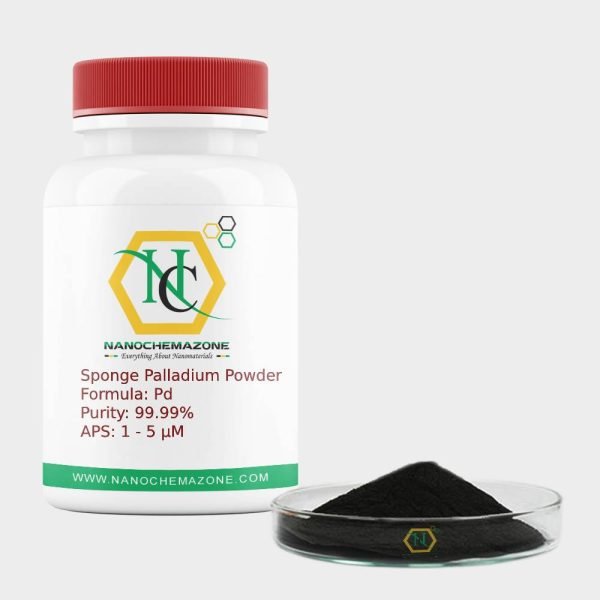
Sponge Palladium Powder
Product Name: Sponge Palladium Powder
| Product | Sponge Palladium Powder |
| CAS No. | 7440-05-3 |
| Appearance | Powder |
| Purity | 99.9% |
| APS | 1 – 5 Microns (Can be customized) |
| Ingredient | Pd |
| Product Code | NCZ-AE-112 |
Stainless Steel 304 Powder
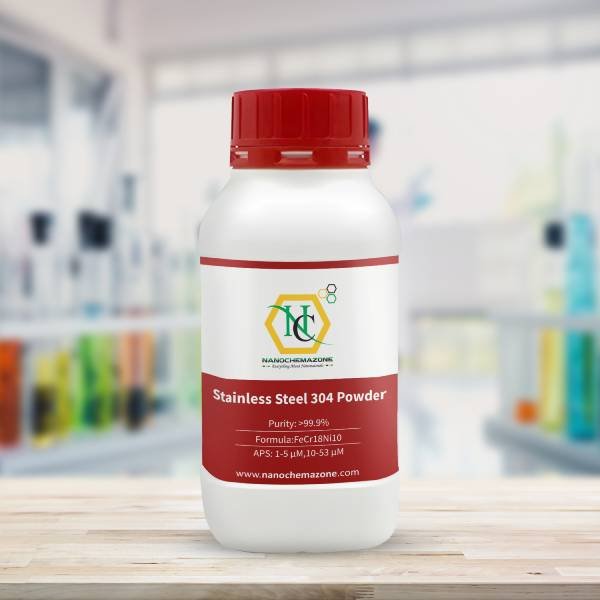
Stainless Steel 304 Powder
| Product | Stainless Steel 304 Powder |
| CAS No. | 65997-19-5 |
| Appearance | Silver-Gray Powder |
| Purity | ≥99%, ≥99.9%, ≥95%(Other purities are also available) |
| APS | 1-5 µM, 10-53 µM (Can be customized), Ask for other available size range. |
| Ingredient | FeCr18Ni10 |
| Density | 7.9g/cm3 |
| Molecular Weight | N/A |
| Product Codes | NCZ-DCY-253/25 |
Stainless Steel 304 Description:
Stainless Steel 304 Powder is one of the numerous advanced ceramic materials manufactured by Nanochemazone. Nanochemazone produces too many standard grades when applicable, including Mil Spec (military grade); ACS, Reagent and Technical Grade; Food, Agricultural and Pharmaceutical Grade; Optical Grade, USP and EP/BP (European Pharmacopoeia/British Pharmacopoeia) and follows applicable ASTM testing standards. Typical and custom packaging is available. Additional technical, research and safety (MSDS) information are available. Please request a quote above for more information on lead time and pricingStainless Steel Powder Related Information :
Storage Conditions: Airtight sealed, avoid light and keep dry at room temperature. Please contact us for customization and price inquiry Email: contact@nanochemazone.com Note: We supply different size ranges of Nano and micron as per the client’s requirements and also accept customization in various parameters. stainless steel 304 Powder for 3D Printing 304 powder is a form of stainless steel powder that is widely used in various industries due to its exceptional properties. It is composed of iron, chromium, and nickel, which give it excellent corrosion resistance, high strength, and good formability. The powder form allows for easy processing and customization according to specific requirements. Introduction To 304 Powder 304 powder is a form of stainless steel powder that is widely used in various industries due to its exceptional properties. It is composed of iron, chromium, and nickel, which give it excellent corrosion resistance, high strength, and good formability. The powder form allows for easy processing and customization according to specific requirements. Composition And Properties 304 powder primarily consists of iron, with approximately 18% chromium and 8% nickel. These alloying elements contribute to its corrosion resistance and durability. Additionally, it contains small amounts of carbon, manganese, phosphorus, sulfur, and silicon. The combination of these elements results in a material with remarkable mechanical and chemical properties. Some key properties of 304 powder include: Corrosion resistance: 304 powder exhibits excellent resistance to corrosion from a wide range of substances, including water, acids, and alkalis. Strength and durability: It has high tensile strength, making it suitable for applications that require robust and long-lasting components. Formability: 304 powder can be easily formed into different shapes, allowing for versatility in manufacturing processes. Heat resistance: It maintains its strength and structural integrity even at elevated temperatures. Hygienic properties: Due to its non-porous surface, it is easy to clean and maintain sanitary conditions in applications such as food processing. Industrial Applications 304 powder finds extensive use in various industries. Let’s explore some of its prominent applications: Automotive Industry In the automotive sector, 304 powder is utilized in the manufacturing of exhaust systems, mufflers, and other components exposed to corrosive gases and liquids. Its resistance to oxidation and high-temperature environments makes it an ideal choice for these applications, ensuring longevity and reliability. Food Processing The food processing industry demands materials that meet stringent hygiene and corrosion resistance requirements. 304 powder is widely employed in food processing equipment, such as tanks, pipes, and fittings. Its smooth surface and resistance to food acids and chemicals make it a preferred choice, ensuring the integrity and safety of food products. Chemical Industry 304 powder is extensively used in the chemical industry due to its resistance to various corrosive substances. It is employed in the construction of reactors, storage tanks, and pipelines for handling chemicals and acids. The material’s ability to withstand corrosive environments and retain its structural integrity contributes to safe and efficient chemical processes. Architecture And Construction In architecture and construction, 304 powder finds applications in the fabrication of structural components, handrails, and decorative elements. Its aesthetic appeal, combined with corrosion resistance, makes it an excellent choice for both interior and exterior applications. Moreover, its formability allows for intricate designs and customization according to architectural requirements. Aerospace Sector The aerospace industry requires materials that can withstand extreme conditions, including high temperatures, vibrations, and corrosive environments. 304 powder is utilized in aircraft components, such as exhaust systems, brackets, and fasteners, due to its excellent combination of strength, heat resistance, and corrosion resistance. It plays a vital role in ensuring the safety and reliability of aerospace systems. Advantages Of Using 304 Powder 304 powder offers several advantages over other materials, making it a preferred choice in many industrial applications. Some notable benefits include: Corrosion resistance: The high chromium and nickel content provide exceptional resistance to corrosion, ensuring durability and longevity. Cost-effectiveness: 304 powder offers a cost-effective solution for various applications due to its availability and wide range of uses. Versatility: Its formability allows for customization and adaptability to different manufacturing processes and design requirements. Hygienic properties: The non-porous surface of 304 powder makes it easy to clean and maintain in industries with strict hygiene standards. Recyclability: Stainless steel, including 304 powder, is highly recyclable, contributing to environmental sustainability. Challenges And Limitations While 304 powder boasts numerous advantages, it also has some limitations to consider. These include: Moderate temperature limitations: While it exhibits good heat resistance, prolonged exposure to high temperatures may lead to a reduction in mechanical properties. Sensitivity to certain chemicals: 304 powder may be susceptible to specific corrosive substances, such as chlorides, under certain conditions. Proper material selection is crucial in such cases. Magnetic properties: Unlike some stainless steel alloys, 304 powder is generally magnetic, which may impact its suitability for certain applications. Best Practices For Handling And Storage To maximize the performance and longevity of 304 powder, it is important to follow best practices for its handling and storage. Consider the following guidelines: Store the powder in a clean, dry, and well-ventilated area to prevent moisture and contamination. Handle the powder with clean gloves to avoid transferring oils and other substances that may affect its properties. Keep the powder away from strong acids, alkalis, and chloride-containing substances to minimize the risk of corrosion. Regularly inspect the powder for any signs of damage or contamination before use. Future Trends And Innovations As technology advances and new industrial challenges emerge, the development of stainless steel powders like 304 powder continues. Researchers and manufacturers are exploring ways to further enhance its properties, expand its applications, and optimize its processing techniques. Future trends may include improved heat resistance, increased strength, and the development of eco-friendly manufacturing processes. for your specific needs. Frequently Asked Questions (FAQs) Is 304 powder suitable for outdoor applications? Yes, 304 powder is commonly used in outdoor applications due to its corrosion resistance and durability. However, prolonged exposure to harsh environments may require additional protective measures. Can 304 powder be welded? Yes, 304 powder can be welded using common welding techniques. However, it is important to follow proper welding procedures to ensure optimal results and maintain its corrosion resistance. Can 304 powder be used for medical applications? While 304 powder is not typically used for direct medical implants, it is often employed in medical equipment and devices where corrosion resistance is required, such as surgical instruments and hospital equipment. How does 304 powder compare to other stainless steel alloys? 304 powder is one of the most commonly used stainless steel alloys due to its balanced combination of properties, cost-effectiveness, and availability. However, there are other alloys with specialized properties that may be more suitable for specific applications. Is 304 powder recyclable? Yes, stainless steel, including 304 powder, is highly recyclable. Recycling stainless steel helps conserve resources and reduce environmental impact.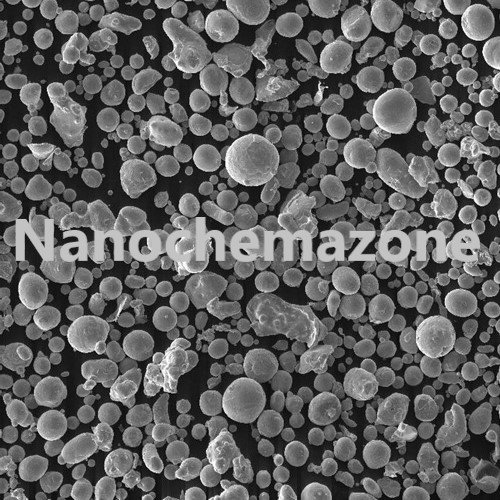
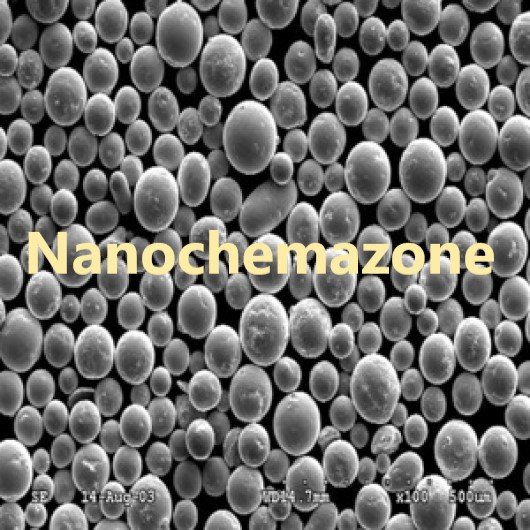
Stainless Steel 316 Alloy Nanoparticles/Nanopowder
| Product Formula | Stainless Steel 316L |
| Product Number | NCZ-A-141-19 |
| APS | ≤ 80 nm (can be customized) |
| Purity | 99.9% |
| Color | Gray |
| Form | Nanopowder |
Note: We can manufacture and supply different particle sizes (Nano size range, Micron, Submicron and different Mesh size) products of Alloy powders (Multi Element, Multi Element Oxide and Mixture of Rare Earth Elements) according to client’s requirements. Kindly ask for the customization in size and Element ratio composition.
Stainless Steel 430 Alloy Nanoparticles/Nanopowder
| Product Formula | Stainless Steel 430L |
| Product Number | NCZ-A-142-19 |
| APS | ≤ 80 nm (can be customized) |
| Purity | 99.9% |
| Color | Gray |
| Form | Nanopowder |
Note: We can manufacture and supply different particle sizes (Nano size range, Micron, Submicron, and different Mesh size) products of Alloy powders (Multi-Element, Multi-Element Oxide and Mixture of Rare Earth Elements) according to client’s requirements. Kindly ask for the customization in size and Element ratio composition.
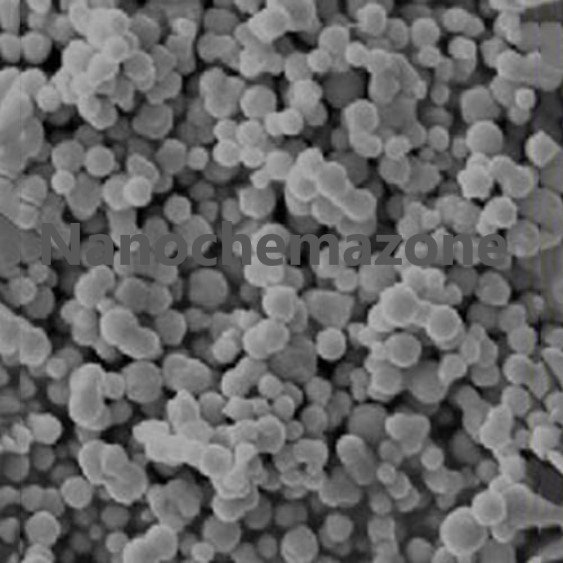
Stainless Steel Alloy Nanoparticles/Nanopowder
| Product Formula | Stainless Steel 304L |
| Product Number | NCZ-A-140-19 |
| APS | ≤ 80 nm (can be customized) |
| Purity | 99.9% |
| Color | Gray |
| Form | Nanopowder |
Note: We can manufacture and supply different particle sizes (Nano size range, Micron, Submicron, and different Mesh size) products of Alloy powders (Multi-Element, Multi-Element Oxide and Mixture of Rare Earth Elements) according to client’s requirements. Kindly ask for the customization in size and Element ratio composition.

Stainless Steel Foam
Stainless Steel Foam
Product: Stainless Steel Foam – 50PPI/3mm
| Stock No. | NCZFF107 |
| PPI | 10 to 110, customization is available |
| Surface Density | 346g/m^2 |
| Purity | ≥99.9% |
| Porosity | ≥95%, customization is available |
| Length | 300 mm, customization is available |
| Width | 300 mm, customization is available |
| Thickness | 3 mm, customization is available |
Stainless Steel Foam Available in Open Cell as well as Closed Cell
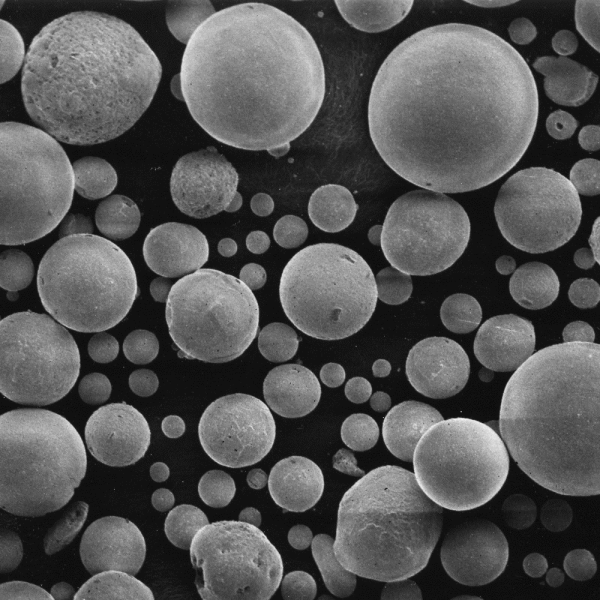
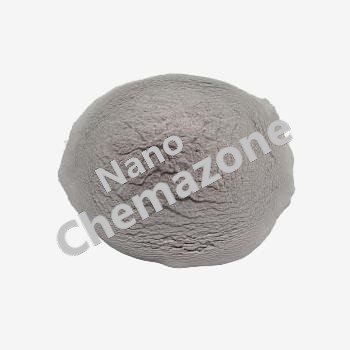
Stainless Steel Nanopowder
| Product Formula | Cr 18-20: Ni9-13: Si<1: Mn<0.3: C≤0.08 |
| Product Number | NCZ-A-121-19 |
| APS | 10 Micron (can be customized) |
| Purity | 99.9% |
| Color | Gray |
| Form | powder |
| Density | 7.9 g/cm3 |
| Melting Point | 1400-1450 °C |
| Boiling Point | 1820-1880 °C |
Note: We can manufacture and supply different particle sizes (Nano size range, Micron, Submicron, and different Mesh size) products of Alloy powders (Multi-Element, Multi-Element Oxide and Mixture of Rare Earth Elements) according to client’s requirements. Kindly ask for the customization in size and Element ratio composition.
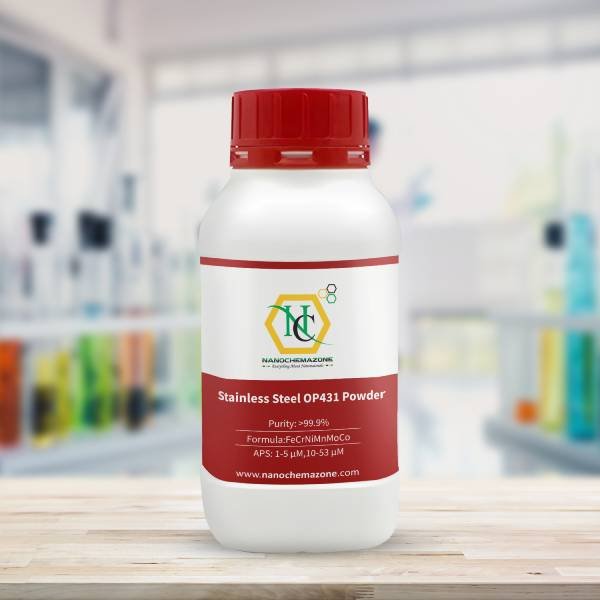
Stainless Steel OP431 Powder
Stainless Steel OP431 Powder
| Product | Stainless Steel OP431 Powder |
| CAS No. | 12597-68-1 |
| Appearance | Metallic Gray Powder |
| Purity | ≥99%, ≥99.9%, ≥95%(Other purities are also available) |
| APS | 1-5 µM, 10-53 µM (Can be customized), Ask for other available size range. |
| Ingredient | FeCrNiMnMoCo |
| Density | N/A |
| Molecular Weight | N/A |
| Product Codes | NCZ-DCY-254/25 |
Stainless Steel OP431 Description:
Stainless Steel 304 Powder is one of the numerous advanced ceramic materials manufactured by Nanochemazone. Nanochemazone produces too many standard grades when applicable, including Mil Spec (military grade); ACS, Reagent and Technical Grade; Food, Agricultural and Pharmaceutical Grade; Optical Grade, USP and EP/BP (European Pharmacopoeia/British Pharmacopoeia) and follows applicable ASTM testing standards. Typical and custom packaging is available. Additional technical, research and safety (MSDS) information are available. Please request a quote above for more information on lead time and pricingStainless Steel OP431 Powder Related Information :
Storage Conditions: Airtight sealed, avoid light and keep dry at room temperature. Please contact us for customization and price inquiry Email: contact@nanochemazone.com Note: We supply different size ranges of Nano and micron as per the client’s requirements and also accept customization in various parameters. Stainless Steel OP431 Powder Stainless steel OP431 powder is a powdered form of stainless steel that consists of iron, chromium, nickel, and other alloying elements. It is manufactured through a specialized process called atomization, where molten stainless steel is rapidly cooled using gas or water, resulting in the formation of fine metal particles. Overview of Stainless Steel OP431 Powder OP431 stainless steel belongs to the ferritic grade steels which contain chromium as the principal alloying element. The addition of aluminum enhances oxidation and corrosion resistance at high temperatures. Key characteristics of OP431 powder include: Excellent oxidation and corrosion resistance up to 1150°C Good creep resistance and thermal fatigue strength Excellent thermo-mechanical stability High thermal conductivity and low thermal expansion Cost-effective compared to austenitic stainless steels Available in various particle size distributions OP431 powder is ideal for applications requiring oxidation resistance, thermal stability and moderate strength at elevated temperatures. Chemical Composition of OP431 Powder OP431 powder has the following nominal composition:| Element | Weight % |
| Iron (Fe) | Balance |
| Chromium (Cr) | 16-18% |
| Aluminum (Al) | 3-5% |
| Yttrium (Y) | 0.2-0.5% |
| Carbon (C) | 0.03% max |
| Silicon (Si) | 1% max |
| Manganese (Mn) | 1% max |
| Property | Value |
| Density | 7.3 g/cm3 |
| Melting Point | 1400-1450°C |
| Thermal Conductivity | 29 W/mK |
| Electrical Resistivity | 0.6 μΩ.cm |
| Young’s Modulus | 200 GPa |
| Poisson’s Ratio | 0.27-0.30 |
| Tensile Strength | 450-650 MPa |
| Yield Strength | 280-480 MPa |
| Elongation | 15-20% |
| Oxidation Resistance | Excellent up to 1150°C |
| Parameter | OP431 | 316L |
| Type | Ferritic | Austenitic |
| Cr content | 16-18% | 16-18% |
| Ni content | – | 10-14% |
| High temperature strength | Higher | Lower |
| Corrosion resistance | Moderate | Excellent |
| Cost | Lower | Higher |
| Applications | Thermal spray, igniters | Automotive, construction |
| Weldability | Poor | Excellent |
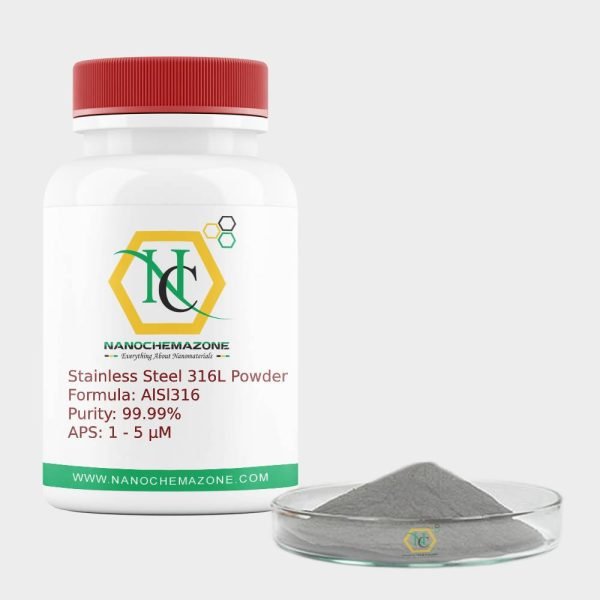
Stainless Steel Powder
Product Name: Stainless Steel Powder
| Product | Stainless Steel Powder |
| CAS No. | 65997-19-5 |
| Appearance | Powder |
| Purity | 99.9% |
| APS | 1 – 5 microns (can be customized) |
| Ingredient | FeCr18Ni10Mo3 |
| Product Code | NCZ-AE-245 |


Stainless Steel Powders (SS420)
Stainless Steel Powder
Stainless Steel Powders Micro and Nanosize range
Stainless Steel SS420 Powder
| MF: | SS420 |
| Chemical Name: | Stainless Steel Powders |
| Purity: | >99.99% |
| APS: | 40-50 µm (Size Customization possible) |
| Form: | Micro powder |
| Product Number: | NCZM122 |
| CAS Number | 12597-68-1 |
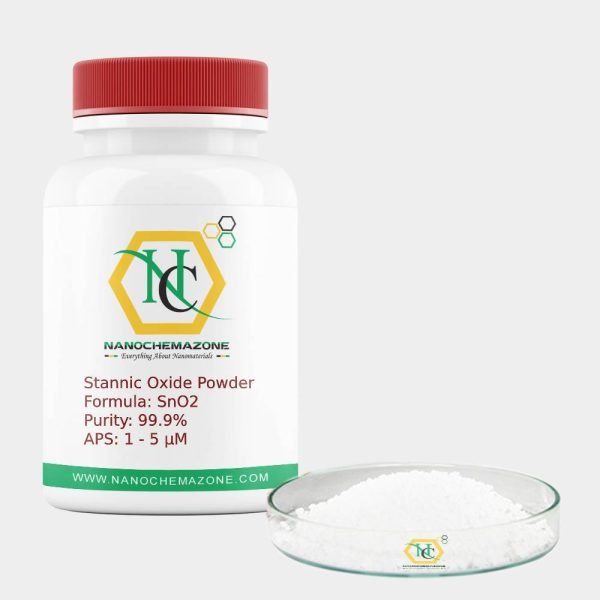
Stannic Oxide Powder
Product Name: Stannic Oxide Powder
| Product | Stannic Oxide Powder |
| CAS No. | 18282-10-5 |
| Appearance | Powder |
| Purity | 99.9% |
| APS | 1 – 5 microns (can be customized) |
| Ingredient | SnO2 |
| Product Code | NCZ-AE-206 |
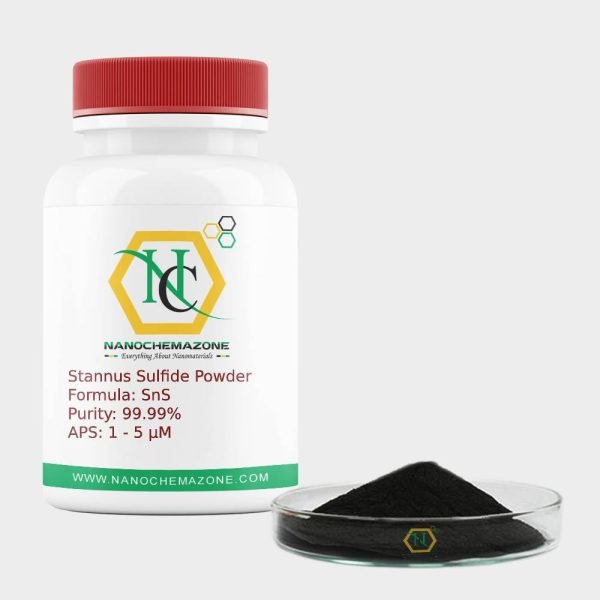
Stannous Sulfide Powder
Product Name: Stannous Sulfide Powder
| Product | Stannous Sulfide Powder |
| CAS No. | 1314-95-0 |
| Appearance | Powder |
| Purity | 99.9% |
| APS | 1 – 5 microns (can be customized) |
| Ingredient | SnS |
| Product Code | NCZ-AE-236 |
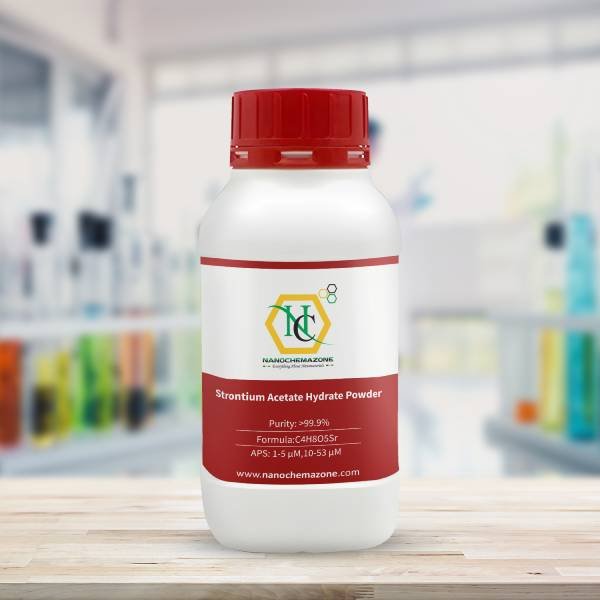
Strontium Acetate Hydrate Powder
Strontium Acetate Hydrate Powder
| Product | Strontium Acetate Hydrate Powder |
| CAS No. | 543-94-2 |
| Appearance | White Powder |
| Purity | ≥99%, ≥99.9%, ≥95%(Other purities are also available) |
| APS | 1-5 µM, 10-53 µM (Can be customized), Ask for other available size range. |
| Ingredient | C4H8O5Sr |
| Density | 2.099g/cm3 |
| Molecular Weight | 223.72g/mol |
| Product Code | NCZ-CAS-268/25 |
Strontium Acetate Hydrate Description:
Strontium Acetate Hydrate Powder is one of the numerous advanced ceramic materials manufactured by Nanochemazone. Nanochemazone produces too many standard grades when applicable, including Mil Spec (military grade); ACS, Reagent and Technical Grade; Food, Agricultural and Pharmaceutical Grade; Optical Grade, USP and EP/BP (European Pharmacopoeia/British Pharmacopoeia) and follows applicable ASTM testing standards. Typical and custom packaging is available. Additional technical, research and safety (MSDS) information are available. Please request a quote above for more information on lead time and pricing.Strontium Acetate Hydrate Powder Related Information:
Storage Conditions: Airtight sealed, avoid light and keep dry at room temperature. Please contact us for customization and price inquiry Email: contact@nanochemazone.com Note: We supply different size ranges of Nano and micron as per the client’s requirements and also accept customization in various parameters. Strontium Acetate Hydrate CAS #: 543-94-2 Linear Formula:(CH3COO)2Sr • xH2O MDL Number:MFCD00198064 EC No.:208-854-8 Strontium Acetate Hydrate Properties (Theoretical)| Compound Formula | C4H8O5Sr |
| Molecular Weight | 223.72 |
| Appearance | White powder |
| Melting Point | N/A |
| Boiling Point | N/A |
| Density | 2.099 g/cm3 |
| Solubility in H2O | N/A |
| Exact Mass | 223.942785 |
| Monoisotopic Mass | 223.942785 |
Strontium Acetate Powder
Strontium Acetate Powder
| Product | Strontium Acetate Powder |
| CAS No. | 543-94-2 |
| Appearance | White Powder |
| Purity | ≥99%, ≥99.9%, ≥95%(Other purities are also available) |
| APS | 1-5 µM, 10-53 µM (Can be customized), Ask for other available size range. |
| Ingredient | Sr(C2H3O2)2 |
| Density | 2.099g/cm3 |
| Molecular Weight | 205.71g/mol |
| Product Code | NCZ-CAS-266/25 |
Strontium Acetate Description:
Strontium Acetate Powder is one of the numerous advanced ceramic materials manufactured by Nanochemazone. Nanochemazone produces too many standard grades when applicable, including Mil Spec (military grade); ACS, Reagent and Technical Grade; Food, Agricultural and Pharmaceutical Grade; Optical Grade, USP and EP/BP (European Pharmacopoeia/British Pharmacopoeia) and follows applicable ASTM testing standards. Typical and custom packaging is available. Additional technical, research and safety (MSDS) information are available. Please request a quote above for more information on lead time and pricing.Strontium Acetate Powder Related Information:
Storage Conditions: Airtight sealed, avoid light and keep dry at room temperature. Please contact us for customization and price inquiry Email: contact@nanochemazone.com Note: We supply different size ranges of Nano and micron as per the client’s requirements and also accept customization in various parameters. Strontium Acetate CAS #: 543-94-2 Linear Formula: Sr(C2H3O2)2 MDL Number:MFCD00036392 EC No.:208-854-8 Strontium Acetate Properties (Theoretical)| Compound Formula | C4H6O4Sr |
| Molecular Weight | 205.71 |
| Appearance | White powder |
| Melting Point | N/A |
| Boiling Point | N/A |
| Density | 2.099 g/cm3 |
| Solubility in H2O | N/A |
| Exact Mass | 205.932 g/mol |
| Monoisotopic Mass | 205.932226 Da |

Strontium Cobaltite Powder
Product Name: Strontium Cobaltite Powder
| Product | Strontium Cobaltite Powder |
| CAS No. | 108916-09-2 |
| Appearance | White Powder |
| Purity | 99.9% |
| APS | 1 – 5 Microns (Can be customized) |
| Ingredient | La0.8Sr0.2CoO3 |
| Product Code | NCZ-NSC-351/20 |
Strontium Cobaltite Description :
Nanochemazone specializes in produce high-quality sputtering targets, ceramic targets, metal targets. Strontium Cobaltite applied to various fields of vacuum coating by various methods (magnetron sputtering, vacuum plating, etc.) Scientific research, aerospace, automotive, microelectronics, integrated circuit industry, light source, optics, decoration, flat panel display industry, information storage industry, data storage, and so on.
Strontium Cobaltite Related Information
Storage Conditions: Airtight sealed, avoid light, and keep dry at room temperature. Please contact us for customization and price inquiry Email: contact@nanochemazone.com Note: We supply different size ranges of Nano and micron as per the client’s requirements and also accept customization in various parameters.
Strontium Titanate Powder
Strontium Titanate Powder
| Product | Strontium Titanate Powder |
| CAS No. | 12031-82-2 |
| Appearance | White Powder |
| Purity | ≥99%, ≥99.9%, ≥95%(Other purities are also available) |
| APS/Particle Size | 1-5 µM, 10-53 µM (Can be customized), Ask for other available size range. |
| Ingredient/Formula | SrTiO3 |
| Density | 4.81 g/mL at 25 °C(lit.) |
| Molecular Weight | 183.49 |
| Product Code | NCZ-DCY-101/25 |
Strontium Titanate Powder Description:
Strontium Titanate Powder is one of the numerous advanced ceramic materials manufactured by Nanochemazone. Nanochemazone produces too many standard grades when applicable, including Mil Spec (military grade); ACS, Reagent and Technical Grade; Food, Agricultural and Pharmaceutical Grade; Optical Grade, USP and EP/BP (European Pharmacopoeia/British Pharmacopoeia) and follows applicable ASTM testing standards. Typical and custom packaging is available. Additional technical, research and safety (MSDS) information are available. Please request a quote above for more information on lead time and pricing.Strontium Titanate Powder Related Information:
Storage Conditions: Airtight sealed, avoid light and keep dry at room temperature. Please contact us for customization and price inquiry Email: contact@nanochemazone.com Note: We supply different size ranges of Nano and micron as per the client’s requirements and also accept customization in various parameters. Strontium titanate (SrTiO3) is an oxide of strontium and titanium with the chemical formula SrTiO3 . At room temperature, it is a centrosymmetric paraelectric material with a perovskite structure. At low temperatures it approaches a ferroelectric phase transition with a very large dielectric constant ~104 but remains para-electric down to the lowest temperatures measured as a result of quantum fluctuations, making it a quantum para-electric. Chemical properties: Other names: Strontium titanium oxide Appearance: White powder CAS No:12031-82-2 Chemical formula: SrTiO3 Melting point: 2060 °C(lit.) Density: 4.81 g/mL at 25 °C(lit.) Molar mass: 183.49 Insolubility in water| Type | ST-1 | ST-2 | ST-3 |
| Purity (wt%) | ≥99.5 | ≥99 | ≥99 |
| BaO (wt%) | <0.05 | <0.10 | <0.30 |
| Fe2O3 (wt%) | <0.01 | <0.13 | <0.15 |
| K2O+Na2O (wt%) | <0.01 | <0.14 | <0.10 |
| Al2O3 (wt%) | <0.10 | <0.20 | <0.50 |
| SiO2 (wt%) | <0.10 | <0.20 | <0.50 |
Strontium Vanadate Powder
Strontium Vanadate Powder
| Product | Strontium Vanadate Powder |
| CAS No. | 12435-86-8 |
| Appearance | Pale Yellow to Light Gray Powder |
| Purity | ≥99%, ≥99.9%, ≥95% (Other purities are also available) |
| APS | 1-5 µM, 10-53 µM (Can be customized), Ask for other available size range. |
| Ingredient | SrVO3 |
| Density | 2.64g/cm3 |
| Molecular Weight | 285.5g/mol |
| Product Codes | NCZ-MNO-136/25 |
Strontium Vanadate Description:
Strontium Vanadate Powder is one of the numerous advanced ceramic materials manufactured by Nanochemazone. Nanochemazone produces too many standard grades when applicable, including Mil Spec (military grade); ACS, Reagent and Technical Grade; Food, Agricultural and Pharmaceutical Grade; Optical Grade, USP and EP/BP (European Pharmacopoeia/British Pharmacopoeia) and follows applicable ASTM testing standards. Typical and custom packaging is available. Additional technical, research and safety (MSDS) information are available. Please request a quote above for more information on lead time and pricing.Strontium Vanadate Powder Related Information :
Storage Conditions: Airtight sealed, avoid light and keep dry at room temperature. Please contact us for customization and price inquiry Email: contact@nanochemazone.com Note: We supply different size ranges of Nano and micron as per the client’s requirements and also accept customization in various parameters. Strontium Vanadate| Catalog No. | NCZ-MNO-136/25 |
| CAS Number | 12435-86-8 |
| Molecular Formula | SrVO3 |
| Molecular Weight | 285.5 |
| Appearance | Pale yellow to light gray powder |
| Purity | 99% |
| Physicochemical Information | |
| Density | 2.64 g/cm3 |
| Melting Point | N/A |
| Water Solubility | Insoluble |
| Exact Mass | 389.663541 g/mol |
| InchI Key | LVLDCXWAPKJQMZ-UHFFFAOYSA-N |
| Symbol | GHS07,GHS06 |
| Signal word | Danger |
| Hazard statements | H315-H319-H302+H332 |
| Precautionary statements | P261-P280-P361-P305+P351+P338-P302+P350-P304+P340-P405-P501 |
| Personal protective equipment | N/A |
| RIDADR | UN3285 6.1/PG II |
| WGK Germany | N/A |

Strontium Vanadate Powder
Strontium Vanadate Powder
| Product | Strontium Vanadate Powder |
| CAS No. | 13597-58-5 |
| Appearance | Gray powder |
| Purity | ≥99%, ≥99.9%, ≥95%(Other purities are also available) |
| APS | 1-5 µM, 10-53 µM (Can be customized), Ask for other available size range. |
| Ingredient | SrVO3 & SrV2O6 |
| Density | 2.64g/cm3 |
| Molecular Weight | 285.4994g/mol |
| Product Codes | NCZ-DCY-138/25 |
Strontium Vanadate Description:
Strontium Vanadate Powder is one of the numerous advanced ceramic materials manufactured by Nanochemazone. Nanochemazone produces too many standard grades when applicable, including Mil Spec (military grade); ACS, Reagent and Technical Grade; Food, Agricultural and Pharmaceutical Grade; Optical Grade, USP and EP/BP (European Pharmacopoeia/British Pharmacopoeia) and follows applicable ASTM testing standards. Typical and custom packaging is available. Additional technical, research and safety (MSDS) information are available. Please request a quote above for more information on lead time and pricingStrontium Vanadate Powder Related Information :
Storage Conditions: Airtight sealed, avoid light and keep dry at room temperature. Please contact us for customization and price inquiry Email: contact@nanochemazone.com Note: We supply different size ranges of Nano and micron as per the client’s requirements and also accept customization in various parameters. Chemical Properties: Other Name: Strontium Divanadium Hexaoxide Formula: SrVO3 & SrV2O6 CAS No.: 13597-58-5| Purity | % | ≥99 |
| Ba2+ | wt% | ≤0.05 |
| Mg2+ | wt% | ≤0.05 |
| Na+ | wt% | ≤0.05 |
| Cl- | wt% | ≤0.05 |
| SO4 2- | wt% | ≤0.05 |
| Fe2O3 | wt% | ≤0.05 |
| H2O | wt% | <0.1 |
| Appearance | wt% | Gray Powder |

Strontium Zirconate Powder
Strontium Zirconate Powder
| Product | Strontium Zirconate Powder |
| CAS No. | 12036-39-4 |
| Appearance | White Powder |
| Purity | ≥99%, ≥99.9%, ≥95%(Other purities are also available) |
| APS | 1-5 µM, 10-53 µM (Can be customized), Ask for other available size range. |
| Ingredient | SrZrO3 |
| Density | 5.46 g/cm3 |
| Molecular Weight | 226.8422 g/mol |
| Product Codes | NCZ-DCY-121/25 |
Strontium Zirconate Description:
Strontium Zirconate Powder is one of the numerous advanced ceramic materials manufactured by Nanochemazone. Nanochemazone produces too many standard grades when applicable, including Mil Spec (military grade); ACS, Reagent and Technical Grade; Food, Agricultural and Pharmaceutical Grade; Optical Grade, USP and EP/BP (European Pharmacopoeia/British Pharmacopoeia) and follows applicable ASTM testing standards. Typical and custom packaging is available. Additional technical, research and safety (MSDS) information are available. Please request a quote above for more information on lead time and pricing.Strontium Zirconate Powder Related Information :
Storage Conditions: Airtight sealed, avoid light and keep dry at room temperature. Please contact us for customization and price inquiry Email: contact@nanochemazone.com Note: We supply different size ranges of Nano and micron as per the client’s requirements and also accept customization in various parameters. Chemical Properties: Other Names: Strontium dioxide zirconium; Strontium zirconium oxide Molecular Formula: SrZrO3 CAS No.: 12036-39-4 Molecular Weight: 226.8422 g/mol EINECS: 234-847-4 Density: 5.46 g/cm3 Strontium Zirconate Technology Parameters| Item | Unit | SZ - 1 | |
| Purity | wt% | ≥99.5 | Adjustable |
| Na2O+K2O | wt% | < 0.05 | Adjustable |
| S 2+ | wt% | < 0.05 | Adjustable |
| Cl | wt% | < 0.05 | Adjustable |
| Particle Size D50 (μm) | wt% | 0.5~3.0 | Adjustable |
| Other content | Adjustable | ||
| Size | Adjustable | ||
| Packing | 25 kg PE liner Kraft paper | ||


SULFUR POWDER
SULPHUR POWDER
Sulfur Powder
| MF: | S |
| Chemical Name: | SULPHUR POWDER |
| Purity: | >99.99% |
| APS: | 40-50 µm (Size Customization possible) |
| Form: | Micro powder |
| Product Number: | NCZM123 |
| CAS Number | 7704-34-9 |
Superfine Ball Shape Conductive Carbon Powder
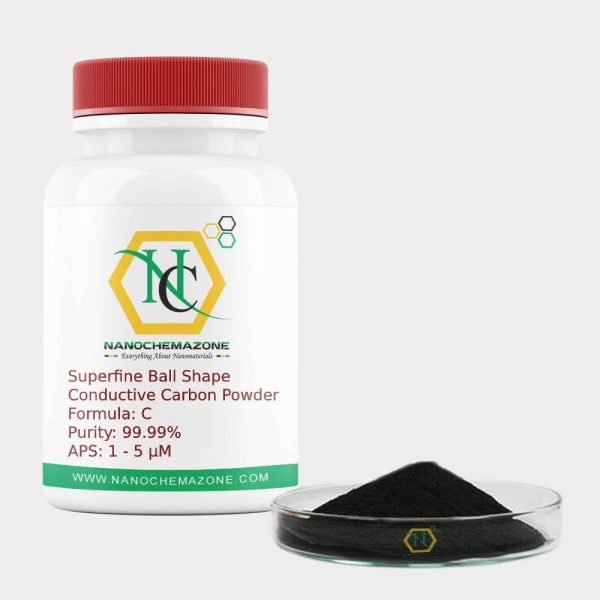
Product Name: Superfine Ball Shape Conductive Carbon Powder
| Product | Superfine Ball Shape Conductive Carbon Powder |
| CAS No. | 1333-86-4 |
| Appearance | Powder |
| Purity | 99.9% |
| APS | 1 – 5 microns (can be customized) |
| Ingredient | C |
| Product Code | NCZ-AE-256 |
Superfine Cosmetic Matrix Powder
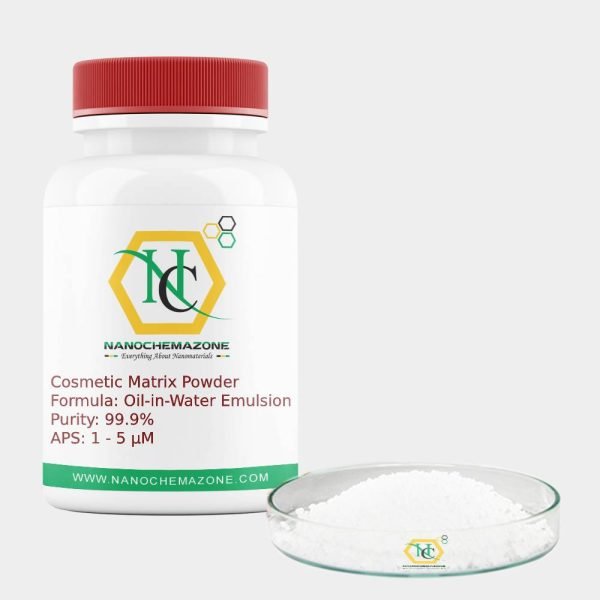
Product Name: Superfine Cosmetic Matrix Powder
| Product | Superfine Cosmetic Matrix Powder |
| CAS No. | 25736-27-0 |
| Appearance | Powder |
| Purity | 99.9% |
| APS | 1 – 5 microns (can be customized) |
| Ingredient | ointment bases with 500g oil-in-water emulsion add superfine powder cosmetic matrix |
| Product Code | NCZ-AE-252 |

Superfine Niobium Nanoparticles Powder
Superfine Niobium Nanoparticles Powder
Product Name: Superfine Niobium Nanoparticles Powder
| Product | Superfine Niobium Nanoparticles Powder |
| Colour | Gray |
| Purity | ≥ 99.99% |
| Particle size | 1-10 µM (customizable) |
| Ingredient/MF | Nb |
| Product Code | NCZ-CE-168/20 |
| CAS Number | 7440-03-1 |
Superfine Niobium Nanoparticles Description:
Superfine Niobium Nanoparticles Powder highest critical temperature of elemental superconducting properties.
The alloys made of tantalum have critical temperatures up to an absolute temperature of 18.50 to 210, which is the most important superconducting material at present.
2 High-temperature alloys: A large part of the world is used in the production of nickel, chromium, and iron-based superalloys in the form of pure metals or the form of high-purity ferroniobium and bismuth-nickel alloys.
Superfine Niobium Nanoparticles are used in jet engines, gas turbine engines, rocket assemblies, turbochargers, and heat-resistant combustion equipment.
Steel application: Among various microalloying elements of steel, waste bismuth is the most effective microalloying element.
The effect of bismuth is so great that iron atoms are rich in strontium atoms, which can improve steel properties. the goal of. The addition of 0.001%-0.1% bismuth in the steel is enough to change the mechanical properties of the steel.
Other niobium (or 1% zirconium) is the sealing material for the high-pressure sodium lamp arc tube because the thermal expansion coefficient of niobium is very similar to that of the sintered alumina arc lamp ceramic material.
Superfine Niobium Nanoparticles Related Information
Please email us for the customization. Email: contact@nanochemazone.com Please contact us for customization and price inquiry Note: We supply different size ranges of Nano and micron as per the client’s requirements and also accept customization in various parameters.
Superfine Tin Disulfide Powder
Product Name: Superfine Tin Disulfide Powder
| Product | Superfine Tin Disulfide Powder |
| CAS No. | 1315-01-1 |
| Appearance | Powder |
| Purity | 99.9% |
| APS | 1 – 5 microns (can be customized) |
| Ingredient | SnS2 |
| Product Code | NCZ-AE-178 |


SWCNT Dispersion
| MF: | SWCNT |
| Chemical Name: | SWCNT Dispersion |
| Purity: | > 99.99% |
| Diameter | 1 to 2 nm (Size Customization possible) |
| Form: | Nano dispersion |
| Product Number: | NCZD2801 |
| CAS Number | 308068-56-6 |


SWCNT Water Dispersion
| MF: | SWCNT |
| Chemical Name: | SWCNT Water Dispersion |
| Purity: | >99.99% |
| APS: | 1-2 nm Diameter (Size Customization possible) |
| Form: | Dispersion |
| Product Number: | NCZD2802 |
| CAS Number | 308068-56-6 |

SWCNT-Single Walled Carbon Nanotubes
Single walled Carbon Nanotubes
| MF: | C |
| Chemical Name: | Single-Walled Carbon Nanotubes |
| Purity: | >98% (SWNT) |
| Length: | 1-10 µm (Size Customization possible) |
| Diameter: | 1-2 nm (O.D), 0.8 -1.6 nm (I.D) |
| SSA: | >580 m2/g (BET) |
| Ash: | <2.0 wt% |
| Tap density: | 0.14g/cm3 |
| True density: | ~ 2.1g/cm3 |
| Form: | Nanopowder/Nanodispersion |
| Conductivity: | 100 S/cm (Electric); 50-200 W/m.K (Thermal) |
| Color: | Black |
| Product Number: | NCZCNT101 |
| CAS Number: | 308068-56-6 |

Synthetic Graphite Powder
Product Name: Synthetic Graphite Powder
| Product | Synthetic Graphite Powder |
| CAS No. | 7782-42-5 |
| Appearance | Black Powder |
| Purity | 99.9% |
| APS | 8µm,75 µm (Can be customized) |
| Product Code | NCZ-NSC331/20 |
| Formula | C |
| Desnity | 2.1-2.2g/cm3 |
Synthetic Graphite Powder Description :
Graphite archaically referred to as plumbago, is a crystalline form of the element carbon with its atoms arranged in a hexagonal structure.
Synthetic Graphite Powder occurs naturally in this form and is the most stable form of carbon under standard conditions. Under high pressures and temperatures, it converts to diamond. Synthetic Graphite Powder is used in pencils and lubricants.
Synthetic Graphite Powder a good conductor of heat and electricity. Its high conductivity makes it useful in electronic products such as electrodes, batteries, and solar panels. Solid carbon comes in different forms known as allotropes depending on the type of chemical bond. The two most common are diamond and graphite (less common ones include buckminsterfullerene).
In diamond the bonds are sp3 and the atoms form tetrahedra with each bound to four nearest neighbors. In graphite, they are sp2 orbital hybrids and the atoms form in planes with each bound to three nearest neighbors 120 degrees apart.
The individual layers are called graphene. In each layer, the carbon atoms are arranged in a honeycomb lattice with a separation of 0.142 nm, and the distance between planes is 0.335 nm. Atoms in the plane are bonded covalently, with only three of the four potential bonding sites satisfied.
The fourth electron is free to migrate in the plane, making graphite electrically conductive. Bonding between layers is via weak van der Waals bonds, which allows layers of graphite to be easily separated, or to slide past each other.
Electrical conductivity perpendicular to the layers is consequently about 1000 times lower. The two known forms of graphite, alpha (hexagonal), and beta (rhombohedral), have very similar physical properties, except that the graphene layers stack slightly differently.
The alpha graphite may be either flat or buckled. The alpha form can be converted to the beta form through mechanical treatment and the beta form reverts to the alpha form when it is heated above 1300 °C
Synthetic Graphite Powder Related Information
Storage Conditions: Airtight sealed, avoid light, and keep dry at room temperature. Please contact us for customization and price inquiry Email: contact@nanochemazone.com Note: We supply different size ranges of Nano and micron as per the client’s requirements and also accept customization in various parameters.
Synthetic Oil Magnetic Fluids
Synthetic Oil Magnetic Fluids
Product Name: Synthetic Oil Magnetic Fluids
| Product | Synthetic oil Megnetic Fluid |
| CAS No. | 1317619 |
| Appearance | Black liquid |
| Purity | 99.9% |
| APS | 10nm (Can be customized) |
| Ingredient | Magnetic Fluid |
| Product Code | NCZ-NSC-146/20 |
Synthetic oil Magnetic Fluid Related Information
Storage Conditions: Airtight sealed, avoid light, and keep dry at room temperature. Please email us for the customization. Email: contact@nanochemazone.com Note: We supply different size ranges of nano and micron size powder as per the client’s requirements and also accept customization in various parameters.

Synthetic Urine for Corrosion Testing of Urological Implants, Stabilized
Synthetic Urine
Synthetic Urine
Product Number: NCZ-APS-0014-20
Packaging: 100 mL to 1000 mL
NOTE: Custom pH formulations can be made in the pH range from 2.0 to 9.0. For custom component formulations please contact sales@nanochemazone.com for a quote. Artificial Urine This ready-to-use solution has the same composition as Real Urine Medium and closely resembles human urine. This formulation contains a non-toxic preservatives to avoid bacteria growth and can be stored at room temperature. The pH of the Artificial Urine Stabilized is 6.5.Artificial Urine's Application:
Artificial Urine for Corrosion Testing of Urological Implants, Stabilized
T15 Powder
T15 Powder
| Product | T15 Powder |
| CAS No. | 7440-33-7 |
| Appearance | Dark Gray Powder |
| Purity | ≥99%, ≥99.9%, ≥95%(Other purities are also available) |
| APS | 1-5 µM, 10-53 µM (Can be customized), Ask for other available size range. |
| Ingredient | WC-Co |
| Density | 8.19g/cm3 |
| Molecular Weight | N/A |
| Product Codes | NCZ-DCY-256/25 |
T15 Description:
T15 Powder is one of the numerous advanced ceramic materials manufactured by Nanochemazone. Nanochemazone produces too many standard grades when applicable, including Mil Spec (military grade); ACS, Reagent and Technical Grade; Food, Agricultural and Pharmaceutical Grade; Optical Grade, USP and EP/BP (European Pharmacopoeia/British Pharmacopoeia) and follows applicable ASTM testing standards. Typical and custom packaging is available. Additional technical, research and safety (MSDS) information are available. Please request a quote above for more information on lead time and pricingT15 Powder Related Information :
Storage Conditions: Airtight sealed, avoid light and keep dry at room temperature. Please contact us for customization and price inquiry Email: contact@nanochemazone.com Note: We supply different size ranges of Nano and micron as per the client’s requirements and also accept customization in various parameters. T15 Powder T15 powder is a tungsten carbide-cobalt cemented carbide powder that provides an exceptional combination of hardness, strength, and toughness. It contains a high percentage of tungsten carbide along with 15% cobalt as the binder phase. Overview of T15 Powder T15 powder is a tungsten carbide-cobalt cemented carbide powder that provides an exceptional combination of hardness, strength, and toughness. It contains a high percentage of tungsten carbide along with 15% cobalt as the binder phase. T15 Powder Properties and Characteristics| Properties | Details |
| Composition | 85% WC with 15% Co binder |
| Density | 13.0-14.5 g/cc |
| Particle shape | Rounded, multi-faceted |
| Size range | 0.5-15 microns |
| Hardness | 88-93 HRA when sintered |
| Transverse rupture strength | 550-650 MPa |
| Component | Weight % |
| Tungsten carbide (WC) | 84-86% |
| Cobalt (Co) | 14-16% |
| Carbon (C) | 0.8% max |
| Oxygen (O) | 0.5% max |
| Iron (Fe) | 0.3% max |
| Nickel (Ni) | 0.3% max |
| Property | Values |
| Density | 13.0-14.5 g/cc |
| Melting point | 2870°C (WC) and 1495°C (Co) |
| Thermal conductivity | 60-100 W/mK |
| Electrical resistivity | 25-35 μΩ-cm |
| Coefficient of thermal expansion | 4.5-6.0 x 10^-6 /K |
| Maximum service temperature | 500°C in air |
| Property | Values |
| Hardness | 88-93 HRA |
| Transverse rupture strength | 550-650 MPa |
| Compressive strength | 5500-6200 MPa |
| Fracture toughness | 10-12 MPa.m^1/2 |
| Young’s modulus | 550-650 GPa |
| Impact strength | 350-900 kJ/m2 |
| Industry | Example Uses |
| Mining | Rock drill bits, grit blasting nozzles |
| Construction | Demolition tools, rock crushers |
| Manufacturing | Forming dies, metal drawing parts |
| Oil and gas | Stabilizers, downhole motors |
| General | Cutting and machining tools |
| Standard | Description |
| ISO 513 | Classification and application of cemented carbides |
| ASTM B276 | Cobalt-tungsten carbide powders and hard metals |
| JIS G 4053 | Sintered hard metals |
| GB/T 4661-2006 | Chinese standard for cemented carbides |
| Particle Size | Characteristics |
| 0.5-2 microns | Ultrafine grade provides superfinish |
| 0.5-5 microns | Submicron range enhances toughness |
| 3-15 microns | Most commonly used size for optimal properties |
| Method | Details |
| Carburization and reduction-diffusion | Produces fine spherical powders |
| Crushing sintered material | Lower cost, irregular angular particles |
| Milling | Ball milling used for particle size reduction |
| Spray drying | Granulation and spheroidization process |
| Degassing | Removes gaseous impurities |
| Recommendation | Reason |
| Use PPE and ventilation | Prevent exposure to fine particles |
| Avoid ignition sources | Powder can combust if overheated in air |
| Follow safe protocols | Reduce health and fire hazards |
| Use inert atmosphere | Prevent oxidation during powder processing |
| Store sealed containers | Prevent contamination or absorption |
| Test | Details |
| Chemical analysis | Verifies composition using ICP, EDX, or XRF |
| Particle size distribution | Laser diffraction or sedimentation analysis |
| Powder morphology | SEM imaging of particle shape |
| Apparent density | Measured as per ASTM B212 standard |
| Tap density | Density measured after mechanical tapping |
| Hall flow rate | Determines powder flowability |
| Parameter | T15 | WC-TiC-TaC |
| Hardness | 88-93 HRA | 92-96 HRA |
| Fracture toughness | 10-12 MPa.m^1/2 | 8-9 MPa.m^1/2 |
| Strength | Very high | Extremely high |
| Cost | Moderate | Very high |
| Corrosion resistance | Fair | Excellent |
| Applications | General wear parts | Extreme abrasion and corrosion |
T15 Powder
T15 Powder
| Product | T15 Powder |
| CAS No. | 14807-96-6 |
| Appearance | Grayish or Metallic Powder |
| Purity | ≥99%, ≥99.9%, ≥95%(Other purities are also available) |
| APS | 1-5 µM, 10-53 µM (Can be customized), Ask for other available size range. |
| Ingredient | WC-Co |
| Density | 8.0-8.2g/cm3 |
| Molecular Weight | N/A |
| Product Codes | NCZ-DCY-358/25 |
T15 Description:
T15 Powder is one of the numerous advanced ceramic materials manufactured by Nanochemazone. Nanochemazone produces too many standard grades when applicable, including Mil Spec (military grade); ACS, Reagent and Technical Grade; Food, Agricultural and Pharmaceutical Grade; Optical Grade, USP and EP/BP (European Pharmacopoeia/British Pharmacopoeia) and follows applicable ASTM testing standards. Typical and custom packaging is available. Additional technical, research and safety (MSDS) information are available. Please request a quote above for more information on lead time and pricing.T15 Powder Related Information :
Storage Conditions: Airtight sealed, avoid light and keep dry at room temperature. Please contact us for customization and price inquiry Email: contact@nanochemazone.com Note: We supply different size ranges of Nano and micron as per the client’s requirements and also accept customization in various parameters. T15 Powder T15 powder is a tungsten carbide-cobalt cemented carbide powder that provides an exceptional combination of hardness, strength, and toughness. It contains a high percentage of tungsten carbide along with 15% cobalt as the binder phase. Overview of T15 Powder T15 powder is a tungsten carbide-cobalt cemented carbide powder that provides an exceptional combination of hardness, strength, and toughness. It contains a high percentage of tungsten carbide along with 15% cobalt as the binder phase. Key properties and advantages of T15 powder: T15 Powder Properties and Characteristics| Properties | Details |
| Composition | 85% WC with 15% Co binder |
| Density | 13.0-14.5 g/cc |
| Particle shape | Rounded, multi-faceted |
| Size range | 0.5-15 microns |
| Hardness | 88-93 HRA when sintered |
| Transverse rupture strength | 550-650 MPa |
| Component | Weight % |
| Tungsten carbide (WC) | 84-86% |
| Cobalt (Co) | 14-16% |
| Carbon (C) | 0.8% max |
| Oxygen (O) | 0.5% max |
| Iron (Fe) | 0.3% max |
| Nickel (Ni) | 0.3% max |
| Property | Values |
| Density | 13.0-14.5 g/cc |
| Melting point | 2870°C (WC) and 1495°C (Co) |
| Thermal conductivity | 60-100 W/mK |
| Electrical resistivity | 25-35 μΩ-cm |
| Coefficient of thermal expansion | 4.5-6.0 x 10^-6 /K |
| Maximum service temperature | 500°C in air |
| Property | Values |
| Hardness | 88-93 HRA |
| Transverse rupture strength | 550-650 MPa |
| Compressive strength | 5500-6200 MPa |
| Fracture toughness | 10-12 MPa.m^1/2 |
| Young’s modulus | 550-650 GPa |
| Impact strength | 350-900 kJ/m2 |
| Industry | Example Uses |
| Mining | Rock drill bits, grit blasting nozzles |
| Construction | Demolition tools, rock crushers |
| Manufacturing | Forming dies, metal drawing parts |
| Oil and gas | Stabilizers, downhole motors |
| General | Cutting and machining tools |
| Standard | Description |
| ISO 513 | Classification and application of cemented carbides |
| ASTM B276 | Cobalt-tungsten carbide powders and hard metals |
| JIS G 4053 | Sintered hard metals |
| GB/T 4661-2006 | Chinese standard for cemented carbides |
| Particle Size | Characteristics |
| 0.5-2 microns | Ultrafine grade provides superfinish |
| 0.5-5 microns | Submicron range enhances toughness |
| 3-15 microns | Most commonly used size for optimal properties |
| Method | Details |
| Carburization and reduction-diffusion | Produces fine spherical powders |
| Crushing sintered material | Lower cost, irregular angular particles |
| Milling | Ball milling used for particle size reduction |
| Spray drying | Granulation and spheroidization process |
| Degassing | Removes gaseous impurities |
| Recommendation | Reason |
| Use PPE and ventilation | Prevent exposure to fine particles |
| Avoid ignition sources | Powder can combust if overheated in air |
| Follow safe protocols | Reduce health and fire hazards |
| Use inert atmosphere | Prevent oxidation during powder processing |
| Store sealed containers | Prevent contamination or absorption |
| Test | Details |
| Chemical analysis | Verifies composition using ICP, EDX, or XRF |
| Particle size distribution | Laser diffraction or sedimentation analysis |
| Powder morphology | SEM imaging of particle shape |
| Apparent density | Measured as per ASTM B212 standard |
| Tap density | Density measured after mechanical tapping |
| Hall flow rate | Determines powder flowability |
| Parameter | T15 | WC-TiC-TaC |
| Hardness | 88-93 HRA | 92-96 HRA |
| Fracture toughness | 10-12 MPa.m^1/2 | 8-9 MPa.m^1/2 |
| Strength | Very high | Extremely high |
| Cost | Moderate | Very high |
| Corrosion resistance | Fair | Excellent |
| Applications | General wear parts | Extreme abrasion and corrosion |

Ta2AlC MAXene Powder Low Price
Product Name: Ta2AlC MAXene Powder
| Product | Ta2AlC MAXene powder |
| Colour | Black Powder |
| Purity | ≥98 wt% |
| Ingredient | Ta2AlC |
| Product Code | NCZ-MX-225 |
Ta2AlC MAXene powder APPLICATION FIELDS
High-temperature coating, MXene precursor, conductive self-lubricating ceramic, lithium-ion battery, supercapacitor, electrochemical catalysis.RELATED INFORMATION
Storage Conditions: Airtight sealed, avoid light and keep dry at room temperature. Please email us for the customization. Email: contact@nanochemazone.com
Ta2C MXenes
Product Name: Ta2C MXenes
Product Code: NCZ-MX-202| Product | Ta2C MXenes |
| Colour | Black Powder |
| Purity | ≥98 wt% |
| Ingredient | Ta2C |
| CAS NO | 12316-56-2 |
APPLICATION FIELDS
High-temperature coating, Mxene precursor, conductive self-lubricating ceramic, lithium-ion battery, supercapacitor, electrochemical catalysis.RELATED INFORMATION
Storage Conditions: Airtight sealed, avoid light and keep dry at room temperature. Please email us for the customization. Email: contact@nanochemazone.com

Ta4AlC3 MAXene Powder
Product Name: Ta4AlC3 MAXene Powder
| Product | Ta4AlC3 MAXene powder |
| Colour | Black Powder |
| Purity | ≥98 wt% |
| Ingredient | Ta4AlC3 |
| Product Code | NCZ-MX-119 |
APPLICATION FIELDS
High-temperature coating, MXene precursor, conductive self-lubricating ceramic, lithium-ion battery, supercapacitor, electrochemical catalysis. RELATED INFORMATION Storage Conditions: Airtight sealed, avoid light and keep dry at room temperature. Please email us for the customization. Email: contact@nanochemazone.com
Ta4C3 MXene Powder in Nano & Micro Size
Product Name: Ta4C3 MXene Powder
Product Code: NCZ-MX-219| Product | Ta4C3 MXene |
| Colour | Black Powder |
| Purity | ≥98 wt% |
| Ingredient | Ta4C3 |
| CAS NO | 12316-56-2 |
APPLICATION FIELDS
High-temperature coating, Mxene precursor, conductive self-lubricating ceramic, lithium-ion battery, supercapacitor, electrochemical catalysis.RELATED INFORMATION
Storage Conditions: Airtight sealed, avoid light and keep dry at room temperature. Please email us for the customization. Email: contact@nanochemazone.com
Tantalum Acetate Solution Powder
Tantalum Acetate Solution Powder
| Product | Tantalum Acetate Solution Powder |
| CAS No. | 228-010-2 |
| Appearance | White to Clear Powder |
| Purity | ≥99%, ≥99.9%, ≥95%(Other purities are also available) |
| APS | 1-5 µM, 10-53 µM (Can be customized), Ask for other available size range. |
| Ingredient | Ta(OC₂H₅)₅ |
| Density | N/A |
| Molecular Weight | 406.25g/mol |
| Product Code | NCZ-CAS-270/25 |
Tantalum Acetate Solution Description:
Tantalum Acetate Solution Powder is one of the numerous advanced ceramic materials manufactured by Nanochemazone. Nanochemazone produces too many standard grades when applicable, including Mil Spec (military grade); ACS, Reagent and Technical Grade; Food, Agricultural and Pharmaceutical Grade; Optical Grade, USP and EP/BP (European Pharmacopoeia/British Pharmacopoeia) and follows applicable ASTM testing standards. Typical and custom packaging is available. Additional technical, research and safety (MSDS) information are available. Please request a quote above for more information on lead time and pricing.Tantalum Acetate Solution Powder Related Information:
Storage Conditions: Airtight sealed, avoid light and keep dry at room temperature. Please contact us for customization and price inquiry Email: contact@nanochemazone.com Note: We supply different size ranges of Nano and micron as per the client’s requirements and also accept customization in various parameters. Tantalum Acetate Solution Linear Formula: Ta(OC2H5)5 MDL Number:MFCD00049785 EC No.:228-010-2 Tantalum Acetate Solution Properties (Theoretical)| Compound Formula | C10H25O5Ta |
| Molecular Weight | 406.25 |
| Appearance | White to Clear Liquid |
| Melting Point | N/A |
| Boiling Point | N/A |
| Density | N/A |
| Solubility in H2O | N/A |
| Exact Mass | 406.118195 |
| Monoisotopic Mass | 406.118195 |

Tantalum boride Powder
Product Name: Tantalum boride Powder
| MF: | TaB |
| Chemical Name |
Tantalum boride Powder |
| Color | Gray |
| EINECS | 234-496-7 |
| Purity: | 99.9% |
| Molecular weight: | 191.76 |
| Product Number: | NCZ-SC-116/20 |
| Cas Number: | 12045-19-1 |
| Density: | 14.2 g/cm3 |
Tantalum boride Powder RELATED INFORMATION
Please email us for the customization. Email: contact@nanochemazone.com Please contact us for customization and price inquiry Note: We supply different size ranges of Nano and micron as per the client’s requirements and also accept customization in various parameters.
Tantalum carbide Powder
Product Name: Tantalum Carbide Powder
| Product | Tantalum Carbide Powder |
| Colour | Brown-Gray |
| Purity | ≥ 99.9% |
| Particle size | 1-10 µM (customizable) |
| Ingredient/MF | TaC |
| Product Code | NCZ-C-105/20 |
| CAS Number | 12070-06-3 |
Tantalum carbide Powder Description:
Tantalum carbides form a family of binary chemical compounds of tantalum and carbon with the empirical formula TaCx, where usually varies between 0.4 and 1. They are extremely hard, brittle, refractory ceramic materials with metallic electrical conductivity. They appear as brown-Gray powders, which are usually processed by sintering. Being important cermet materials, tantalum carbides are commercially used in tool bits for cutting applications and are sometimes added to tungsten carbide alloys.Properties of TaC Tantalum carbide powder:
Tantalum carbides have metallic electrical conductivity, both in terms of its magnitude and temperature dependence. TaC is a superconductor with a relatively high transition temperature of TC = 10.35 K. Application of TaC Tantalum carbide powder- Widely used in the production of microwave absorbing materials, metal powder injection
- Used as all kinds of superhard material and powder metallurgy products additives etc.
- Used as a cutting tool.
- Used for delicate Ceramics.
- Hard wear-resistant alloy tools, tools, molds, and wear-resistant corrosion-resistant structural components additive, improve the toughness of the alloy.
- Tantalum carbide sintered shown in gold, watches can be made decorations.
Tantalum Carbide Powder
Tantalum Carbide Powder
| Product | Tantalum Carbide Powder |
| CAS No. | 12070-06-3 |
| Appearance | Brown Powder |
| Purity | ≥99%, ≥99.9%, ≥95%(Other purities are also available) |
| APS | 1-5 µM, 10-53 µM (Can be customized), Ask for other available size range. |
| Ingredient | TaC |
| Density | 14.3g/cm3 |
| Molecular Weight | 192.96g/mol |
| Product Codes | NCZ-DCY-156/25 |
Tantalum Carbide Description:
Tantalum Carbide is one of the numerous advanced ceramic materials manufactured by Nanochemazone. Nanochemazone produces too many standard grades when applicable, including Mil Spec (military grade); ACS, Reagent and Technical Grade; Food, Agricultural and Pharmaceutical Grade; Optical Grade, USP and EP/BP (European Pharmacopoeia/British Pharmacopoeia) and follows applicable ASTM testing standards. Typical and custom packaging is available. Additional technical, research and safety (MSDS) information are available. Please request a quote above for more information on lead time and pricing.Tantalum Carbide Powder Related Information :
Storage Conditions: Airtight sealed, avoid light and keep dry at room temperature. Please contact us for customization and price inquiry Email: contact@nanochemazone.com Note: We supply different size ranges of Nano and micron as per the client’s requirements and also accept customization in various parameters. Spherical Tantalum Carbide (TaC) powder 15-53µm Tantalum powder (Ta) is used in electronics, metallurgy, steel, chemical , cemented carbide, atomic energy, superconducting technology, automotive electronics, aerospace, medical and health, scientific research and other high-tech fields have important applications. Hunan Huawei provides high-quality Tantalum Powder at competitive prices. Tantalum Metal Powder | Spherical Tantalum Powder Tantalum has the characteristics of low elastic modulus, high friction coefficient, excellent tissue endogeneity and cartilage conductivity, high strength, strong corrosion resistance, and outstanding biocompatibility. It is an ideal human bone substitute material. Spherical Tantalum Powder We also provide spherical tantalum powder with excellent fluidity; it is a material for 3D printing. Ta spherical powder can produce the metal objects directly with high density and accurate shape by DMLS (direct metal laser sintering), which is a typical 3D printing technique. The particle size of our spherical tantalum powder will be 1-15um,15-53um, 45-105um or customized diameter, purity of 99.9%.
Tantalum chloride Powder
Product Name: Tantalum Chloride Powder
| Product |
Tantalum Chloride Powder |
| CAS No. | 7721-01-9 |
| Appearance | Yellow Powder |
| Purity | 99.9% |
| APS | 325 mesh (Can be customized) |
| Ingredient | TaCl5 |
| Product Code | NCZ-NSC-161/20 |
Description:
Organic compounds used as chlorinating agents, chemical intermediates, and used for the preparation of tantalum, etc.RELATED INFORMATION
Storage Conditions: Airtight sealed, avoid light and keep dry at room temperature. Please email us for the customization. Email: contact@nanochemazone.com Note: We supply different size ranges of nano and micron size powder as per the client’s requirements and also accept customization in various parameters.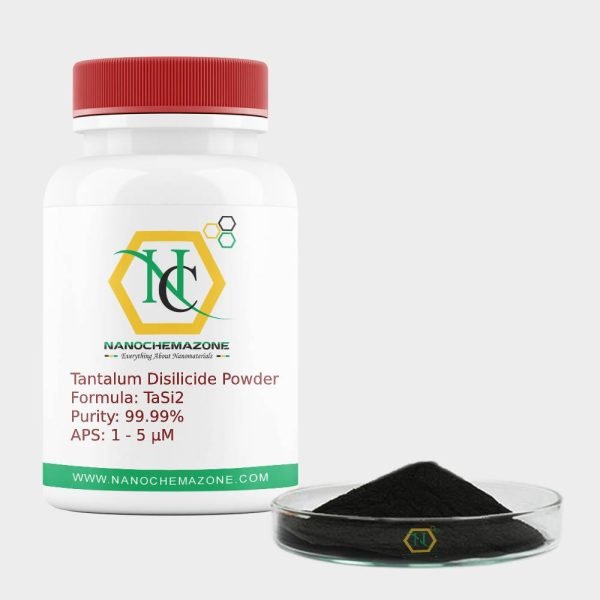
Tantalum Disilicide Powder
Product Name: Tantalum Disilicide Powder
| Product | Tantalum Disilicide Powder |
| CAS No. | 12136-78-6 |
| Appearance | Powder |
| Purity | 99.9% |
| APS | 1 – 5 microns (can be customized) |
| Ingredient | TaSi2 |
| Product Code | NCZ-AE-220 |
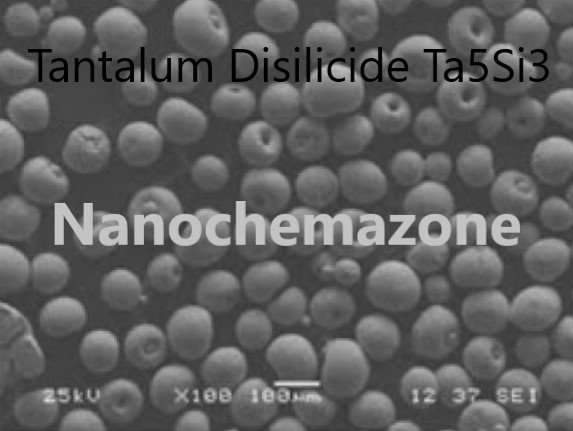
Tantalum Disilicide Ta5Si3
Tantalum Disilicide Nanoparticles
Tantalum Disilicide Powder Ta5Si3| MF | Ta5Si3 |
| Chemical Name | Tantalum Silicide |
| Purity | ≥ 99% |
| APS | 50-100 nm, 1 to 5 um, 10 um, 325 Mesh (Size Customization possible) |
| Form | Gray Powder |
| Product Number | NCZ3247-20 |
| CAS Number | 12067-56-0 |
Note: We supply different products of microparticles and Nanoparticles powder in all sizes range according to the client’s requirements.

Tantalum Metal -Gauze Powder
Product Name: Tantalum Metal-Gauze Powder
| Product |
Tantalum Metal-Gauze Powder |
| CAS No. | 7440-25-7 |
| Appearance | Gray Powder |
| Purity | 99.9% |
| APS | 1 – 5 Microns (Can be customized) |
| Ingredient | Ta |
| Product Code | NCZ-NSC-257/20 |
Tantalum Metal -Gauze Powder Description:
It is part of the refractory metals group, which are widely used as minor components in alloys. The chemical inertness of tantalum makes it a valuable substance for laboratory equipment and a substitute for platinum. Its main use today is in tantalum capacitors in electronic equipment such as mobile phones, DVD players, video game systems, and computers.Related Information of Tantalum Metal -Gauze Powder:
Storage Conditions: Airtight sealed, avoid light and keep dry at room temperature. Please contact us for customization and price inquiry Email: contact@nanochemazone.com Note: We supply different size ranges of Nano and micron as per the client’s requirements and also accept customization in various parameters.
Tantalum Niobium Carbide Powder
Tantalum Niobium Carbide Powder
Product Name: Tantalum Niobium Carbide Powder
| Product | Tantalum Niobium Carbide Powder |
| CAS No. | 12070-06-3 |
| Appearance | Gray Powder |
| Purity | 99.9% |
| APS | 100 mm (Can be customized) |
| Ingredient | TaC:NbC |
| Product Code | NCZ-NSC327/20 |
Tantalum Niobium Carbide Powder Description :
Tantalum Niobium Carbide Powder is a chemical element with the symbol Ta and atomic number. Previously known as tantalum, it is named after Tantalus, a villain from Greek mythology.
Tantalum is a rare, hard, blue-gray, lustrous transition metal that is highly corrosion-resistant. It is part of the refractory metals group, which are widely used as minor components in alloys.
The chemical inertness of tantalum makes it a valuable substance for laboratory equipment, and as a substitute for platinum.
Its main use today is in tantalum capacitors in electronic equipment such as mobile phones, DVD players, video game systems, and computers. Tantalum, always together with the chemically similar niobium, occurs in the mineral groups tantalite, columbite, and coltan (a mix of columbite and tantalite, though not recognized as a separate mineral species.
Tantalum is considered a technology-critical element. Tantalum is dark dense, ductile, very hard, easily fabricated, and highly conductive of heat and electricity. The metal is renowned for its resistance to corrosion by acids; in fact, at temperatures below 150 °C tantalum is almost completely immune to attack by the normally aggressive aqua regia.
It can be dissolved with hydrofluoric acid or acidic solutions containing the fluoride ion and sulfur trioxide, as well as with a solution of potassium hydroxide.
Tantalum's high melting point of 3017 °C (boiling point 5458 °C) is exceeded among the elements only by tungsten, rhenium, and osmium for metals, and carbon. Tantalum exists in two crystalline phases, alpha, and beta.
The alpha phase is relatively ductile and soft; it has a body-centered cubic structure (space group Im3m, lattice constant a = 0.33058 nm), Knoop hardness 200–400 HN and electrical resistivity 15–60. The beta phase is hard and brittle; its crystal symmetry is tetragonal (space group P42/mnm, a = 1.0194 nm, c = 0.5313 nm), Knoop hardness is 1000–1300 HN and electrical resistivity is relative.
The beta phase is metastable and converts to the alpha phase upon heating to 750–775 °C. Bulk tantalum is almost entirely alpha phase, and the beta phase usually exists as thin films obtained by magnetron sputtering, chemical vapor deposition or electrochemical deposition from a eutectic molten salt solution
Tantalum Niobium Carbide Powder Related Information:
Storage Conditions: Airtight sealed, avoid light and keep dry at room temperature. Please contact us for customization and price inquiry Email: contact@nanochemazone.com Note: We supply different size ranges of Nano and micron as per the client’s requirements and also accept customization in various parameters.
Tantalum Nitride Nanoparticles
Nano Tantalum Nitride Powder
Tantalum Nitride Nanoparticles
Tantalum Nitride Nanopowder
| FORM | POWDER |
| Molecular Weight | 194.95 g/mol |
| APS | 80-100 nm |
| Density | 14.30 g/ml |
| Melting Point | 3000-3200˚C |
| Molecular Formula | TaN |
| Crystal Structure | Cubic |
| Free carbon | 0.07% |
| Specific Gravity | 16.3 g/cc |
| Appearance and Odor | Black to grey powder, no odor |
| Solubility in H2O | Insoluble |
| CAS | 12033-62-4 |
Tantalum Nitride Powder
Tantalum Nitride Powder
| Product | Tantalum Nitride Powder |
| CAS No. | N/A |
| Appearance | Brown Powder |
| Purity | ≥99%, ≥99.9%, ≥95%(Other purities are also available) |
| APS | 1-5 µM, 10-53 µM (Can be customized), Ask for other available size range. |
| Ingredient | TaN5O15 |
| Density | N/A |
| Molecular Weight | 358.96g/mol |
| Product Codes | NCZ-DCY-158/25 |
Tantalum Nitride Description:
Tantalum Nitride is one of the numerous advanced ceramic materials manufactured by Nanochemazone. Nanochemazone produces too many standard grades when applicable, including Mil Spec (military grade); ACS, Reagent and Technical Grade; Food, Agricultural and Pharmaceutical Grade; Optical Grade, USP and EP/BP (European Pharmacopoeia/British Pharmacopoeia) and follows applicable ASTM testing standards. Typical and custom packaging is available. Additional technical, research and safety (MSDS) information are available. Please request a quote above for more information on lead time and pricing.Tantalum Nitride Powder Related Information :
Storage Conditions: Airtight sealed, avoid light and keep dry at room temperature. Please contact us for customization and price inquiry Email: contact@nanochemazone.com Note: We supply different size ranges of Nano and micron as per the client’s requirements and also accept customization in various parameters. Spherical Tantalum Nitride (TaN) powder 15-53µm Tantalum powder (Ta) is used in electronics, metallurgy, steel, chemical , cemented carbide, atomic energy, superconducting technology, automotive electronics, aerospace, medical and health, scientific research and other high-tech fields have important applications. Nanochemazone provides high-quality Tantalum Powder at competitive prices Tantalum Metal Powder | Spherical Tantalum Powder Tantalum has the characteristics of low elastic modulus, high friction coefficient, excellent tissue endogeneity and cartilage conductivity, high strength, strong corrosion resistance, and outstanding biocompatibility. It is an ideal human bone substitute material. Spherical Tantalum Powder We also provide spherical tantalum powder with excellent fluidity; it is a material for 3D printing. Ta spherical powder can produce the metal objects directly with high density and accurate shape by DMLS (direct metal laser sintering), which is a typical 3D printing technique. The particle size of our spherical tantalum powder will be 1-15um,15-53um, 45-105um or customized diameter, purity of 99.9%.
Tantalum Pentoxide Powder
Tantalum Pentoxide Powder
Product Name: Tantalum Pentoxide Powder
| Product | Tantalum Pentoxide Powder |
| Colour | White |
| Purity | ≥ 99.9% |
| Particle size | 1-10 µM (customizable) |
| Ingredient/MF | Ta2o5 |
| Product Code | NCZ-CM-173/20 |
| CAS Number | 1314-61-0 |
Tantalum Pentoxide Application:
1. Produce raw materials for crystal book. 2.Used in the electronics industry. Lithium rhenate single crystal and high refractive index low dispersion special optical glass 3. It can be used as a catalyst in the chemical industry. Please email us for the customization. Email: contact@nanochemazone.com Please contact us for customization and price inquiry Note: We supply different size ranges of Nano and micron as per the client’s requirements and also accept customization in various parameters.
Tantalum Pentoxide Powder
Tantalum Pentoxide Powder
| Product | Tantalum Pentoxide Powder |
| CAS No. | 1314-61-0 |
| Appearance | White Powder |
| Purity  | ≥99%, ≥99.9%, ≥95% (Other purities are also available) |
| APS   | 1-5 µM, 10-53 µM (Can be customized), Ask for other available size range. |
| Ingredient | Ta2O5 |
| Density | 8.2g/cm3 |
| Molecular Weight | N/A |
| Product Codes | NCZ-MNO-104/25 |
Tantalum Pentoxide Description:
Tantalum Pentoxide Powder is one of the numerous advanced ceramic materials manufactured by Nanochemazone. Nanochemazone produces too many standard grades when applicable, including Mil Spec (military grade); ACS, Reagent and Technical Grade; Food, Agricultural and Pharmaceutical Grade; Optical Grade, USP and EP/BP (European Pharmacopoeia/British Pharmacopoeia) and follows applicable ASTM testing standards. Typical and custom packaging is available. Additional technical, research and safety (MSDS) information are available. Please request a quote above for more information on lead time and pricingTantalum Pentoxide Powder Related Information :
Storage Conditions: Airtight sealed, avoid light and keep dry at room temperature. Please contact us for customization and price inquiry Email: contact@nanochemazone.com Note: We supply different size ranges of Nano and micron as per the client’s requirements and also accept customization in various parameters. Tantalum Pentoxide (Ta2O5) Powder (CAS No. 1314-61-0)| Catalog No. | NCZ-MNO-104/25 |
| CAS Number | 1314-61-0 |
| Purity | 99.9%, 99.99% |
| Formula Weight | 441.98 |
| Melting Point | 1800 °C |
| Spec. Gravity | 8.2 g/cm3 |
| Lot Size | 10kg, 50kg, 100kg |
| Product No. | Purity (Impurities in Oxides) | Lot Size |
| TA00231 | Ta2O5 > 99.9% (metals basis) Nb < 0.005%, Fe < 0.005%, Si < 0.002%Ti < 0.002%, Ni < 0.002%, W < 0.003% | 10 kg 50 kg 100 kg |
| TA00232 | Ta2O5 > 99.99% (metals basis) Nb < 10 ppm, Fe < 10 ppm, Si < 10 ppm Ti < 3 ppm, Ni < 3 ppm, W < 5 ppm | 10 kg 50 kg 100 kg |
| TA00233 | Ta2O5 > 99.995% (metals basis) Nb < 2 ppm, Fe < 3 ppm, Si < 3 ppm Ti < 1 ppm, Ni < 1 ppm, W < 2 ppm | 10 kg 50 kg 100 kg |


Tantalum Powder
Tantalum Powder
Tantalum Powder nano and micro size range
| MF: | Ta |
| Chemical Name: | Tantalum Powder |
| Purity: | >99.99% |
| APS: | 40-50 µm (Size Customization possible) |
| Form: | Micro powder |
| Product Number: | NCZM124 |
| CAS Number | 7440-25-7 |
TC11 Powder
TC11 Powder
| Product | TC11 Powder |
| CAS No. | 7440-32-6 |
| Appearance | Gray Powder |
| Purity | ≥99%, ≥99.9%, ≥95%(Other purities are also available) |
| APS | 1-5 µM, 10-53 µM (Can be customized), Ask for other available size range. |
| Ingredient | Ti-Al-Mo-Zr-Si |
| Density | 2.1-2.4g/cm3 |
| Molecular Weight | N/A |
| Product Codes | NCZ-DCY-257/25 |
TC11 Description:
TC11 Powder is one of the numerous advanced ceramic materials manufactured by Nanochemazone. Nanochemazone produces too many standard grades when applicable, including Mil Spec (military grade); ACS, Reagent and Technical Grade; Food, Agricultural and Pharmaceutical Grade; Optical Grade, USP and EP/BP (European Pharmacopoeia/British Pharmacopoeia) and follows applicable ASTM testing standards. Typical and custom packaging is available. Additional technical, research and safety (MSDS) information are available. Please request a quote above for more information on lead time and pricingTC11 Powder Related Information :
Storage Conditions: Airtight sealed, avoid light and keep dry at room temperature. Please contact us for customization and price inquiry Email: contact@nanochemazone.com Note: We supply different size ranges of Nano and micron as per the client’s requirements and also accept customization in various parameters. TC11 Powder : A Comprehensive Guide TC11 powder, also known as Titanium Carbide 11, is a cutting-edge material with remarkable properties. It is composed of titanium and carbon atoms, resulting in a high-strength, lightweight powder that exhibits excellent wear resistance and thermal stability. What Is TC11 Powder? TC11 powder, also known as Titanium Carbide 11, is a cutting-edge material with remarkable properties. It is composed of titanium and carbon atoms, resulting in a high-strength, lightweight powder that exhibits excellent wear resistance and thermal stability. Properties Of TC11 Powder TC11 powder possesses several noteworthy properties that make it an ideal choice for various applications. Some key properties of TC11 powder include: High hardness and wear resistance Excellent thermal stability Low density Good electrical conductivity Chemical inertness Advantages And Benefits Of TC11 Powder The utilization of TC11 powder brings forth numerous advantages and benefits. These include: Enhanced mechanical properties Extended lifespan of components Reduced weight and improved fuel efficiency Increased resistance to high temperatures Enhanced electrical conductivity Superior corrosion resistance Applications Of TC11 Powder The versatility of TC11 powder allows for its utilization in a wide range of industries. Some notable applications of TC11 powder are: The Role Of TC11 Powder In Aerospace Industry In the aerospace industry, TC11 powder finds extensive use in manufacturing lightweight components for aircraft and spacecraft. Its high strength, low density, and exceptional thermal stability make it an excellent choice for producing turbine blades, engine components, and structural parts. TC11 Powder In Automotive Manufacturing The automotive industry can benefit greatly from TC11 powder. By incorporating TC11 powder in the manufacturing process, automakers can create lighter and more fuel-efficient vehicles. TC11 powder is used in producing engine parts, exhaust systems, and suspension components. TC11 Powder In Medical Applications TC11 powder has found its way into the medical field due to its biocompatibility and excellent wear resistance. It is used in orthopedic implants, dental prosthetics, and surgical instruments. The use of TC11 powder ensures long-lasting and reliable medical devices. TC11 Powder In Electronics And Gadgets The electrical conductivity and thermal stability of TC11 powder make it highly suitable for electronics and gadget manufacturing. It is used in the production of circuit boards, heat sinks, and various electronic components. TC11 Powder In Sports And Recreation In sports and recreation, TC11 powder plays a significant role. It is used in the manufacturing of sports equipment such as golf clubs, tennis rackets, and bicycle frames. The lightweight and durable nature of TC11 powder make it an excellent choice for performance-driven applications. TC11 Powder In Defense And Military TC11 powder has garnered interest in the defense and military sectors. It is used in the production of armor plates, ballistic vests, and protective gear. TC11 powder provides enhanced protection while ensuring lightweight and agile equipment. Safety Considerations And Handling Of TC11 Powder While TC11 powder offers numerous benefits, proper safety precautions must be followed during handling and processing. It is important to wear appropriate protective gear, ensure adequate ventilation, and follow the recommended guidelines provided by the manufacturer. Future Prospects And Development Of TC11 Powder As technology advances, the development of TC11 powder continues to progress. Researchers are exploring new manufacturing techniques and optimizing its properties for even broader applications. The future of TC11 powder holds immense potential in revolutionizing various industries.
TC11 Powder
TC11 Powder
| Product | TC11 Powder |
| CAS No. | N/A |
| Appearance | Gray Powder |
| Purity | ≥99%, ≥99.9%, ≥95%(Other purities are also available) |
| APS | 1-5 µM, 10-53 µM (Can be customized), Ask for other available size range. |
| Ingredient | Ti-Al-Mo-Zr-Si |
| Density | 2.1g/cm3 |
| Molecular Weight | N/A |
| Product Codes | NCZ-DCY-316/25 |
TC11 Description:
TC11 Powder is one of the numerous advanced ceramic materials manufactured by Nanochemazone. Nanochemazone produces too many standard grades when applicable, including Mil Spec (military grade); ACS, Reagent and Technical Grade; Food, Agricultural and Pharmaceutical Grade; Optical Grade, USP and EP/BP (European Pharmacopoeia/British Pharmacopoeia) and follows applicable ASTM testing standards. Typical and custom packaging is available. Additional technical, research and safety (MSDS) information are available. Please request a quote above for more information on lead time and pricing.TC11 Powder Related Information :
Storage Conditions: Airtight sealed, avoid light and keep dry at room temperature. Please contact us for customization and price inquiry Email: contact@nanochemazone.com Note: We supply different size ranges of Nano and micron as per the client’s requirements and also accept customization in various parameters. TC11 Powder : A Comprehensive Guide TC11 powder, also known as Titanium Carbide 11, is a cutting-edge material with remarkable properties. It is composed of titanium and carbon atoms, resulting in a high-strength, lightweight powder that exhibits excellent wear resistance and thermal stability. What Is TC11 Powder? TC11 powder, also known as Titanium Carbide 11, is a cutting-edge material with remarkable properties. It is composed of titanium and carbon atoms, resulting in a high-strength, lightweight powder that exhibits excellent wear resistance and thermal stability. Properties Of TC11 Powder TC11 powder possesses several noteworthy properties that make it an ideal choice for various applications. Some key properties of TC11 powder include: High hardness and wear resistance Excellent thermal stability Low density Good electrical conductivity Chemical inertness Advantages And Benefits Of TC11 Powder The utilization of TC11 powder brings forth numerous advantages and benefits. These include: Enhanced mechanical properties Extended lifespan of components Reduced weight and improved fuel efficiency Increased resistance to high temperatures Enhanced electrical conductivity Superior corrosion resistance Applications Of TC11 Powder The versatility of TC11 powder allows for its utilization in a wide range of industries. Some notable applications of TC11 powder are: The Role Of TC11 Powder In Aerospace Industry In the aerospace industry, TC11 powder finds extensive use in manufacturing lightweight components for aircraft and spacecraft. Its high strength, low density, and exceptional thermal stability make it an excellent choice for producing turbine blades, engine components, and structural parts. TC11 Powder In Automotive Manufacturing The automotive industry can benefit greatly from TC11 powder. By incorporating TC11 powder in the manufacturing process, automakers can create lighter and more fuel-efficient vehicles. TC11 powder is used in producing engine parts, exhaust systems, and suspension components. TC11 Powder In Medical Applications TC11 powder has found its way into the medical field due to its biocompatibility and excellent wear resistance. It is used in orthopedic implants, dental prosthetics, and surgical instruments. The use of TC11 powder ensures long-lasting and reliable medical devices. TC11 Powder In Electronics And Gadgets The electrical conductivity and thermal stability of TC11 powder make it highly suitable for electronics and gadget manufacturing. It is used in the production of circuit boards, heat sinks, and various electronic components. TC11 Powder In Sports And Recreation In sports and recreation, TC11 powder plays a significant role. It is used in the manufacturing of sports equipment such as golf clubs, tennis rackets, and bicycle frames. The lightweight and durable nature of TC11 powder make it an excellent choice for performance-driven applications. TC11 Powder In Defense And Military TC11 powder has garnered interest in the defense and military sectors. It is used in the production of armor plates, ballistic vests, and protective gear. TC11 powder provides enhanced protection while ensuring lightweight and agile equipment. How To Choose The Right TC11 Powder Supplier When selecting a TC11 powder supplier, it is crucial to consider certain factors. Look for a supplier that offers high-quality TC11 powder, adheres to industry standards, provides technical support, and has a reliable track record. Safety Considerations And Handling Of TC11 Powder While TC11 powder offers numerous benefits, proper safety precautions must be followed during handling and processing. It is important to wear appropriate protective gear, ensure adequate ventilation, and follow the recommended guidelines provided by the manufacturer. Future Prospects And Development Of TC11 Powder As technology advances, the development of TC11 powder continues to progress. Researchers are exploring new manufacturing techniques and optimizing its properties for even broader applications. The future of TC11 powder holds immense potential in revolutionizing various industries. Frequently Asked Questions (FAQs) What are the main characteristics of TC11 powder?TC11 powder possesses high hardness, wear resistance, low density, good electrical conductivity, and chemical inertness. Is TC11 powder suitable for high-temperature applications?Yes, TC11 powder exhibits excellent thermal stability, making it suitable for high-temperature environments. Can TC11 powder be used in additive manufacturing?Absolutely, TC11 powder can be used in additive manufacturing processes like 3D printing to create intricate and customized components. Are there any health risks associated with TC11 powder?When handled and processed following proper safety guidelines, TC11 powder poses minimal health risks. It is important to take necessary precautions during handling and use. Where can I purchase TC11 powder?You can find TC11 powder from reputable suppliers and distributors. Visit our website here to access reliable sources for TC11 powder.
TC18 Powder
TC18 Powder
| Product | TC18 Powder |
| CAS No. | 12070-08-5 |
| Appearance | Dark Gray to Black Fine Powder |
| Purity | ≥99%, ≥99.9%, ≥95%(Other purities are also available) |
| APS | 1-5 µM, 10-53 µM (Can be customized), Ask for other available size range. |
| Ingredient | TiC18 |
| Density | 4.93g/cm3 |
| Molecular Weight | 59.91g/mol |
| Product Codes | NCZ-DCY-258/25 |
TC18 Description:
TC18 Powder is one of the numerous advanced ceramic materials manufactured by Nanochemazone. Nanochemazone produces too many standard grades when applicable, including Mil Spec (military grade); ACS, Reagent and Technical Grade; Food, Agricultural and Pharmaceutical Grade; Optical Grade, USP and EP/BP (European Pharmacopoeia/British Pharmacopoeia) and follows applicable ASTM testing standards. Typical and custom packaging is available. Additional technical, research and safety (MSDS) information are available. Please request a quote above for more information on lead time and pricingTC18 Powder Related Information :
Storage Conditions: Airtight sealed, avoid light and keep dry at room temperature. Please contact us for customization and price inquiry Email: contact@nanochemazone.com Note: We supply different size ranges of Nano and micron as per the client’s requirements and also accept customization in various parameters. TC18 Powder : Unlocking the Power of Titanium Carbide TC18 powder refers to a fine powder composed of titanium carbide (TiC) particles. Titanium carbide, a hard ceramic compound, is renowned for its exceptional hardness, high melting point, and impressive resistance to wear and corrosion. TC18 powder is produced by finely grinding titanium carbide into a powdered form, allowing for its versatile utilization in numerous industries. Properties Of TC18 Powder The properties of TC18 powder make it a highly sought-after material for various applications. Some key properties include: High Hardness: TC18 powder exhibits exceptional hardness, comparable to that of diamonds, making it ideal for wear-resistant applications. Excellent Thermal Stability: With a high melting point of approximately 3140°C (5675°F), TC18 powder can withstand extreme temperatures without significant degradation. Superior Corrosion Resistance: TC18 powder possesses impressive resistance to corrosion, making it suitable for applications in harsh environments. Good Electrical Conductivity: Despite being a ceramic material, TC18 powder exhibits good electrical conductivity, enabling its use in electronic applications. Low Density: TC18 powder has a relatively low density, which contributes to its lightweight nature and potential applications in aerospace and automotive industries. Applications Of TC18 Powder The versatile nature of TC18 powder allows for its application across diverse industries. Some notable applications include: Cutting Tools and Inserts: TC18 powder is widely used in the manufacturing of cutting tools and inserts due to its exceptional hardness and wear resistance. Wear-Resistant Coatings: TC18 powder is employed in the creation of wear-resistant coatings, enhancing the durability and lifespan of various components. Additive Manufacturing: TC18 powder finds use in additive manufacturing processes, such as 3D printing, to create high-strength, complex structures. Electronics: The good electrical conductivity of TC18 powder makes it valuable for electronic applications, including electrical contacts and circuit boards. Aerospace and Automotive Industries: TC18 powder is utilized in the aerospace and automotive sectors for its lightweight nature and ability to withstand high temperatures and corrosive environments. Advantages Of TC18 Powder The utilization of TC18 powder offers several advantages, including: Enhanced Durability: TC18 powder’s high hardness and wear resistance enhance the durability and lifespan of components in various applications. Improved Performance: By utilizing TC18 powder, manufacturers can achieve improved performance in cutting tools, coatings, and electronic components. Lightweight Design: TC18 powder’s low density contributes to lightweight designs in aerospace and automotive industries, enabling fuel efficiency and increased payload capacity. Cost Savings: The enhanced durability and performance of TC18 powder can lead to cost savings by reducing maintenance and replacement costs. Environmental Benefits: TC18 powder’s corrosion resistance and longevity contribute to a reduction in waste and environmental impact. Production And Manufacturing Process Of TC18 Powder The production of TC18 powder involves several stages, including: Raw Material Preparation: Pure titanium and carbon source materials are selected and processed to obtain a suitable mixture for reaction. Reaction Stage: The prepared mixture undergoes a high-temperature reaction, typically through carbothermic reduction, resulting in the formation of titanium carbide. Powderization: The synthesized titanium carbide is then mechanically ground into a fine powder, resulting in TC18 powder. Quality Control and Testing: Rigorous quality control measures are implemented to ensure the desired particle size, purity, and consistency of the TC18 powder. Quality Control Measures To maintain the quality and integrity of TC18 powder, strict quality control measures are employed throughout the production process. These measures include: Particle Size Analysis: Ensuring the powder meets the required size specifications for specific applications. Chemical Composition Testing: Verifying the purity and elemental composition of TC18 powder to meet industry standards. Microstructural Analysis: Examining the microstructure of TC18 powder to assess its homogeneity and ensure consistent quality. Physical Property Evaluation: Conducting tests to evaluate properties such as hardness, thermal stability, and electrical conductivity. Future Prospects Of TC18 Powder With its remarkable properties and versatile applications, TC18 powder holds immense potential for future advancements. Ongoing research and development efforts aim to further optimize its properties, expand its range of applications, and explore new industries that can benefit from this innovative material.
TC18 Powder
TC18 Powder
| Product | TC18 Powder |
| CAS No. | N/A |
| Appearance | Gray Powder |
| Purity | ≥99%, ≥99.9%, ≥95%(Other purities are also available) |
| APS | 1-5 µM, 10-53 µM (Can be customized), Ask for other available size range. |
| Ingredient | TiC18 |
| Density | N/A |
| Molecular Weight | N/A |
| Product Codes | NCZ-DCY-317/25 |
TC18 Description:
TC18 Powder is one of the numerous advanced ceramic materials manufactured by Nanochemazone. Nanochemazone produces too many standard grades when applicable, including Mil Spec (military grade); ACS, Reagent and Technical Grade; Food, Agricultural and Pharmaceutical Grade; Optical Grade, USP and EP/BP (European Pharmacopoeia/British Pharmacopoeia) and follows applicable ASTM testing standards. Typical and custom packaging is available. Additional technical, research and safety (MSDS) information are available. Please request a quote above for more information on lead time and pricing.TC18 Powder Related Information :
Storage Conditions: Airtight sealed, avoid light and keep dry at room temperature. Please contact us for customization and price inquiry Email: contact@nanochemazone.com Note: We supply different size ranges of Nano and micron as per the client’s requirements and also accept customization in various parameters. TC18 Powder : Unlocking the Power of Titanium Carbide TC18 powder refers to a fine powder composed of titanium carbide (TiC) particles. Titanium carbide, a hard ceramic compound, is renowned for its exceptional hardness, high melting point, and impressive resistance to wear and corrosion. TC18 powder is produced by finely grinding titanium carbide into a powdered form, allowing for its versatile utilization in numerous industries Properties Of TC18 Powder The properties of TC18 powder make it a highly sought-after material for various applications. Some key properties include: High Hardness: TC18 powder exhibits exceptional hardness, comparable to that of diamonds, making it ideal for wear-resistant applications. Excellent Thermal Stability: With a high melting point of approximately 3140°C (5675°F), TC18 powder can withstand extreme temperatures without significant degradation. Superior Corrosion Resistance: TC18 powder possesses impressive resistance to corrosion, making it suitable for applications in harsh environments. Good Electrical Conductivity: Despite being a ceramic material, TC18 powder exhibits good electrical conductivity, enabling its use in electronic applications. Low Density: TC18 powder has a relatively low density, which contributes to its lightweight nature and potential applications in aerospace and automotive industries. Applications Of TC18 Powder The versatile nature of TC18 powder allows for its application across diverse industries. Some notable applications include: Cutting Tools and Inserts: TC18 powder is widely used in the manufacturing of cutting tools and inserts due to its exceptional hardness and wear resistance. Wear-Resistant Coatings: TC18 powder is employed in the creation of wear-resistant coatings, enhancing the durability and lifespan of various components. Additive Manufacturing: TC18 powder finds use in additive manufacturing processes, such as 3D printing, to create high-strength, complex structures. Electronics: The good electrical conductivity of TC18 powder makes it valuable for electronic applications, including electrical contacts and circuit boards. Aerospace and Automotive Industries: TC18 powder is utilized in the aerospace and automotive sectors for its lightweight nature and ability to withstand high temperatures and corrosive environments. Advantages Of TC18 Powder The utilization of TC18 powder offers several advantages, including: Enhanced Durability: TC18 powder’s high hardness and wear resistance enhance the durability and lifespan of components in various applications. Improved Performance: By utilizing TC18 powder, manufacturers can achieve improved performance in cutting tools, coatings, and electronic components. Lightweight Design: TC18 powder’s low density contributes to lightweight designs in aerospace and automotive industries, enabling fuel efficiency and increased payload capacity. Cost Savings: The enhanced durability and performance of TC18 powder can lead to cost savings by reducing maintenance and replacement costs. Environmental Benefits: TC18 powder’s corrosion resistance and longevity contribute to a reduction in waste and environmental impact. Production And Manufacturing Process Of TC18 Powder The production of TC18 powder involves several stages, including: Raw Material Preparation: Pure titanium and carbon source materials are selected and processed to obtain a suitable mixture for reaction. Reaction Stage: The prepared mixture undergoes a high-temperature reaction, typically through carbothermic reduction, resulting in the formation of titanium carbide. Powderization: The synthesized titanium carbide is then mechanically ground into a fine powder, resulting in TC18 powder. Quality Control and Testing: Rigorous quality control measures are implemented to ensure the desired particle size, purity, and consistency of the TC18 powder. Quality Control Measures To maintain the quality and integrity of TC18 powder, strict quality control measures are employed throughout the production process. These measures include: Particle Size Analysis: Ensuring the powder meets the required size specifications for specific applications. Chemical Composition Testing: Verifying the purity and elemental composition of TC18 powder to meet industry standards. Microstructural Analysis: Examining the microstructure of TC18 powder to assess its homogeneity and ensure consistent quality. Physical Property Evaluation: Conducting tests to evaluate properties such as hardness, thermal stability, and electrical conductivity. Future Prospects Of TC18 Powder With its remarkable properties and versatile applications, TC18 powder holds immense potential for future advancements. Ongoing research and development efforts aim to further optimize its properties, expand its range of applications, and explore new industries that can benefit from this innovative material. FAQs What is TC18 powder? TC18 powder refers to a fine powdered form of titanium carbide, a hard ceramic compound known for its exceptional properties. What are the applications of TC18 powder? TC18 powder finds application in cutting tools, wear-resistant coatings, additive manufacturing, electronics, and industries requiring lightweight, corrosion-resistant materials. What are the advantages of using TC18 powder? Utilizing TC18 powder offers advantages such as enhanced durability, improved performance, lightweight design, cost savings, and environmental benefits. How is TC18 powder produced? TC18 powder is produced through a process involving the reaction of titanium and carbon source materials, followed by mechanical grinding into a fine powder. What does the future hold for TC18 powder? Ongoing research and development aim to optimize TC18 powder’s properties, expand its applications, and explore new industries that can benefit from its remarkable properties.
TC4 ELI Powder
TC4 ELI Powder
| Product | TC4 ELI Powder |
| CAS No. | 12070-08-5 |
| Appearance | Silver-Gray Powder |
| Purity | ≥99%, ≥99.9%, ≥95%(Other purities are also available) |
| APS | 1-5 µM, 10-53 µM (Can be customized), Ask for other available size range. |
| Ingredient | Ti-Al-V |
| Density | 4.43g/cm3 |
| Molecular Weight | N/A |
| Product Codes | NCZ-DCY-259/25 |
TC4 ELI Description:
TC4 ELI Powder is one of the numerous advanced ceramic materials manufactured by Nanochemazone. Nanochemazone produces too many standard grades when applicable, including Mil Spec (military grade); ACS, Reagent and Technical Grade; Food, Agricultural and Pharmaceutical Grade; Optical Grade, USP and EP/BP (European Pharmacopoeia/British Pharmacopoeia) and follows applicable ASTM testing standards. Typical and custom packaging is available. Additional technical, research and safety (MSDS) information are available. Please request a quote above for more information on lead time and pricingTC4 ELI Powder Related Information :
Storage Conditions: Airtight sealed, avoid light and keep dry at room temperature. Please contact us for customization and price inquiry Email: contact@nanochemazone.com Note: We supply different size ranges of Nano and micron as per the client’s requirements and also accept customization in various parameters. TC4 ELI Powder TC4 ELI powder is a titanium alloy known for its exceptional mechanical properties and biocompatibility. It is a variant of Ti-6Al-4V alloy, specifically developed for critical applications in industries such as aerospace, medical, automotive, and sports equipment manufacturing. TC4 ELI powder exhibits enhanced purity and reduced interstitial elements, making it highly desirable for various advanced applications. TC4 ELI powder, also known as Titanium 6Aluminum 4Vanadium ELI powder, is an advanced titanium alloy powder used in various high-performance applications. This guide provides a comprehensive overview of TC4 ELI powder, its properties, applications, suppliers, grades, and comparisons to other titanium powders. Overview of TC4 ELI Powder TC4 ELI powder is a high-purity extra low interstitial (ELI) variant of TC4 titanium alloy containing 6% aluminum, 4% vanadium, and low amounts of iron and oxygen. Compared to other titanium alloys, TC4 ELI offers an excellent combination of high strength, low weight, outstanding corrosion resistance, and biocompatibility. The ELI grade ensures maximum ductility and toughness. TC4 ELI is suitable for additive manufacturing, metal injection molding, and other powder metallurgy applications. Its fine powders enable complex geometries and thin walls in 3D printed or sintered parts. TC4 ELI Powder Properties| Property | Description |
| Composition | 6% Al, 4% V, 0.08% max Fe, 0.13% max O |
| Density | 4.43 g/cc |
| Melting Point | 1604°C |
| Strength | 895-930 MPa ultimate tensile strength |
| Ductility | 10-15% elongation |
| Fatigue Strength | 500-550 MPa |
| Young’s Modulus | 110 GPa |
| Thermal Conductivity | 6.7 W/m-K |
| Electrical Resistivity | 178 μΩ-cm |
| Coefficient of Thermal Expansion | 8.9 μm/m-°C |
| Area | Applications |
| Aerospace | Aircraft structures, engine components, space launch systems |
| Implants | Orthopedic implants, dental implants, maxillofacial implants |
| Automotive | Motorsports components, turbocharger wheels |
| Industrial | Marine hardware, offshore drilling parts, valves, pumps |
| Energy | Wellhead components, downhole tools, pipelines |
| Defense | Ballistic armor, weapon components, protective gear |
| Parameter | Details |
| Particle Size Range | 15-45 microns, 45-105 microns, 105-250 microns |
| Particle Shape | Spherical, angular, blended |
| Size Distribution | D10, D50, D90 values |
| Apparent Density | 2.5-3.5 g/cc |
| Tap Density | 3.5-4.5 g/cc |
| Flow Rate | Hall flowmeter measurement |
| Chemical Analysis | Al, V, Fe, O, N, C, H, Ti |
| Lot Number | For traceability |
| Packaging | Vials, jars up to 25 kg |
| Grade | Description |
| As-atomized | No post-processing after gas atomization |
| Annealed | Heat treated to relieve residual stresses |
| Hot isostatic pressed | Consolidated at high temperature and pressure |
| Plasma sintered | Rapidly sintered using plasma discharge |
| ISO-S | Spherical powder made by gas atomization |
| Alloy | Strength | Toughness | Corrosion Resistance | Cost |
| Ti-6Al-4V | Medium | Medium | Medium | Low |
| Ti-6Al-7Nb | Medium | Medium | High | Medium |
| Ti-555 (Ti-5Al-5V-5Mo-3Cr) | Very High | Low | Medium | High |
| TC4 ELI (Ti-6Al-4V-0.08Fe-0.13O) | Very High | High | Very High | High |