

Shop

Chromium Powder
Product Name: Chromium Powder
| Product | Chromium Powder |
| CAS No. | 7440-47-3 |
| Appearance | Powder |
| Purity | 99.9% |
| APS | 1 – 5 Microns (Can be customized) |
| Ingredient | Cr |
| Product Code | NCZ-AE-114 |
RELATED INFORMATION
Storage Conditions:
Airtight sealed, avoid light, and keep dry at room temperature.
Please email us for the customization.
Email: contact@nanochemazone.com


Chromium Powder
Chromium Powder Nano and Micron particles size range
| MF: | Cr |
| Chemical Name: | Chromium Powder |
| Purity: | >c99.99% |
| APS: | 40-50 µm (Size Customization possible) |
| Form: | Micro powder |
| Product Number: | NCZM106 |
| CAS Number | 7440-47-3 |
Note: We can supply different size products of micro and Nano Size range powder according to client’s requirements.
Chromium Powder
Chromium Powder
| Product | Chromium Powder |
| CAS No. | 7440-47-3 |
| Appearance | Gray Powder |
| Purity | ≥99%, ≥99.9%, ≥95%(Other purities are also available) |
| APS | 1-5 µM, 10-53 µM (Can be customized), Ask for other available size range. |
| Ingredient | Cr |
| Density | 7.18g/cm3 |
| Molecular Weight | 52.00g/mol |
| Product Codes | NCZ-DCY-153/25 |
Chromium Description:
Chromium Powder is one of the numerous advanced ceramic materials manufactured by Nanochemazone. Nanochemazone produces too many standard grades when applicable, including Mil Spec (military grade); ACS, Reagent and Technical Grade; Food, Agricultural and Pharmaceutical Grade; Optical Grade, USP and EP/BP (European Pharmacopoeia/British Pharmacopoeia) and follows applicable ASTM testing standards. Typical and custom packaging is available. Additional technical, research and safety (MSDS) information are available. Please request a quote above for more information on lead time and pricing
Chromium Powder Related Information :
Storage Conditions:
Airtight sealed, avoid light and keep dry at room temperature.
Please contact us for customization and price inquiry
Email: contact@nanochemazone.com
Note: We supply different size ranges of Nano and micron as per the client’s requirements and also accept customization in various parameters.
Spherical Chromium (Cr) powder
Purity:99.5%
CAS No:7440-47-3
ENINEC No.:231-157-5
Spherical chromium powder(Cr)is used in the fields of metallurgy, agriculture, electrical, chemical, environmental protection and aerospace.
Parameters:
High purity (≥99.9%), low oxygen (≤300ppm), high sphericity (≥98%), smooth surface, no satellite spheres, uniform particle size distribution, and excellent flow properties (≤15.0s/50g), and high bulk density (≥4.5g/cm3) and tap density (≥5.5g/cm3).
Spherical Chromium Powder Application
RF plasma spheroidized chromium powder has the characteristics of high sphericity, good fluidity, high purity, large loose packing density, the full internal density of the particles, and no hollow powder. It is widely used in cemented carbide, diamond tools, and welding materials, Palladium, vacuum coating, thermal spraying, ceramics, etc.

Chromium Propylene Glycol Dispersion
Chromium Propylene Glycol Dispersion
| Product | Chromium Propylene Glycol Dispersion |
| CAS No. | 7440-47-3 |
| Appearance | Black Powder |
| Purity | 99.9% |
| APS | 40 nm (Can be customized) |
| Ingredient | Cr |
| Product Code | NCZ-NSC420/20 |
Chromium Propylene Glycol Dispersion Description:
Chromium Propylene Glycol Dispersion according to the National Library of Medicine and Agency for Toxic Substances and Disease Registry, is a synthetic liquid substance that absorbs water. It is labeled an organic compound in chemistry due to its carbon attributes. It is a viscous, colorless liquid, which is nearly odorless but possesses a faintly sweet taste. Containing two alcohol groups, it is classed as a diol.
Chromium Propylene Glycol Dispersion miscible with a broad range of solvents, including water, acetone, and chloroform. In general, glycols are non-irritating and have very low volatility. It is produced on a large scale primarily for the production of polymers. Propylene glycol is approved and used as a vehicle for topical, oral, and some intravenous pharmaceutical preparations. Final products contain 20% propylene glycol, 1.5% of di propylene glycol, and small amounts of other Chromium Propylene Glycol Dispersion. Further purification produces finished industrial grade or USP/JP/EP/BP grade propylene glycol that is typically 99.5% or greater. Use of USP (US Pharmacopoeia) propylene glycol can reduce the risk of Abbreviated New Drug Application (ANDA) rejection.
Chromium Propylene Glycol Dispersion can also be obtained from glycerol, a byproduct of the production of biodiesel. This starting material is usually reserved for industrial use because of the noticeable odor and taste that accompanies the final product.
Chromium Cr Propylene Glycol Dispersion Related Information
Storage Conditions:
Airtight sealed, avoid light and keep dry at room temperature.
Please contact us for customization and price inquiry
Email: contact@nanochemazone.com
Note: We supply different size ranges of Nano and micron as per the client’s requirements and also accept customization in various parameters.

Chromium Silicide Powder
Chromium Silicide Powder
Product Name: Chromium Silicide Powder
| Product |
Chromium Silicide Powder |
| CAS No. | 12018-09-6 |
| Appearance | White Powder |
| Purity | 99.9% |
| APS | 1 – 5 Microns (Can be customized) |
| Ingredient | CrSi2 |
| Product Code | NCZ-NSC-127/20 |
RELATED INFORMATION
Storage Conditions:
Airtight sealed, avoid light and keep dry at room temperature.
Please email us for the customization.
Email: contact@nanochemazone.com
Note: We supply different size ranges of nano and micron size powder as per the client’s requirements and also accept customization in various parameters.

Chromium Silicide Powder
Chromium Silicide Powder
Product Name: Chromium Silicide Powder
| Product | Chromium Silicide Powder |
| Colour | Silver |
| Purity | ≥ 99.9% |
| Particle size | 1-10 µM (customizable) |
| Ingredient/MF | CrSi2 |
| Product Code | NCZ-CSI-153/20 |
| CAS Number | 12018-09-6 |
Chromium Silicide Powder Description:
Chromium Silicide is obtained through silicidation process. This material is insoluble in water and stays odourless is preferred for thermoplastic property as it is mechanically alloyed substance.
It helps in increasing emission current and also in reducing onset voltage discharge resistance.
It shows high electrical conductivity on material in which it is used.
It shows isothermal and low temperature qualities and has excellent oxidation properties.
We provide this product in powder form and it is available either in silver or black colour granule
Chromium Silicide Powder Application:
- Used for fine ceramics raw material powder
- Used in the production of semiconductor thin film with crucible
- Used as membrane, coating glass, target materials, sputtering target material
- Widely applied for its potential properties in aerospace industry.
- It is also applied in plastic mould industry in combination with nickel.
Please email us for the customization.
Email: contact@nanochemazone.com
Please contact us for customization and price inquiry
Note: We supply different size ranges of Nano and micron as per the client’s requirements and also accept customization in various parameters.
Chromium(II) Acetate Dihydrate Powder
Chromium(II) Acetate Dihydrate Powder
| Product | Chromium(II) Acetate Dihydrate Powder |
| CAS No. | 628-52-4 |
| Appearance | Reddish-Brown Powder |
| Purity | ≥99%, ≥99.9%, ≥95%(Other purities are also available) |
| APS | 1-5 µM, 10-53 µM (Can be customized), Ask for other available size range. |
| Ingredient | C8H16Cr2O10 |
| Density | 1.79g/cm3 |
| Molecular Weight | 376.2g/mol |
| Product Code | NCZ-CAS-139/25 |
Chromium(II) Acetate Dihydrate Description:
Chromium(II) Acetate Dihydrate Powder is one of the numerous advanced ceramic materials manufactured by Nanochemazone. Nanochemazone produces too many standard grades when applicable, including Mil Spec (military grade); ACS, Reagent and Technical Grade; Food, Agricultural and Pharmaceutical Grade; Optical Grade, USP and EP/BP (European Pharmacopoeia/British Pharmacopoeia) and follows applicable ASTM testing standards. Typical and custom packaging is available. Additional technical, research and safety (MSDS) information are available. Please request a quote above for more information on lead time and pricing.
Chromium(II) Acetate Dihydrate Related Information:
Storage Conditions:
Airtight sealed,avoid light and keep dry at room temperature.
Please contact us for customization and price inquiry
Email: contact@nanochemazone.com
Note: We supply different size ranges of Nano and micron as per the client’s requirements and also accept customization in various parameters.
Chromium(II) Acetate Dihydrate
CAS #: 628-52-4
Linear Formula:Cr2(OOCCH3)4 • 2H2O
MDL NumberMFCD09037374
EC No.:695-958-5
Chromium(II) Acetate Dihydrate Properties (Theoretical)
| Compound Formula | C8H16Cr2O10 |
| Molecular Weight | 376.2 |
| Appearance | Reddish-brown powder |
| Melting Point | N/A |
| Boiling Point | N/A |
| Density | 1.79 g/cm3 |
| Solubility in H2O | Insoluble |
| Exact Mass | 375.955357 g/mol |
| Monoisotopic Mass | 375.955357 g/mol |
Chromium(II) Acetate, Dimer Monohydrate Powder
Chromium(II) Acetate, Dimer Monohydrate Powder
| Product | Chromium(II) Acetate Dimer Monohydrate Powder |
| CAS No. | 14976-80-8 |
| Appearance | Dusty-Rose Powder |
| Purity | ≥99%, ≥99.9%, ≥95%(Other purities are also available) |
| APS | 1-5 µM, 10-53 µM (Can be customized), Ask for other available size range. |
| Ingredient | Cr2(CH3COO)4(H2O)2 |
| Density | 1.7g/cm3 |
| Molecular Weight | 376.2g/mol |
| Product Code | NCZ-CAS-140/25 |
Chromium(II) Acetate, Dimer Monohydrate Description:
Chromium(II) Acetate, Dimer Monohydrate Powder is one of the numerous advanced ceramic materials manufactured by Nanochemazone. Nanochemazone produces too many standard grades when applicable, including Mil Spec (military grade); ACS, Reagent and Technical Grade; Food, Agricultural and Pharmaceutical Grade; Optical Grade, USP and EP/BP (European Pharmacopoeia/British Pharmacopoeia) and follows applicable ASTM testing standards. Typical and custom packaging is available. Additional technical, research and safety (MSDS) information are available. Please request a quote above for more information on lead time and pricing.
Chromium(II) Acetate, Dimer Monohydrate Powder Related Information:
Storage Conditions:
Airtight sealed, avoid light and keep dry at room temperature.
Please contact us for customization and price inquiry
Email: contact@nanochemazone.com
Note: We supply different size ranges of Nano and micron as per the client’s requirements and also accept customization in various parameters.
Chromium(II) Acetate, Dimer Monohydrate
CAS #: 14976-80-8
Linear Formula:[Cr(CH3COO)2 • H2O]2
MDL NumberMFCD00167309
EC No.: N/A
Chromium(II) Acetate, Dimer Monohydrate Properties (Theoretical)
| Compound Formula | C8H16Cr2O10Cr2 |
| Molecular Weight | 376.2 |
| Appearance | Dusty-rose powder |
| Melting Point | N/A |
| Boiling Point | N/A |
| Density | 1.7 g/cm39 |
| Solubility in H2O | N/A |
| Exact Mass | N/A |
| Monoisotopic Mass | N/A |
| Charge | N/A |
Chromium(III) Acetate Hydroxide Powder
Chromium(III) Acetate Hydroxide Powder
| Product | Chromium(III) Acetate Hydroxide Powder |
| CAS No. | 39430-51-8 |
| Appearance | Dark Blue to Green Powder |
| Purity | ≥99%, ≥99.9%, ≥95%(Other purities are also available) |
| APS | 1-5 µM, 10-53 µM (Can be customized), Ask for other available size range. |
| Ingredient | Cr3(OH)2(OOCCH3)7 |
| Density | 1.28g/cm3 |
| Molecular Weight | 612.38g/mol |
| Product Code | NCZ-CAS-141/25 |
Chromium(III) Acetate Hydroxide Description:
Chromium(III) Acetate Hydroxide Powder is one of the numerous advanced ceramic materials manufactured by Nanochemazone. Nanochemazone produces too many standard grades when applicable, including Mil Spec (military grade); ACS, Reagent and Technical Grade; Food, Agricultural and Pharmaceutical Grade; Optical Grade, USP and EP/BP (European Pharmacopoeia/British Pharmacopoeia) and follows applicable ASTM testing standards. Typical and custom packaging is available. Additional technical, research and safety (MSDS) information are available. Please request a quote above for more information on lead time and pricing.
Chromium(III) Acetate Hydroxide Powder Related Information:
Storage Conditions:
Airtight sealed, avoid light and keep dry at room temperature.
Please contact us for customization and price inquiry
Email: contact@nanochemazone.com
Note: We supply different size ranges of Nano and micron as per the client’s requirements and also accept customization in various parameters.
Chromium(III) Acetate Hydroxide
CAS #: 39430-51-8
Linear Formula:Cr3(OH)2(CH3COO)7
MDL Number:MFCD00058912
EC No.:254-447-3
Chromium(III) Acetate Hydroxide Properties (Theoretical)
| Compound Formula | C14H32Cr3O16 |
| Molecular Weight | 612.38 |
| Appearance | Dark blue to green powder |
| Melting Point | > 400 °C |
| Boiling Point | N/A |
| Density | 1.28 g/cm3 |
| Solubility in H2O | 675 g/l (20 °C) |
| Exact Mass | 611.990571 |
| Monoisotopic Mass | 611.990571 |

cis-Bis(benzonitrile)dichloroplatinum(II) Powder
cis-Bis(benzonitrile)dichloroplatinum(II) Powder
| Product | cis-Bis(benzonitrile)dichloroplatinum(II) Powder |
| CAS No. | 15617-19-3 |
| Appearance | Yellow Powder |
| Purity | ≥99%, ≥99.9%, ≥95%
(Other purities are also available) |
| APS | 1-5 µM, 10-53 µM (Can be customized), Ask for other available size range. |
| Ingredient | C14H10Cl2N2Pt |
| Density | N/A |
| Molecular Weight | 472.23g/mol |
| Product Codes | NCZ-MNO-282/25 |
cis-Bis(benzonitrile)dichloroplatinum(II) Description:
cis-Bis(benzonitrile)dichloroplatinum(II) Powder is one of the numerous advanced ceramic materials manufactured by Nanochemazone. Nanochemazone produces too many standard grades when applicable, including Mil Spec (military grade); ACS, Reagent and Technical Grade; Food, Agricultural and Pharmaceutical Grade; Optical Grade, USP and EP/BP (European Pharmacopoeia/British Pharmacopoeia) and follows applicable ASTM testing standards. Typical and custom packaging is available. Additional technical, research and safety (MSDS) information are available. Please request a quote above for more information on lead time and pricing.
cis-Bis(benzonitrile)dichloroplatinum(II) Powder Related Information:
Storage Conditions:
Airtight sealed,avoid light and keep dry at room temperature.
Please contact us for customization and price inquiry
Email: contact@nanochemazone.com
Note: We supply different size ranges of Nano and micron as per the client’s requirements and also accept customization in various parameters.
cis-Bis(benzonitrile)dichloroplatinum(II) Powder (CAS No.15617-19-3)
| Catalog No. | NCZ-MNO-282/25 |
| CAS Number | 15617-19-3 |
| Appearance | Yellow powder or crystals |
| Molecular Formula | C14H10Cl2N2Pt |
| Molecular Weight | 472.23 |
Description of cis-Bis(benzonitrile)dichloroplatinum(II) Powder
cis-Bis(benzonitrile)dichloroplatinum(II) is one of the numerous organometallic compounds. Organometallics are useful reagents, catalysts, and precursor materials with applications in thin film deposition, industrial chemistry, pharmaceuticals, LED manufacturing, and others.
Specification of cis-Bis(benzonitrile)dichloroplatinum(II) Powder
| Compound Formula | C14H10Cl2N2Pt |
| Molecular Weight | 472.23 |
| Appearance | Yellow powder or crystals |
| Melting Point | 224 °C |
| Exact Mass | 470.987 g/mol |
| Monoisotopic Mass | 470.987 g/mol |
Application of cis-Bis(benzonitrile)dichloroplatinum(II) Powder
Catalyst for:
• Asymmetric hydroformylation reactions
• Allylation reactions
• Carbene insertion into O-H bonds of alcohols
• Cyclopropanation reactions
• Hydrosilylation reacttions

Citric Acid Powder
Product Name: Citric Acid Powder
| Product | Citric Acid Powder |
| CAS No. | 77-92-9 |
| Form | Powder |
| Purity | ≥ 99 % |
| APS | 80-100 nm (can be customised) |
| Ingredient | C6H8O7 |
| Product Code | NCZ-MS-116 |
RELATED INFORMATION
Storage Conditions:
Airtight sealed, avoid light, and keep dry at room temperature.
Please email us for the customization.
Email: contact@nanochemazone.com

Clay Nanopowder Water Dispersion
Product Name: Clay Nanopowder Water Dispersion
| Product | Clay Water Dispersion |
| CAS No. | 1302-87-0 |
| Appearance | Yellow |
| Purity | 99.9% |
| APS | 18 nm (Can be customized) |
| Ingredient | Mg3Si2O5(OH)4 |
| Product Code | NCZ-NSC482/20 |
Clay Nanopowder Water Dispersion Description
Clay Water Dispersion material composed of hydrated aluminum oxide and silicon oxide that can be used as a drying agent. Bentonite is generally immediately available in most volumes, including bulk orders.
Ultra-high purity and high purity compositions improve both optical quality and usefulness as scientific standards. Nanoscale elemental powders and suspensions, as alternative high surface area forms, may be considered.
Nanochemazone produces to many standard grades when applicable, including Mil Spec (military grade); ACS, Reagent and Technical Grade; Food, Agricultural and Pharmaceutical Grade; Optical Grade, USP and EP/BP (European Pharmacopoeia/British Pharmacopoeia) and follows applicable ASTM testing standards.
Typical and custom packaging is available, as is additional research, technical and safety (MSDS) data. Please contact us for information on lead time and pricing above.
Clay Nanopowder Water Dispersion Related Information
Storage Conditions:
Airtight sealed, avoid light and keep dry at room temperature.
Please contact us for customization and price inquiry
Email: contact@nanochemazone.com
Note: We supply different size ranges of Nano and micron as per the client’s requirements and also accept customization in various parameters.

Coating and membrane Grade Aluminum oxide nanowires
| Chemical Formula | Al2O3 |
| Product Name | Aluminium oxide nanowires |
| CAS Number | 1344-28-1 |
| Stock No. | NCZNW102-19 |
| Molar Mass | 101.96 g/mol |
| Density | 3.987g/cm3 |
| Melting point | 2,072 ˚C |
| Boiling Point | 78.24 ˚C |
| Diameter | 4 nm (Customization available) |
| Length | 1 µm (Customization available) |
Please contact us for customization and price inquiry.
Note: We supply different size ranges of Aluminum oxide nanowires as per the client’s requirements and also accept customization in various parameters.
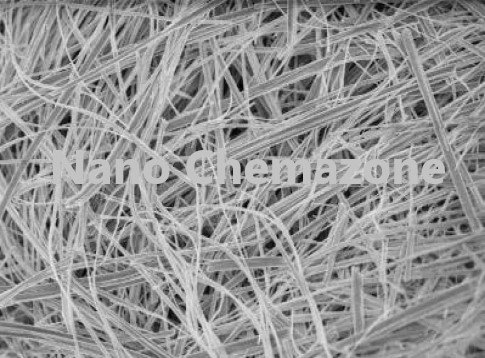
Coating and Membrane Grade Titanium Oxide Nanowires
| Chemical Formula | TiO2 |
| Stock No. | NCZNW103-19 |
| Molar mass | 79.866 g/mol |
| Density | 4.23g/cm3 |
| Melting Point | 1,843 ˚C |
| Boiling point | 2,972 ˚C |
| CAS Number | 13463-67-7 |
| Diameter | 10 nm (customization available) |
| Length | 10 µm (customization available) |
Please contact us for customization and price inquiry.
Note: We supply different size ranges of Titanium Oxide Nanowires as per the client’s requirements and also accept customization in various parameters.

Cobalt Acetate Powder
Cobalt Acetate Powder
| Product | Cobalt Acetate Powder |
| CAS No. | 71-48-7 |
| Appearance | Pale Pink to Red to Violet Crystal Powder |
| Purity | ≥99%, ≥99.9%, ≥95%(Other purities are also available) |
| APS | 1-5 µM, 10-53 µM (Can be customized), Ask for other available size range. |
| Ingredient | C4H6CoO4 |
| Density | 1.7g/cm3 |
| Molecular Weight | 177.02g/mol |
| Product Code | NCZ-CAS-142/25 |
Cobalt Acetate Description:
Cobalt Acetate Powder is one of the numerous advanced ceramic materials manufactured by Nanochemazone. Nanochemazone produces too many standard grades when applicable, including Mil Spec (military grade); ACS, Reagent and Technical Grade; Food, Agricultural and Pharmaceutical Grade; Optical Grade, USP and EP/BP (European Pharmacopoeia/British Pharmacopoeia) and follows applicable ASTM testing standards. Typical and custom packaging is available. Additional technical, research and safety (MSDS) information are available. Please request a quote above for more information on lead time and pricing.
Cobalt Acetate Powder Related Information:
Storage Conditions:
Airtight sealed, avoid light and keep dry at room temperature.
Please contact us for customization and price inquiry
Email: contact@nanochemazone.com
Note: We supply different size ranges of Nano and micron as per the client’s requirements and also accept customization in various parameters.
CAS #: 71-48-7
Linear Formula: Co(C2H3O2)2
MDL NumberMFCD00008689
EC No.:200-755-8
Cobalt Acetate Properties (Theoretical)
| Compound Formula | C4H6CoO4 |
| Molecular Weight | 177.02 |
| Appearance | Pale pink to red to violet crystals or powder |
| Melting Point | 298 °C |
| Boiling Point | N/A |
| Density | 1.7 g/cm3 |
| Solubility in H2O | Soluble |
| Exact Mass | 176.959804 |
| Monoisotopic Mass | 176.959804 |
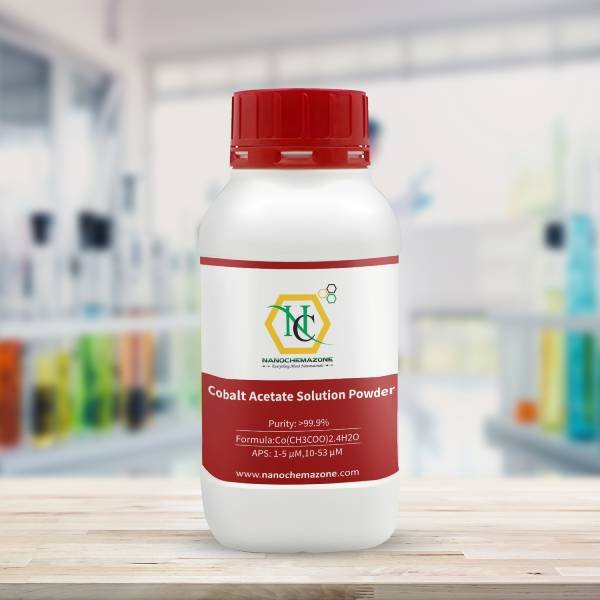
Cobalt Acetate Solution Powder
Cobalt Acetate Solution Powder
| Product | Cobalt Acetate Solution Powder |
| CAS No. | 6147-53-1 |
| Appearance | Reddish-Pink to Red-Violet Powder |
| Purity | ≥99%, ≥99.9%, ≥95%(Other purities are also available) |
| APS | 1-5 µM, 10-53 µM (Can be customized), Ask for other available size range. |
| Ingredient | Co(CH3COO)2.4H2O |
| Density | N/A |
| Molecular Weight | 249.08g/mol |
| Product Code | NCZ-CAS-143/25 |
Cobalt Acetate Solution Description:
Cobalt Acetate Powder is one of the numerous advanced ceramic materials manufactured by Nanochemazone. Nanochemazone produces too many standard grades when applicable, including Mil Spec (military grade); ACS, Reagent and Technical Grade; Food, Agricultural and Pharmaceutical Grade; Optical Grade, USP and EP/BP (European Pharmacopoeia/British Pharmacopoeia) and follows applicable ASTM testing standards. Typical and custom packaging is available. Additional technical, research and safety (MSDS) information are available. Please request a quote above for more information on lead time and pricing.
Cobalt Acetate Solution Powder Related Information:
Storage Conditions:
Airtight sealed, avoid light and keep dry at room temperature.
Please contact us for customization and price inquiry
Email: contact@nanochemazone.com
Note: We supply different size ranges of Nano and micron as per the client’s requirements and also accept customization in various parameters.
Cobalt Acetate Solution
CAS #: 6147-53-1
Linear Formula:(CH3COO)2Co • 4H2O
MDL NumberMFCD00149569
EC No.:200-755-8
Cobalt Acetate Solution Properties (Theoretical)
| Compound Formula | C4H14CoO8 |
| Molecular Weight | 249.08 |
| Appearance | Liquid |
| Melting Point | N/A |
| Boiling Point | N/A |
| Density | N/A |
| Solubility in H2O | N/A |
| Exact Mass | 249.002062 |
| Monoisotopic Mass | 249.002062 |

Cobalt Carbide Powder
Product Name: Cobalt Carbide Powder
| MF: | Tr-Co |
| Chemical Name |
Cobalt Carbide Powder |
| Color | gray |
| APS (nm) | 30 |
| Purity: | 99.9% |
| Specific surface area(m2/g) | 40-60 |
| Product Number: | NCZ-NCO-112/20 |
| Cas Number: | 7440-48-4 |
| Crystal Form | Sphere |
Cobalt Carbide Powder RELATED INFORMATION
High-density magnetic recording materials: using nanometer cobalt powder record-high density and high coercive force (up to 119.4 KA/m), signal-to-noise ratio, and oxidation resistance as well as good, can significantly improve tapes and large capacity hard disk performance. Magnetic iron, cobalt, nickel alloy powder production of magnetic and outstanding performance, can be widely applied in medical apparatus and instruments, sealing damping, sound, light show.
Please email us for the customization.
Email: contact@nanochemazone.com
Please contact us for customization and price inquiry
Note: We supply different size ranges of nano and micron size powder as per the client’s requirements and also accept customization in various parameters.

Cobalt Carbonate AR Powder
Product Name: Cobalt Carbonate AR Powder
| Product | Cobalt Carbonate AR Powder |
| CAS No. | 513-79-1 |
| Appearance | Powder |
| Purity | 99.9% |
| APS | 1 – 5 microns (can be customized) |
| Ingredient | CoCO3.xH2O |
| Product Code | NCZ-AE-251 |
RELATED INFORMATION
Storage Conditions:
Airtight sealed, avoid light, and keep dry at room temperature.
Please email us for the customization.
Email: contact@nanochemazone.com

Cobalt Chloride Hexahydrate Powder
Product Name: Cobalt Chloride Hexahydrate Powder
| Product | Cobalt Chloride Hexahydrate Powder |
| CAS No. | 7646-79-9 |
| Appearance | Powder |
| Purity | 99.9% |
| APS | 1 – 5 Microns (Can be customized) |
| Ingredient | CoCl2.6H2O |
| Product Code | NCZ-AE-132 |
DESCRIPTION
Cobalt chloride hexahydrate is a red or purple crystal. Soluble in water, soluble in ethanol, acetone and ether. Used as a paint desiccating agent, dry ammonia absorber, neutral dyes, indicator, ceramic colorants, feed additive, etc
RELATED INFORMATION
Storage Conditions:
Airtight sealed, avoid light, and keep dry at room temperature.
Please email us for the customization.
Email: contact@nanochemazone.com
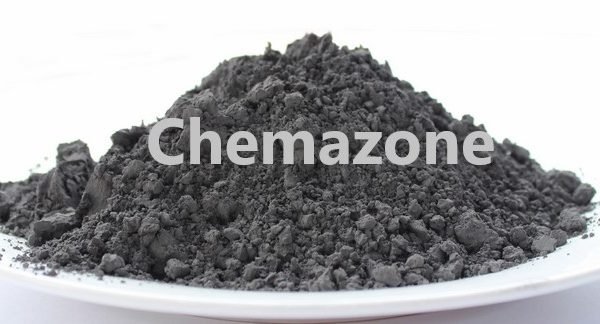
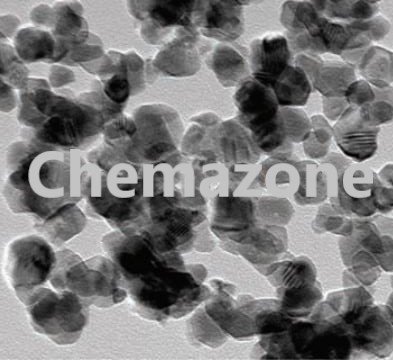
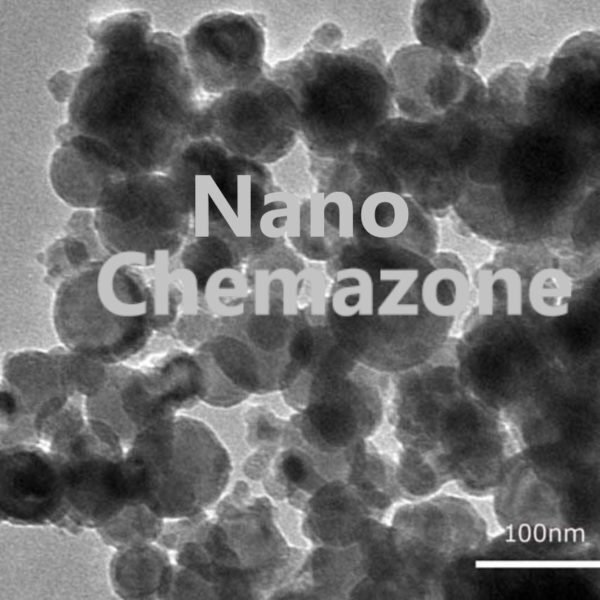
Cobalt Chromium Alloy Nanopowder
Co-Cr Alloy Nanoparticles/Nanopowder (Particle Size Less than ≤ 80 nm, 99.9%)
Cobalt Chromium Alloy Nanopowder
| Product Formula | Co: Cr |
| Product Number | NCZ-A-113-19 |
| CAS Number | 7440-48-4/7440-77-3 |
| Molecular Weight | 110.93 g/moL |
| APS | ≤ 80 nm (can be customized) |
| Purity | 99.9% |
| Color | Grayish |
| Form | Nanopowder |
| Density | 10.0 g/cm3 |
| Melting Point | 1330 °C |
| Boiling Point | 2100 °C |
Note: We can manufacture and supply different particle sizes (Nano size range, Micron, Submicron, and different Mesh size) products of Alloy powders (Multi-Element, Multi-Element Oxide and Mixture of Rare Earth Elements) according to client’s requirements. Kindly ask for the customization in size and Element ratio composition.
Cobalt Chromium Aluminum Yttrium Alloy Nanopowder
Co-Cr-Al-Y Alloy Nanoparticles/Nanopowder (Particle Size Less than ≤ 80 nm, 99.9%)
Cobalt Chromium Aluminum Yttrium Alloy Nanopowder
| Product Formula | Co: Cr: Al: Y |
| Product Number | NCZ-A-114-19 |
| Molecular Weight | 226.81 g/moL |
| APS | ≤ 80 nm (can be customized) |
| Purity | 99.9% |
| Color | Grayish |
| Form | Nanopowder |
Note: We can manufacture and supply different particle sizes (Nano size range, Micron, Submicron, and different Mesh size) products of Alloy powders (Multi-Element, Multi-Element Oxide and Mixture of Rare Earth Elements) according to client’s requirements. Kindly ask for the customization in size and Element ratio composition.


Cobalt Chromium Molybdenum Alloy Nanopowder
| MF: | Co:Cr:Mo |
| Chemical Name: |
Cobalt Chromium Molybdenum Alloy Powder |
| Purity: | > 99.99% |
| APS: | <80 nm (Size Customization possible) |
| Form: | Nanopowder |
| Product Number: | NCZA106 |
| CAS Number: | 12629-02-6 |
Size Options: also available in the micro size range and 325 Mesh, 200 Mesh, etc. (Ask for the customization)

Cobalt Disilicide Powder
Cobalt Disilicide Powder
Product Name: Cobalt Disilicide Powder
Product |
Cobalt Disilicide Powder |
| CAS No. | 12017-12-8 |
| Appearance | Gray Powder |
| Purity | 99.9% |
| APS | 1 – 5 Microns (Can be customized) |
| Ingredient | CoSi2 |
| Product Code | NCZ-NSC-129/20 |
Cobalt Disilicide Powder RELATED INFORMATION
Storage Conditions:
Airtight sealed, avoid light and keep dry at room temperature.
Please email us for the customization.
Email: contact@nanochemazone.com
Note: We supply different size ranges of nano and micron size powder as per the client’s requirements and also accept customization in various parameters.


Cobalt doped Ti3AlC2 MXene powder
Product Name: Cobalt doped Ti3AlC2 MXene powder
Product Code: NCZ-MX-105-20B
| Product | Cobalt doped Ti3AlC2 MXene powder |
| Colour | Black Powder |
| Purity | ≥98 wt% |
| Ingredient | Co@Ti3AlC2, Also available other doping such as Fe, Mn, S (Ask for the customization) |
| CAS NO | 196506-01-1 |
Cobalt doped Ti3AlC2 MXene powder APPLICATION FIELDS:
High-temperature coating, Mxene precursor, conductive self-lubricating ceramic, lithium-ion battery, supercapacitor, electrochemical catalysis.
RELATED INFORMATION
Storage Conditions:
Airtight sealed, avoid light and keep dry at room temperature.
Please email us for the customization.
Email: contact@nanochemazone.com


Cobalt Ferrite Nanoparticles
Cobalt Iron Oxide Nanopowder
Cobalt Ferrite Nanoparticles
Nano Cobalt Iron Oxide/Cobalt Ferrite powder
| MF: | CoFe2O4 |
| Chemical Name: | Cobalt Iron Oxide/Cobalt Ferrite Nanoparticles |
| Purity: | > 99.99% |
| APS: | 30 nm (Size Customization possible) |
| Form: | Nanopowder |
| Product Number: | #NCZ1901 |
| CAS Number | 12052-28-7 |
Note: We can supply different size products of microparticles and Nanoparticles Size range powder according to client’s requirements.

Cobalt Hydroxide Powder
Product Name: Cobalt Hydroxide Powder
| Product |
Cobalt Hydroxide Powder |
| CAS No. | 21041-93-0 |
| Appearance | Gray Powder |
| Purity | 99.9% |
| APS | 1 – 5 Microns (Can be customized) |
| Ingredient | Co(OH)2 |
| Product Code | NCZ-NSC-121/20 |
Cobalt Hydroxide Powder DESCRIPTION:
Cobalt salt, cobalt catalyst, and electrolytic method for producing hydrogen peroxide decomposition agent in chemical production. Coating industry as paint driers. Used as a colorant, etc. Solution for the production of cobalt salt, cobalt catalyst, storage battery electrode, and paint drying agent; glass, enamel coloring, a cobalt compound, and drying agent for paint and varnish.
RELATED INFORMATION
Storage Conditions:
Airtight sealed, avoid light and keep dry at room temperature.
Please email us for the customization.
Email: contact@nanochemazone.com
Note: We supply different size ranges of nano and micron size powder as per the client’s requirements and also accept customization in various parameters.

Cobalt Iron Alloy Powder (Nano and Micron Particle Size)


COBALT MICRO POWDER
Cobalt Metal Powder
Cobalt Metal Powder Micron and nanoparticles size range
| MF: | Co |
| Chemical Name: | Cobalt Powder |
| Purity: | > 99.99% |
| APS: | 40-50 µm (Size Customization possible) |
| Form: | Micro powder |
| Product Number: | NCZM107 |
| CAS Number | 7440-48-4 |
Note: We can supply different size products of micro and Nano Size range powder according to client’s requirements.

Cobalt MicroPowder
Cobalt Micro Powder
Product Name: Cobalt Micro Powder
| Product | Cobalt Micro Powder |
| CAS No. | 7440-48-4 |
| Appearance | Black Powder |
| Purity | 99.9% |
| APS | 40-60µm, (Can be customized) |
| Ingredient | Co |
| Product Code | NCZ-NSC339/20 |
| Molecular weight | 92.95g/mol |
| Density | 3.5g/cm3 |
Cobalt Micro Powder Description:
Cobalt is a chemical element with the symbol Co and atomic number. Like nickel, cobalt is found in the Earth's crust only in chemically combined form, save for small deposits found in alloys of natural meteoric iron.
The free element, produced by reductive smelting, is a hard, lustrous, silver-gray metal. Cobalt-based blue pigments (cobalt blue) have been used since ancient times for jewelry and paints, and to impart a distinctive blue tint to glass, but the color was later thought to be due to the known metal bismuth.
Miners had long used the name for some of the blue-pigment-producing minerals; they were so named because they were poor in known metals, and gave poisonous arsenic-containing fumes when smelted. In 1735, such ores were found to be reducible to a new metal (the first discovered since ancient times), and this was ultimately named for the kobold.
Today, some cobalt is produced specifically from one of a number of metallic-lustered ores, such as cobaltite (CoAsS). The element is, however, more usually produced as a by-product of copper and nickel mining.
The copper belt in the Democratic Republic of the Congo (DRC) and Zambia yields most of the global cobalt production.
World production in 2016 was 116,000 tonnes (according to Natural Resources Canada), and the DRC alone accounted for more than 50%. Cobalt is primarily used in lithium-ion batteries, and in the manufacture of magnetic, wear-resistant and high-strength alloys.
The compounds cobalt silicate and cobalt(II) aluminate (CoAl2O4, cobalt blue) give a distinctive deep blue color to glass, ceramics, inks, paints, and varnishes. Cobalt occurs naturally as only one stable isotope, cobalt-59. Cobalt-60 is a commercially important radioisotope, used as a radioactive tracer and for the production of high-energy gamma rays.
Cobalt Micro Powder Related Information:
Storage Conditions:
Airtight sealed, avoid light and keep dry at room temperature.
Please contact us for customization and price inquiry
Email: contact@nanochemazone.com
Note: We supply different size ranges of Nano and micron as per the client’s requirements and also accept customization in various parameters.


Cobalt Nanoparticles
Cobalt Nanopowder
Cobalt Metal Nanoparticles
Cobalt Nanoparticles
Nano Cobalt Nanopowder
| MF: | Co |
| Chemical Name: | Cobalt |
| Purity: | > 99.99% |
| APS: | 20 nm (Size Customization possible) |
| Form: | Nanopowder |
| Product Number: | #NCZ1801 |
| CAS Number | 7440-48-4 |
Note: We can supply different size products of microparticles and Nanoparticles Size range powder according to client’s requirements.

Cobalt Nanowires
| MF: | Co |
| Chemical Name: | Cobalt Nanowires |
| Purity: | > 99.99% |
| Diameter: | 200-300 nm |
| Length: | up to 200 µm |
| Form: | Nanowire |
| Product Number: | NCZW103 |
| CAS Number | 7440-48-4 |
Please contact us for customization and price inquiry.
Note: We supply different size ranges of Cobalt Nanowires as per the client’s requirements and also accept customization in various parameters.

Cobalt Powder
Product Name: Cobalt Powder
| Product | Cobalt Powder |
| CAS No. | 7440-48-4 |
| Appearance | Powder |
| Purity | 99.9% |
| APS | 1 – 5 microns (can be customized) |
| Ingredient | Co |
| Product Code | NCZ-AE-185 |
RELATED INFORMATION
Storage Conditions:
Airtight sealed, avoid light, and keep dry at room temperature.
Please email us for the customization.
Email: contact@nanochemazone.com

Cobalt Selenide Powder
Product Name: Cobalt Selenide Powder
| Product | Cobalt Selenide Powder |
| CAS No. | 1307-99-9 |
| Appearance | Black Powder |
| Purity | 99.9% |
| APS | 1 – 5 Microns (Can be customized) |
| Ingredient | CoSe |
| Product Code | NCZ-NSC-230/20 |
Cobalt Selenide Powder of Description:
Cobalt Selenide is used in a number of industrial applications including infrared detection and imaging.
Related Information:
Storage Conditions:
Airtight sealed, avoid light and keep dry at room temperature.
Please contact us for customization and price inquiry
Email: contact@nanochemazone.com
Note: We supply different size ranges of Nano and micron as per the client’s requirements and also accept customization in various parameters.

Cobalt Silica Core Shell Nanoparticles
Cobalt Silica Core Shell Nanoparticles
| MF: | Co/SiO2 |
| Chemical Name: | Cobalt Silica Core Shell Nanoparticles |
| Purity: | >99.99% |
| APS: | 80-100 nm (Size Customization possible) |
| Form: | Nanopowder/Nanodispersion |
| Product Number: | NCZCS108 |
| CAS Number: | 7440-48-4 /7631-86-9 |
Note: We supply different products of microparticles and Nanoparticles powder in all size range according to client’s requirements.
Please enquire for other core-shell particles having different thicknesses, porosities, and sizes.
If the item shown is not exactly what you require please let us know by sending us a message

Cobalt Sulfate hexahydrate Powder
Product Name: Cobalt Sulfate hexahydrate Powder
| Product |
Cobalt Sulfate hexahydrate Powder |
| CAS No. | 13586-38-4 |
| Appearance | Pink Powder |
| Purity | 99.9% |
| APS | 1 – 5 Microns (Can be customized) |
| Ingredient | (NH4)2Co(SO4)2•6H2O |
| Product Code | NCZ-NSC-260/20 |
Description:
Ammonium cobalt sulfate hexahydrate is used as spectroscopic standard, cobalt plating, catalysis, and ceramics. It is also used in pharmaceutical intermediates.
RELATED INFORMATION:
Storage Conditions:
Airtight sealed, avoid light and keep dry at room temperature.
Please contact us for customization and price inquiry
Email: contact@nanochemazone.com
Note: We supply different size ranges of Nano and micron as per the client’s requirements and also accept customization in various parameters.
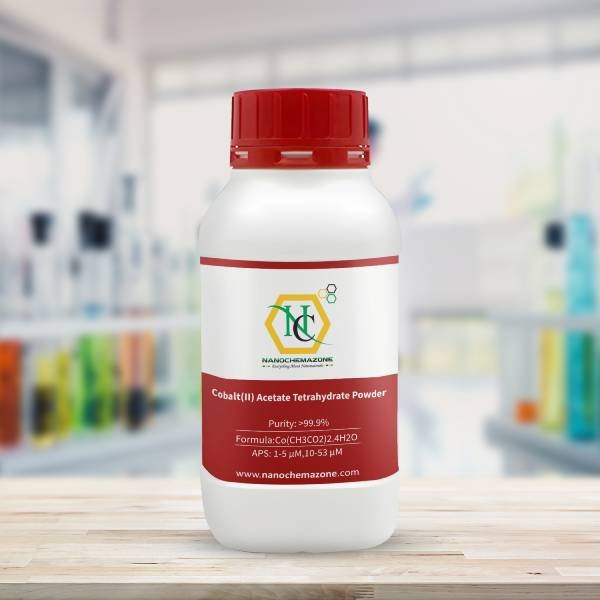
Cobalt(II) Acetate Tetrahydrate Powder
Cobalt(II) Acetate Tetrahydrate Powder
| Product | Cobalt(II) Acetate Tetrahydrate Powder |
| CAS No. | 6147-53-1 |
| Appearance | Pink to Red Powder |
| Purity | ≥99%, ≥99.9%, ≥95%(Other purities are also available) |
| APS | 1-5 µM, 10-53 µM (Can be customized), Ask for other available size range. |
| Ingredient | Co(CH3CO2)2.4H2O |
| Density | 1.71g/cm3 |
| Molecular Weight | 249.08g/mol |
| Product Code | NCZ-CAS-144/25 |
Cobalt(II) Acetate Tetrahydrate Description:
Cobalt(II) Acetate Tetrahydrate Powder is one of the numerous advanced ceramic materials manufactured by Nanochemazone. Nanochemazone produces too many standard grades when applicable, including Mil Spec (military grade); ACS, Reagent and Technical Grade; Food, Agricultural and Pharmaceutical Grade; Optical Grade, USP and EP/BP (European Pharmacopoeia/British Pharmacopoeia) and follows applicable ASTM testing standards. Typical and custom packaging is available. Additional technical, research and safety (MSDS) information are available. Please request a quote above for more information on lead time and pricing.
Cobalt(II) Acetate Tetrahydrate Powder Related Information:
Storage Conditions:
Airtight sealed,avoid light and keep dry at room temperature.
Please contact us for customization and price inquiry
Email: contact@nanochemazone.com
Note: We supply different size ranges of Nano and micron as per the client’s requirements and also accept customization in various parameters.
Cobalt(II) Acetate Tetrahydrate
CAS #: 6147-53-1
Linear Formula:(CH3COO)2Co • 4H2O
MDL Number:MFCD00149569
EC No.:200-755-8
Cobalt(II) Acetate Tetrahydrate Properties (Theoretical)
| Compound Formula | C4H14CoO8 |
| Molecular Weight | 249.08 |
| Appearance | Pink to red powder, granules, and/or chunks |
| Melting Point | 140 °C |
| Boiling Point | N/A |
| Density | 1.71 g/cm3 |
| Solubility in H2O | 380 g/l (20 °C) |
| Exact Mass | 249.002062 |
| Monoisotopic Mass | 249.002062 |
| Refractive Index | 1.542 |

CoCr28Mo6 Powder
CoCr28Mo6 Powder
| Product | CoCr28Mo6 Powder |
| CAS No. | 105525-46-0 |
| Appearance | Spherical Powder |
| Purity | ≥99%, ≥99.9%, ≥95%(Other purities are also available) |
| APS | 1-5 µM, 10-53 µM (Can be customized), Ask for other available size range. |
| Ingredient | Co-28Cr-6Mo |
| Density | 4.5-5.5g/cm3 |
| Molecular Weight | N/A |
| Product Codes | NCZ-DCY-209/25 |
CoCr28Mo6 Description:
CoCr28Mo6 Powder is one of the numerous advanced ceramic materials manufactured by Nanochemazone. Nanochemazone produces too many standard grades when applicable, including Mil Spec (military grade); ACS, Reagent and Technical Grade; Food, Agricultural and Pharmaceutical Grade; Optical Grade, USP and EP/BP (European Pharmacopoeia/British Pharmacopoeia) and follows applicable ASTM testing standards. Typical and custom packaging is available. Additional technical, research and safety (MSDS) information are available. Please request a quote above for more information on lead time and pricing
CoCr28Mo6 Powder Related Information :
Storage Conditions:
Airtight sealed, avoid light and keep dry at room temperature.
Please contact us for customization and price inquiry
Email: contact@nanochemazone.com
Note: We supply different size ranges of Nano and micron as per the client’s requirements and also accept customization in various parameters.
CoCr28Mo6 Powder
CoCr28Mo6 powder, also known as ASTM F75 alloy, is a cobalt-chromium-molybdenum alloy powder used for manufacturing of orthopedic implants due to its biocompatibility, high strength and corrosion resistance
Overview of CoCr28Mo6 Powder
CoCr28Mo6 powder, also known as ASTM F75 alloy, is a cobalt-chromium-molybdenum alloy powder used for manufacturing of orthopedic implants due to its biocompatibility, high strength and corrosion resistance.
It has excellent wear resistance and is commonly used for making hip, knee and dental implants. The “28Mo6” designation indicates it contains 28% chromium and 6% molybdenum.
Key properties and advantages:
CoCr28Mo6 Powder Properties and Characteristics
| Properties | Details |
| Composition | Co-28Cr-6Mo alloy |
| Density | 8.3 g/cc |
| Particle shape | Irregular, angular |
| Size range | 10-45 microns |
| Apparent density | 4.0-4.5 g/cc |
| Flowability | Moderate |
| Corrosion resistance | Excellent due to passive oxide layer |
| Biocompatibility | High, used for implants |
| Wear resistance | Very good due to high Cr content |
| Cost | Moderate to high |
CoCr28Mo6 powder can be used to manufacture implants using 3D printing or traditional techniques like metal injection molding. It provides an optimal combination of mechanical properties, corrosion resistance and biocompatibility.
CoCr28Mo6 Powder Composition
| Element | Weight % |
| Cobalt | Balance |
| Chromium | 27-30% |
| Molybdenum | 5-7% |
| Nickel | <1% |
| Manganese | <1% |
| Carbon | <0.35% |
| Iron | <0.75% |
| Silicon | <1% |
Cobalt provides strength, toughness, and biocompatibility
Chromium improves corrosion and wear resistance
Molybdenum contributes to high strength and hardness
Other elements like C, Ni, Mn, Fe, and Si present as impurities
CoCr28Mo6 Powder Physical Properties
| Properties | Values |
| Density | 8.3 g/cc |
| Melting point | 1350-1400°C |
| Thermal conductivity | 18 W/mK |
| Electrical resistivity | 94 μΩ-cm |
| Curie temperature | 1329°C |
| Coefficient of thermal expansion | 14.5 x 10^-6 /K |
High density compared to titanium alloys
Maintains strength at elevated temperatures
Lower thermal conductivity than pure metals
Becomes paramagnetic above Curie temperature
CTE higher than other competing alloys
These properties make it suitable for high temperature load bearing implant applications requiring corrosion resistance.
CoCr28Mo6 Powder Mechanical Properties
| Properties | Values |
| Hardness | 35-45 HRC |
| Tensile strength | 170-220 ksi (1170-1510 MPa) |
| Yield strength | 140-180 ksi (965-1240 MPa) |
| Elongation | 8-16% |
| Modulus of elasticity | 230-300 GPa |
| Fatigue strength | 50 ksi (345 MPa) |
Excellent combination of strength and ductility
Strength levels exceed requirements for load bearing implants
Hardness provides good wear and abrasion resistance
High fatigue strength ensures durability under cyclic loading
The mechanical properties make CoCr28Mo6 suitable for orthopedic implants experiencing high static and dynamic loads
CoCr28Mo6 Powder Applications
| Application | Examples |
| Orthopedic implants | Hip, knee, dental implants |
| Medical devices | Surgical tools, instruments |
| Aerospace | Turbine engine components |
| Automotive | Fuel injection parts |
| Industrial | Valves, tooling, molds |
Some specific product uses:
Articulating surfaces in joint replacement implants
Dental crowns, bridges and root implants
Orthopedic fixation devices like bone plates
High temperature resistant aerospace engine components
Automotive fuel injection nozzles
Cutting tools, gaskets, valves requiring wear resistance
The biocompatibility, corrosion resistance and tribological properties make CoCr28Mo6 highly suitable for orthopedic and dental applications.
CoCr28Mo6 Powder Standards
| Standard | Description |
| ASTM F75 | Wrought Co-Cr-Mo alloy for surgical implants |
| ASTM F1537 | Specification for wrought Co-Cr-Mo alloy for dental appliances |
| ISO 5832-4 | Implant grade wrought Co-Cr-Mo-Ni alloy |
| ASTM F3056 | Specification for additive manufacturing CoCr alloy for orthopedic implants |
These standards specify:
Chemical composition limits
Mechanical property requirements
Production method (gas atomization)
Acceptable impurity levels
Quality assurance processes
Test methods to verify powder properties
Meeting these requirements ensures suitability for orthopedic implant applications.
CoCr28Mo6 Powder Particle Size Distribution
| Particle size | Characteristics |
| 10-25 microns | Used for laser powder bed fusion (LPBF) |
| 25-45 microns | Used for binder jetting and DMLS |
| 15-45 microns | Used for metal injection molding |
Finer powder provides better resolution and surface finish in AM
Coarser powder improves flowability for powder processing
Size range selection depends on production technique used
Tight control over particle size distribution is maintained
Controlling particle size and morphology is critical for high powder packing density and optimized sintering.
CoCr28Mo6 Powder Apparent Density
| Apparent density | Characteristics |
| 4.0 – 4.5 g/cc | Irregular powder morphology |
| 35-45% of true density | Due to voids between particles |
Higher apparent density improves powder flow and compressibility
Irregular shape and wide size distribution reduces packed density
Values up to 60% are possible with optimized spherical powder
Higher apparent density allows efficient powder pressing and sintering to full density. It improves manufacturing productivity.
CoCr28Mo6 Powder Production
| Method | Details |
| Gas atomization | High pressure inert gas breaks up molten alloy stream into fine droplets |
| Vacuum induction melting | High purity starting materials melted under vacuum |
| Multiple remelting | Improves chemical homogeneity |
| Sieving | Classifies powder into different size fractions |
| Blending | Different powder sizes blended to customize particle size distribution |
Gas atomization produces fine spherical powder morphology
Vacuum melting and multiple remelting minimize impurities
Post-processing provides fine control over particle size distribution
Automated production and strict process control ensures reliable and consistent properties of CoCr28Mo6 powder.
CoCr28Mo6 Powder Handling and Safety
| Recommendation | Reason |
| Avoid inhalation | Due to risk of lung tissue damage from fine particles |
| Use protective masks | Prevent accidental ingestion |
| Handle in ventilated areas | Reduce airborne particle circulation |
| Use hazmat suits | Minimize skin contact |
| Ensure no ignition sources | Powder can combust in oxygen |
| Follow anti-static protocols | Prevent fire from static discharge |
| Use non-sparking tools | Avoid possibility of ignition during handling |
| Store in sealed containers | Prevent contamination and oxidation |
CoCr28Mo6 powder is relatively inert but general precautions are recommended for safe handling and processing.
CoCr28Mo6 Powder Inspection and Testing
| Test | Details |
| Chemical analysis | Verifies composition using ICP spectroscopy |
| Particle size distribution | Determines distribution using sieve analysis |
| Apparent density | Measured as per ASTM B212 standard |
| Powder morphology | SEM image analysis |
| Flow rate analysis | Time taken for fixed powder quantity to flow through funnel |
| Tap density test | Density measured after mechanical tapping |
Rigorous testing ensures consistent powder quality and compliance with specifications like ASTM F75 for medical grade powder.
CoCr28Mo6 Powder Storage and Handling
| Factor | Effect |
| Air, oxygen | Risk of oxidation at high temperatures |
| Moisture | Low corrosion rate at room temperature |
| Hydrocarbons | Fire hazard if allowed to contaminate powder |
| Acids, alkalis | Resistant to dilute acids and bases |
| Organic solvents | Some absorption and staining if immersed |
| Temperatures above 400°C | Increased oxidation rate in air |
Recommendations:
Store sealed in inert gas filled containers
Keep below 30°C temperature
Avoid contact with oxidizing acids and chlorinated solvents
Open containers only in controlled environments
With proper precautions, CoCr28Mo6 powder exhibits good stability during storage and handling.
Comparison With Stainless Steel Powder
| Parameter | CoCr28Mo6 | Stainless Steel |
| Density | 8.3 g/cc | 7.9 g/cc |
| Tensile strength | 1170-1510 MPa | 600-1100 MPa |
| Ductility | 8-16% | 15-40% |
| Corrosion resistance | Excellent | Good |
| Wear resistance | Excellent | Moderate |
| Biocompatibility | High | Moderate |
| Cost | High | Low |
| Uses | Medical implants, aerospace | Industrial applications |
CoCr28Mo6 has higher strength and hardness
Stainless steel provides better ductility and toughness
CoCr28Mo6 is more corrosion resistant
CoCr28Mo6 is preferred for biomedical applications
Stainless steel is more cost-effective
CoCr28Mo6 outperforms stainless steel for applications requiring high strength, hardness and corrosion resistance.
CoCr28Mo6 Powder Pros and Cons
Advantages of CoCr28Mo6 Powder
Excellent biocompatibility and corrosion resistance
High strength and hardness
Good wear resistance
High temperature capability
Can be processed using AM or MIM techniques
Suitable for load-bearing implant applications
Provides good aesthetic appearance
Limitations of CoCr28Mo6 Powder
More expensive than stainless steel or titanium alloys
Lower ductility and fracture toughness
Requires protective atmosphere during processing
Difficult to machine compared to other alloys
Limitations in joining and welding the material
Release of Co ions in body raises health concerns
CoCr28Mo6 Powder FAQs
Q: What are the main applications of CoCr28Mo6 powder?
A: The main applications are orthopedic joint replacement implants like hips and knees, dental implants and crowns, surgical instruments, and high performance aerospace components.
Q: What gives CoCr28Mo6 excellent corrosion resistance?
A: The high chromium content enables formation of a stable, continuous and self-healing protective oxide layer on the surface preventing corrosion.
Q: What are the key differences between medical and industrial grades of CoCr28Mo6 powder?
A: Medical grade powder has higher purity, lower impurities, finer particle size, better size distribution control, and goes through more rigorous testing to meet standards.
Q: What precautions are required during storage and handling of CoCr28Mo6 powder?
A: Recommended precautions include avoiding inhalation, using protective gear, ensuring proper ventilation, controlling static discharge, using non-sparking tools, and storing in sealed inert gas purged containers.

CoCrFeNi Powder
CoCrFeNi Powder
| Product | CoCrFeNi Powder |
| CAS No. | N/A |
| Appearance | Gray Powder |
| Purity | ≥99%, ≥99.9%, ≥95%(Other purities are also available) |
| APS | 1-5 µM, 10-53 µM (Can be customized), Ask for other available size range. |
| Ingredient | Co-Cr-Fe-Ni |
| Density | 7.5-8.3g/cm3 |
| Molecular Weight | N/A |
| Product Codes | NCZ-DCY-325/25 |
CoCrFeNi Description:
CoCrFeNi Powder is one of the numerous advanced ceramic materials manufactured by Nanochemazone. Nanochemazone produces too many standard grades when applicable, including Mil Spec (military grade); ACS, Reagent and Technical Grade; Food, Agricultural and Pharmaceutical Grade; Optical Grade, USP and EP/BP (European Pharmacopoeia/British Pharmacopoeia) and follows applicable ASTM testing standards. Typical and custom packaging is available. Additional technical, research and safety (MSDS) information are available. Please request a quote above for more information on lead time and pricing.
CoCrFeNi Powder Related Information :
Storage Conditions:
Airtight sealed, avoid light and keep dry at room temperature.
Please contact us for customization and price inquiry
Email: contact@nanochemazone.com
Note: We supply different size ranges of Nano and micron as per the client’s requirements and also accept customization in various parameters.
CoCrFeNi Powder
CoCrFeNi powder, also known as CoCrFeNiMn powder or high entropy alloy (HEA) powder, refers to a material composed of cobalt, chromium, iron, and nickel elements in near-equiatomic ratios. This novel alloy powder displays exceptional properties compared to conventional alloys and has garnered significant interest for various applications.
Overview of CoCrFeNi Powder
CoCrFeNi powder, also known as CoCrFeNiMn powder or high entropy alloy (HEA) powder, refers to a material composed of cobalt, chromium, iron, and nickel elements in near-equiatomic ratios. This novel alloy powder displays exceptional properties compared to conventional alloys and has garnered significant interest for various applications.
Some key features of CoCrFeNi powder include:
High configurational entropy leading to outstanding strength, hardness, thermal stability, and corrosion resistance
Single solid-solution FCC phase microstructure
Excellent strength-ductility combination
High fracture toughness
Good machinability and formability
Resistance to softening at elevated temperatures
Customizable with minor additions of elements like manganese
The unique disorder in the atomic arrangement of CoCrFeNi imparts superior mechanical performance. The near-equal concentrations of the main elements hinder dislocation movement, improving hardness. The multiphase structure provides solid solution strengthening through lattice strain effects.
Composition of CoCrFeNi Powder
The composition of CoCrFeNi HEA powder can be tailored but generally consists of:
| Element | Typical Composition Range |
| Cobalt (Co) | 20-35 at.% |
| Chromium (Cr) | 20-35 at.% |
| Iron (Fe) | 20-35 at.% |
| Nickel (Ni) | 20-35 at.% |
The equiatomic ratio provides maximum configurational entropy but minor deviations do not significantly affect properties. Additions of 1-2 at.% of manganese are common to further improve properties through grain refinement and precipitation strengthening.
CoCrFeNi alloy powder exhibits a unique combination of outstanding properties:
| Property | Values |
| Density | 7.5-8.3 g/cm3 |
| Melting Point | >1200°C |
| Microhardness | 2.5-4 GPa |
| Ultimate Tensile Strength | 500-1300 MPa |
| Yield Strength | 200-1100 MPa |
| Elongation | 10-60% |
| Young’s Modulus | 150-250 GPa |
| Shear Modulus | 65-85 GPa |
| Poisson’s Ratio | 0.21-0.33 |
| Fracture Toughness | >100 MPa√m |
| Thermal Conductivity | 10-30 W/mK |
| Electrical Resistivity | 70-100 nΩm |
| Corrosion Resistance | Excellent in various environments |
The high hardness arises from solid solution strengthening while the FCC structure imparts good ductility. The properties can be tailored through composition adjustments and processing.
Characteristics of CoCrFeNi Powder
Some salient characteristics of CoCrFeNi alloy powder include:
Single phase FCC structure lacking intermetallic phases
Annealing twins and stacking faults present
Equiaxed powder morphology with good flowability
Powder size distribution ranging from 15-150 μm
High purity with low oxygen content
Spherical powder shape and smooth surface
Customizable powder size, shape, and composition
The powder exhibits high chemical homogeneity with a uniform distribution of alloying elements. The spherical morphology provides good packing and flow characteristics.
Applications of CoCrFeNi Powder
The exceptional combination of strength, toughness, and processability of CoCrFeNi powder makes it suitable for:
Additive Manufacturing: Excellent printability due to good flow and melting characteristics. Used for aerospace, tooling, and biomedical implants.
Thermal Spray Coatings: Resistance to wear, corrosion, and thermal softening. Coatings for mechanical, marine, and chemical applications.
Alloy Development: Base material for new high entropy alloys with additions of Al, Ti, etc.
Metal Injection Molding: High stiffness parts with good dimensional stability for aviation and automotive.
Powder Metallurgy: High performance P/M parts with balanced strength and ductility.
Cryogenic Applications: Retention of ductility and toughness at subzero temperatures.
Specifications of CoCrFeNi Powder
CoCrFeNi alloy powder is available in various size ranges, compositions, and forms:
| Parameter | Variants |
| Size range | 15-25 μm, 25-45 μm, 45-75 μm, 75-105 μm, 105-150 μm |
| Composition | Equiatomic, custom elemental ratios |
| Powder shape | Spherical, irregular |
| Production method | Gas/water atomization, mechanical alloying |
| Supply form | Loose powder, sintered preforms |
Larger powder sizes of 45-150 μm are preferred for thermal spray and metal injection molding. Finer 15-45 μm sizes are used for additive manufacturing. Powders can be customized in shape, size, oxygen content, and flowability.
Pros and Cons of CoCrFeNi Powder
| Advantages | Limitations |
| Outstanding strength and hardness | High material costs due to Co and Ni |
| Excellent ductility and toughness | Limited data on long-term performance |
| Good fabricability by AM, MIM, PM | Processing challenges with microstructural control |
| Thermal and microstructural stability | Composition must be precisely controlled |
| High corrosion and wear resistance | Lower processability than conventional alloys |
| Retains strength at elevated temperatures | Often requires HIP post-processing |
CoCrFeNi HEA powder enables components with unmatched property combinations. However, the material and processing costs are high. Microstructure and properties depend heavily on precise composition control.
Comparison with Alternatives
Vs. Stainless Steel Powders
Higher strength and hardness
Superior wear and corrosion resistance
More expensive base material cost
Lower processability and weldability
Vs. Tool Steel Powders
Better ductility and fracture toughness
Lower high-temperature strength
Less established processing methods
Limited size and alloy variant availability
Vs. Inconel Superalloy Powders
Comparable high-temperature strength
Lower cost material
Shorter track record of performance
Restricted microstructural stability at very high temperatures
FAQs
Q: What is high entropy alloy (HEA) powder?
A: HEA powder contains multiple principal elements in near-equiatomic ratios to produce exceptional properties of strength, ductility, and stability. CoCrFeNi powder is a leading HEA.
Q: What are the typical sizes of CoCrFeNi powder available?
A: Common size ranges are 15-45 μm for AM, 45-105 μm for thermal spraying, and 105-150 μm for MIM and other applications. Finer and coarser sizes can be customized.
Q: What affects the price of CoCrFeNi alloy powder?
A: Powder size, composition, purity, production method, and order quantity determine pricing. Larger sizes over 100 μm cost less. Minor additions or tighter composition ranges increase cost.
Q: How is CoCrFeNi HEA powder produced?
A: Gas atomization and water atomization are the main production methods. The powder can also be made by mechanical alloying or cryomilling of prealloyed ingots.
Q: What are some example applications of CoCrFeNi powder?
A: Leading uses are additive manufacturing of tooling and aerospace components, thermal spray coatings for wear/corrosion resistance, alloy development, metal injection molding of automotive parts, and powder metallurgy of high-performance components.
Q: What are the key properties of CoCrFeNi HEA powder?
A: It exhibits an exceptional combination of high strength, hardness, ductility, fracture toughness, thermal stability, and corrosion resistance compared to conventional alloys.
Q: What are the limitations of CoCrFeNi powder?
A: High base material cost, processing challenges in controlling microstructure, limited long-term performance data, reduced weldability compared to steels are some disadvantages.
Q: How does CoCrFeNi powder compare with tool steels and stainless steels?
A: It has vastly higher strength and hardness but lower processability than stainless steels. Compared to tool steels, it provides superior fracture toughness and ductility.
Q: Is CoCrFeNi suitable for cryogenic applications?
A: Yes, it retains good ductility and toughness at sub-zero temperatures while conventional alloys become brittle. This makes it useful for cryogenic equipment.
Q: Can the composition of CoCrFeNi powder be customized?
A: Yes, suppliers can provide custom elemental ratios beyond the equiatomic composition. Common adjustments are 1-2 at.% Mn or Co additions to tailor the properties.
CoCrFeNi Powder
CoCrFeNi Powder
| Product | CoCrFeNi Powder |
| CAS No. | N/A |
| Appearance | Spherical Powder |
| Purity | ≥99%, ≥99.9%, ≥95%(Other purities are also available) |
| APS | 1-5 µM, 10-53 µM (Can be customized), Ask for other available size range. |
| Ingredient | Co-Cr-Fe-Ni |
| Density | 7.5-8.3g/cm3 |
| Molecular Weight | N/A |
| Product Codes | NCZ-DCY-210/25 |
CoCrFeNi Description:
CoCrFeNi Powder is one of the numerous advanced ceramic materials manufactured by Nanochemazone. Nanochemazone produces too many standard grades when applicable, including Mil Spec (military grade); ACS, Reagent and Technical Grade; Food, Agricultural and Pharmaceutical Grade; Optical Grade, USP and EP/BP (European Pharmacopoeia/British Pharmacopoeia) and follows applicable ASTM testing standards. Typical and custom packaging is available. Additional technical, research and safety (MSDS) information are available. Please request a quote above for more information on lead time and pricing
CoCrFeNi Powder Related Information :
Storage Conditions:
Airtight sealed, avoid light and keep dry at room temperature.
Please contact us for customization and price inquiry
Email: contact@nanochemazone.com
Note: We supply different size ranges of Nano and micron as per the client’s requirements and also accept customization in various parameters.
CoCrFeNi Powder
CoCrFeNi powder, also known as CoCrFeNiMn powder or high entropy alloy (HEA) powder, refers to a material composed of cobalt, chromium, iron, and nickel elements in near-equiatomic ratios. This novel alloy powder displays exceptional properties compared to conventional alloys and has garnered significant interest for various applications.
Overview of CoCrFeNi Powder
CoCrFeNi powder, also known as CoCrFeNiMn powder or high entropy alloy (HEA) powder, refers to a material composed of cobalt, chromium, iron, and nickel elements in near-equiatomic ratios. This novel alloy powder displays exceptional properties compared to conventional alloys and has garnered significant interest for various applications.
Some key features of CoCrFeNi powder include:
High configurational entropy leading to outstanding strength, hardness, thermal stability, and corrosion resistance
Single solid-solution FCC phase microstructure
Excellent strength-ductility combination
High fracture toughness
Good machinability and formability
Resistance to softening at elevated temperatures
Customizable with minor additions of elements like manganese
The unique disorder in the atomic arrangement of CoCrFeNi imparts superior mechanical performance. The near-equal concentrations of the main elements hinder dislocation movement, improving hardness. The multiphase structure provides solid solution strengthening through lattice strain effects.
Composition of CoCrFeNi Powder
The composition of CoCrFeNi HEA powder can be tailored but generally consists of:
| Element | Typical Composition Range |
| Cobalt (Co) | 20-35 at.% |
| Chromium (Cr) | 20-35 at.% |
| Iron (Fe) | 20-35 at.% |
| Nickel (Ni) | 20-35 at.% |
The equiatomic ratio provides maximum configurational entropy but minor deviations do not significantly affect properties. Additions of 1-2 at.% of manganese are common to further improve properties through grain refinement and precipitation strengthening.
Properties of CoCrFeNi Powder
CoCrFeNi alloy powder exhibits a unique combination of outstanding properties:
| Property | Values |
| Density | 7.5-8.3 g/cm3 |
| Melting Point | >1200°C |
| Microhardness | 2.5-4 GPa |
| Ultimate Tensile Strength | 500-1300 MPa |
| Yield Strength | 200-1100 MPa |
| Elongation | 10-60% |
| Young’s Modulus | 150-250 GPa |
| Shear Modulus | 65-85 GPa |
| Poisson’s Ratio | 0.21-0.33 |
| Fracture Toughness | >100 MPa√m |
| Thermal Conductivity | 10-30 W/mK |
| Electrical Resistivity | 70-100 nΩm |
| Corrosion Resistance | Excellent in various environments |
The high hardness arises from solid solution strengthening while the FCC structure imparts good ductility. The properties can be tailored through composition adjustments and processing.
Characteristics of CoCrFeNi Powder
Some salient characteristics of CoCrFeNi alloy powder include:
Single phase FCC structure lacking intermetallic phases
Annealing twins and stacking faults present
Equiaxed powder morphology with good flowability
Powder size distribution ranging from 15-150 μm
High purity with low oxygen content
Spherical powder shape and smooth surface
Customizable powder size, shape, and composition
The powder exhibits high chemical homogeneity with a uniform distribution of alloying elements. The spherical morphology provides good packing and flow characteristics.
Applications of CoCrFeNi Powder
The exceptional combination of strength, toughness, and processability of CoCrFeNi powder makes it suitable for:
Additive Manufacturing: Excellent printability due to good flow and melting characteristics. Used for aerospace, tooling, and biomedical implants.
Thermal Spray Coatings: Resistance to wear, corrosion, and thermal softening. Coatings for mechanical, marine, and chemical applications.
Alloy Development: Base material for new high entropy alloys with additions of Al, Ti, etc.
Metal Injection Molding: High stiffness parts with good dimensional stability for aviation and automotive.
Powder Metallurgy: High performance P/M parts with balanced strength and ductility.
Cryogenic Applications: Retention of ductility and toughness at subzero temperatures.
Specifications of CoCrFeNi Powder
CoCrFeNi alloy powder is available in various size ranges, compositions, and forms:
| Parameter | Variants |
| Size range | 15-25 μm, 25-45 μm, 45-75 μm, 75-105 μm, 105-150 μm |
| Composition | Equiatomic, custom elemental ratios |
| Powder shape | Spherical, irregular |
| Production method | Gas/water atomization, mechanical alloying |
| Supply form | Loose powder, sintered preforms |
Larger powder sizes of 45-150 μm are preferred for thermal spray and metal injection molding. Finer 15-45 μm sizes are used for additive manufacturing. Powders can be customized in shape, size, oxygen content, and flowability.
Pros and Cons of CoCrFeNi Powder
| Advantages | Limitations |
| Outstanding strength and hardness | High material costs due to Co and Ni |
| Excellent ductility and toughness | Limited data on long-term performance |
| Good fabricability by AM, MIM, PM | Processing challenges with microstructural control |
| Thermal and microstructural stability | Composition must be precisely controlled |
| High corrosion and wear resistance | Lower processability than conventional alloys |
| Retains strength at elevated temperatures | Often requires HIP post-processing |
CoCrFeNi HEA powder enables components with unmatched property combinations. However, the material and processing costs are high. Microstructure and properties depend heavily on precise composition control.
Comparison with Alternatives
Vs. Stainless Steel Powders
Higher strength and hardness
Superior wear and corrosion resistance
More expensive base material cost
Lower processability and weldability
Vs. Tool Steel Powders
Better ductility and fracture toughness
Lower high-temperature strength
Less established processing methods
Limited size and alloy variant availability
Vs. Inconel Superalloy Powders
Comparable high-temperature strength
Lower cost material
Shorter track record of performance
Restricted microstructural stability at very high temperatures
FAQs
Q: What is high entropy alloy (HEA) powder?
A: HEA powder contains multiple principal elements in near-equiatomic ratios to produce exceptional properties of strength, ductility, and stability. CoCrFeNi powder is a leading HEA.
Q: What are the typical sizes of CoCrFeNi powder available?
A: Common size ranges are 15-45 μm for AM, 45-105 μm for thermal spraying, and 105-150 μm for MIM and other applications. Finer and coarser sizes can be customized.
Q: What affects the price of CoCrFeNi alloy powder?
A: Powder size, composition, purity, production method, and order quantity determine pricing. Larger sizes over 100 μm cost less. Minor additions or tighter composition ranges increase cost.
Q: How is CoCrFeNi HEA powder produced?
A: Gas atomization and water atomization are the main production methods. The powder can also be made by mechanical alloying or cryomilling of prealloyed ingots.
Q: What are some example applications of CoCrFeNi powder?
A: Leading uses are additive manufacturing of tooling and aerospace components, thermal spray coatings for wear/corrosion resistance, alloy development, metal injection molding of automotive parts, and powder metallurgy of high-performance components.
Q: What are the key properties of CoCrFeNi HEA powder?
A: It exhibits an exceptional combination of high strength, hardness, ductility, fracture toughness, thermal stability, and corrosion resistance compared to conventional alloys.
Q: What are the limitations of CoCrFeNi powder?
A: High base material cost, processing challenges in controlling microstructure, limited long-term performance data, reduced weldability compared to steels are some disadvantages.
Q: How does CoCrFeNi powder compare with tool steels and stainless steels?
A: It has vastly higher strength and hardness but lower processability than stainless steels. Compared to tool steels, it provides superior fracture toughness and ductility.
Q: Is CoCrFeNi suitable for cryogenic applications?
A: Yes, it retains good ductility and toughness at sub-zero temperatures while conventional alloys become brittle. This makes it useful for cryogenic equipment.
Q: Can the composition of CoCrFeNi powder be customized?
A: Yes, suppliers can provide custom elemental ratios beyond the equiatomic composition. Common adjustments are 1-2 at.% Mn or Co additions to tailor the properties.

CoCrMo Powder
CoCrMo Powder
| Product | CoCrMo Powder |
| CAS No. | N/A |
| Appearance | Spherical Powder |
| Purity | ≥99%, ≥99.9%, ≥95%(Other purities are also available) |
| APS | 1-5 µM, 10-53 µM (Can be customized), Ask for other available size range. |
| Ingredient | CoCrMo |
| Density | 8.3g/cm3 |
| Molecular Weight | N/A |
| Product Codes | NCZ-DCY-211/25 |
CoCrMo Description:
CoCrMo Powder is one of the numerous advanced ceramic materials manufactured by Nanochemazone. Nanochemazone produces too many standard grades when applicable, including Mil Spec (military grade); ACS, Reagent and Technical Grade; Food, Agricultural and Pharmaceutical Grade; Optical Grade, USP and EP/BP (European Pharmacopoeia/British Pharmacopoeia) and follows applicable ASTM testing standards. Typical and custom packaging is available. Additional technical, research and safety (MSDS) information are available. Please request a quote above for more information on lead time and pricing
CoCrMo Powder Related Information :
Storage Conditions:
Airtight sealed, avoid light and keep dry at room temperature.
Please contact us for customization and price inquiry
Email: contact@nanochemazone.com
Note: We supply different size ranges of Nano and micron as per the client’s requirements and also accept customization in various parameters.
CoCrMo Powder
CoCrMo is a cobalt-chromium-molybdenum alloy powder widely used in metal additive manufacturing for biomedical, dental, aerospace, and industrial applications needing wear resistance and biocompatibility.
Overview of CoCrMo Powder
CoCrMo is a cobalt-chromium-molybdenum alloy powder widely used in metal additive manufacturing for biomedical, dental, aerospace, and industrial applications needing wear resistance and biocompatibility.
This article provides a detailed guide to CoCrMo powder covering composition, properties, AM process parameters, applications, specifications, suppliers, handling, inspection, comparisons, pros and cons, and FAQs. Key information is presented in easy-to-reference tables.
Composition of CoCrMo Powder
| Element | Weight % | Purpose |
| Cobalt | 58-69 | Matrix element, biocompatibility |
| Chromium | 26-30 | Corrosion resistance, wear resistance |
| Molybdenum | 5-7 | Strength, wear resistance |
| Carbon | 0.05-0.35 | Carbide former |
| Silicon | 1 max | Deoxidizer |
| Manganese | 1 max | Deoxidizer |
| Iron | 0.75 max | Contamination limit |
The high cobalt content provides biocompatibility while chromium and molybdenum impart strength and wear resistance.
Properties of CoCrMo Powder
| Property | Description |
| Biocompatibility | Excellent compatibility with human body tissues |
| Wear resistance | High abrasion and sliding wear resistance |
| Corrosion resistance | Resistant to body fluids and many chemicals |
| Strength | Tensile strength up to 1310 MPa when work hardened |
| Hardness | Up to 54 HRC when age hardened |
| Fatigue strength | Suitable for cyclical dynamic loading |
The properties enable use for load-bearing implants and devices.
AM Process Parameters for CoCrMo Powder
| Parameter | Typical value | Purpose |
| Layer height | 20-50 μm | Resolution vs build speed |
| Laser power | 150-400 W | Melting condition without vaporization |
| Scan speed | 400-1200 mm/s | Density versus production rate |
| Hatch spacing | 80-120 μm | Mechanical properties |
| Supports | Tree or lattice | Overhangs, internal channels |
| Hot isostatic pressing | 1220°C, 100 MPa, 3 hrs | Eliminate porosity |
Parameters tailored for density, microstructure, build rate and post-processing requirements.
Applications of 3D Printed CoCrMo Parts
| Industry | Applications |
| Medical | Knee/hip implants, dental crowns, surgical tools |
| Aerospace | Turbine blades, engine components |
| Automotive | Valve seats, turbocharger wheels |
| Industrial | Wear-resistant tooling, flanges, seals |
| Oil and gas | Valve parts, pumps |
Benefits versus wrought CoCrMo include complex geometries, customized implants, reduced costs and lead times.
Specifications of CoCrMo Powder for AM
| Parameter | Specification |
| Particle size range | 15-45 μm typical |
| Particle shape | Spherical morphology |
| Apparent density | > 4 g/cc |
| Tap density | > 6 g/cc |
| Hall flow rate | > 23 sec for 50 g |
| Purity | >99.9% |
| Oxygen content | <1000 ppm |
Custom size distributions and controlled moisture levels available.
Handling and Storage of CoCrMo Powder
As a reactive material, careful CoCrMo powder handling is essential:
Store sealed containers away from moisture, acids, ignition sources
Prevent exposure to air and use inert gas padding
Ground equipment to dissipate static charges
Avoid dust accumulation and use dust extraction
Local exhaust ventilation recommended
Follow safety data sheet precautions
Proper techniques ensure optimal powder condition.
Inspection and Testing of CoCrMo Powder
| Method | Parameters Tested |
| Sieve analysis | Particle size distribution |
| SEM imaging | Particle morphology |
| EDX | Chemistry and composition |
| XRD | Phases present |
| Pycnometry | Density |
| Hall flow rate | Powder flowability |
Testing per ASTM standards verifies powder quality and batch consistency.
Comparing CoCrMo to Alternative Alloy Powders
| Alloy | Biocompatibility | Strength | Cost | Printability |
| CoCrMo | Excellent | Medium | Medium | Good |
| Titanium Ti64 | Good | Low | High | Fair |
| Stainless steel 316L | Good | Medium | Medium | Excellent |
| Inconel 718 | Poor | High | High | Good |
CoCrMo provides the best combination of biocompatibility, strength, and printability for many applications.
Pros and Cons of CoCrMo Powder for AM
| Pros | Cons |
| Excellent biocompatibility and corrosion resistance | Limited high temperature capability |
| Very good wear and abrasion resistance | Susceptible to porosity during printing |
| Readily 3D printable and weldable | Requires controlled atmosphere handling |
| Cost advantage versus titanium alloys | Post-processing often needed |
| Can match wrought material properties | Lower fracture toughness than stainless steels |
CoCrMo enables functional metal implants and components, albeit with controlled processing requirements.
Frequently Asked Questions about CoCrMo Powder
Q: What particle size range works best for 3D printing CoCrMo alloy?
A: A typical range is 15-45 microns. It provides good powder flowability combined with high resolution and density.
Q: What post-processing methods are used on CoCrMo AM parts?
A: Hot isostatic pressing, heat treatment, surface machining, and polishing are commonly used post-processes for achieving full density and surface finish.
Q: Which metal 3D printing processes are compatible with CoCrMo alloy?
A: Selective laser melting (SLM), direct metal laser sintering (DMLS) and electron beam melting (EBM) can all process CoCrMo powder.
Q: What industries use additively manufactured CoCrMo components?
A: Medical, dental, aerospace, automotive, oil and gas, and industrial sectors benefit from 3D printed CoCrMo parts.
Q: Does CoCrMo require support structures during 3D printing?
A: Yes, supports are needed on overhangs and internal channels to prevent deformation and allow easy removal after printing.
Q: What defects can occur when printing CoCrMo powder?
A: Potential defects are porosity, cracking, distortion, incomplete fusion, and surface roughness. Most can be prevented with optimized parameters.
Q: What type of biocompatibility testing is done on CoCrMo alloys?
A: Cytotoxicity, sensitization, irritation, systemic toxicity, genotoxicity, and implantation testing per standard.
Q: How are the properties of printed CoCrMo compared to cast alloy?
A: AM CoCrMo components can achieve mechanical properties on par or better than cast and annealed counterparts when optimized.
Q: What are the main differences between CoCr F75 and SP2 alloys?
A: F75 has higher carbon for better machinability while SP2 has lower carbon plus niobium for improved particle melting behavior during printing.
Q: What density can be expected with 3D printed CoCrMo components?
A: Density above 99% is achievable for CoCrMo with ideal parameters tailored for the alloy, matching wrought material properties.

CoCrMoW Powder
CoCrMoW Powder
| Product | CoCrMoW Powder |
| CAS No. | N/A |
| Appearance | Gray Powder |
| Purity | ≥99%, ≥99.9%, ≥95%(Other purities are also available) |
| APS | 1-5 µM, 10-53 µM (Can be customized), Ask for other available size range. |
| Ingredient | Co-Cr-Mo-W |
| Density | 8.3-9.2g/cm3 |
| Molecular Weight | N/A |
| Product Codes | NCZ-DCY-213/25 |
CoCrMoW Description:
CoCrMoW Powder is one of the numerous advanced ceramic materials manufactured by Nanochemazone. Nanochemazone produces too many standard grades when applicable, including Mil Spec (military grade); ACS, Reagent and Technical Grade; Food, Agricultural and Pharmaceutical Grade; Optical Grade, USP and EP/BP (European Pharmacopoeia/British Pharmacopoeia) and follows applicable ASTM testing standards. Typical and custom packaging is available. Additional technical, research and safety (MSDS) information are available. Please request a quote above for more information on lead time and pricing
CoCrMoW Powder Related Information :
Storage Conditions:
Airtight sealed, avoid light and keep dry at room temperature.
Please contact us for customization and price inquiry
Email: contact@nanochemazone.com
Note: We supply different size ranges of Nano and micron as per the client’s requirements and also accept customization in various parameters.
Overview of CoCrMoW Powder
CoCrMoW powder is a cobalt-chromium-molybdenum-tungsten alloy powder used primarily for manufacturing of orthopedic joint implants. The addition of tungsten further enhances the strength, wear resistance and hardness compared to CoCrMo alloys.
Key properties and advantages of CoCrMoW powder include:
CoCrMoW Powder Properties and Characteristics
| Properties | Details |
| Composition | Co-Cr-Mo-W alloy |
| Density | 9.2 g/cc |
| Particle shape | Spherical |
| Size range | 15-45 microns |
| Apparent density | Up to 60% of true density |
| Flowability | Good |
| Corrosion resistance | Excellent due to Cr oxide layer |
| Biocompatibility | High, suitable for implants |
| Wear resistance | Extremely good from W and Cr |
| Strength | Very high from solid solution strengthening |
With its unique combination of biocompatibility, high hardness, strength and toughness, CoCrMoW enables manufacturing of high performance orthopedic implants using 3D printing or metal injection molding.
CoCrMoW Powder Composition
| Element | Weight % |
| Cobalt | Balance |
| Chromium | 26-30% |
| Molybdenum | 5-7% |
| Tungsten | 4-6% |
| Carbon | < 0.35% |
| Manganese | < 1% |
| Silicon | < 1% |
| Iron | < 1% |
| Nickel | < 1% |
Cobalt provides strength, biocompatibility, aids solid solution strengthening
Chromium for oxidation resistance and corrosion resistance
Molybdenum contributes to solid solution strengthening
Tungsten significantly improves wear resistance and hardness
Other elements present as impurities
CoCrMoW Powder Physical Properties
| Properties | Values |
| Density | 9.2 g/cc |
| Melting point | 1370-1430°C |
| Electrical resistivity | 96 μΩ-cm |
| Thermal conductivity | 16 W/mK |
| CTE | 14.5 x 10^-6 K^-1 |
| Curie temperature | 1160°C |
High density compared to CoCrMo and titanium alloys
Maintains strength and hardness at elevated temperatures
Relatively low thermal conductivity
Becomes paramagnetic above Curie temperature
CTE higher than competing alloys in implant applications
The properties allow use in load bearing orthopedic implants requiring high temperature strength, hardness and corrosion resistance.
CoCrMoW Powder Mechanical Properties
| Properties | Values |
| Hardness | 43-52 HRC |
| Tensile strength | 1310-1650 MPa |
| Yield strength | 1035-1450 MPa |
| Elongation | 8-15% |
| Modulus of elasticity | 240-310 GPa |
| Compressive strength | 1700-2100 MPa |
Excellent combination of very high strength and hardness
Strength levels exceed requirements for load bearing implants
Reasonable ductility for a hard material
High modulus provides stiffness required for implants
High fatigue strength ensures durability
The mechanical properties make CoCrMoW powder highly suitable for manufacturing strong, wear resistant orthopedic implants using AM techniques.
CoCrMoW Powder Applications
| Application | Examples |
| Orthopedic implants | Knee, hip, dental implants |
| Medical devices | Surgical tools and instruments |
| Aerospace | Aircraft engine components |
| Automotive | Fuel injection parts, valves |
| Industrial | Cutting tools, dies, molds |
Some specific product uses of CoCrMoW alloy powder:
Articulating surfaces in joint replacement implants
Dental crowns, bridges and root caps
Maxillofacial implants, skull plates
Aircraft engine turbine blades and housings
Automotive engine valves and fuel injection nozzles
Cutting tools and industrial tooling
The combination of outstanding mechanical properties, corrosion resistance and biocompatibility provides maximum performance for these demanding applications.
| Standard | Description |
| ASTM F75 | Standard for wrought CoCrMo alloy for surgical implants |
| ASTM F1537 | Wrought CoCrMoNi alloy for dental applications |
| ASTM F3001 | Specification for additive manufacturing of medical implants using powder bed fusion |
| ISO 5832-4 | Wrought CoCrMoNi alloy for surgical implants |
These standards specify:
Limits on composition, impurities
Minimum mechanical property requirements
Production method – inert gas atomization
Acceptable particle size distribution
Testing protocols for quality assurance
Powder characterization requirements
Compliance with standards ensures suitability for critical orthopedic implant applications.
CoCrMoW Powder Particle Size Distribution
| Particle size | Characteristics |
| 15-25 microns | Used in laser powder bed fusion (LPBF) |
| 25-45 microns | Used in binder jetting and DMLS |
| 10-45 microns | Used in metal injection molding |
Finer powder provides higher resolution and surface finish for AM
Coarser powder has better flowability for powder processing
Balanced size distribution optimized for each production method
Tight control over particle size distribution is maintained
Controlling particle size and morphology allows high packing density and optimized sintering.
CoCrMoW Powder Apparent Density
| Apparent density | Characteristics |
| Up to 60% of true density | For spherical powder morphology |
| 4.5-5.5 g/cc range | Due to voids between particles |
Higher apparent density improves powder flow and compressibility
Spherical powder shape allows greater packing density
Values up to 65% are possible with optimized powder
Higher apparent density results in better manufacturing productivity and part quality.
CoCrMoW Powder Production
| Method | Details |
| Gas atomization | High pressure inert gas breaks up molten alloy stream into fine droplets |
| Vacuum induction melting | High purity starting materials melted under vacuum |
| Multiple remelting | Improves chemical homogeneity |
| Sieving | Classifies powder into different particle size fractions |
| Blending | Powder fractions blended to customize particle distribution |
Gas atomization produces fine spherical powder morphology
Vacuum melting minimizes impurities like oxygen and nitrogen
Multiple remelting improves uniformity of composition
Post-processing allows precise control of particle size distribution
CoCrMoW Powder Handling and Safety
| Recommendation | Reason |
| Avoid inhalation | To prevent lung tissue damage from fine particles |
| Use protective mask and gloves | Prevent accidental ingestion through nose/mouth |
| Handle in well ventilated areas | Reduce airborne particle circulation |
| Use appropriate protective clothing | Minimize skin contact |
| Ensure no ignition sources nearby | Powder can combust in oxygen atmosphere |
| Follow anti-static protocols | Prevent fire due to static discharge while handling |
| Use non-sparking tools | Avoid possibility of ignition |
| Store in sealed containers in cool, dry area | Prevent contamination and oxidation |
Although CoCrMoW powder is relatively inert, recommended precautions should be taken for safe handling and processing.
CoCrMoW Powder Testing
| Test | Details |
| Chemical analysis | ICP spectroscopy used to verify composition |
| Particle size analysis | Determines particle size distribution |
| Apparent density | Measured using Hall flowmeter as per ASTM B212 |
| Powder morphology | Imaging analysis via SEM to check particle shape |
| Flow rate testing | Determines flowability through a standardized funnel |
| Tap density testing | Density measured after mechanically tapping powder sample |
Rigorous testing ensures compliance with specifications like ASTM F75 and consistent powder suitable for orthopedic implant manufacturing.
CoCrMoW Powder Storage and Handling
| Factor | Effect |
| Air, oxygen | Risk of oxidation at high temperatures |
| Moisture | Low corrosion rate at room temperature |
| Organic solvents | Can absorb solvents and stain powder |
| Acids, alkalis | Resistant to mild acids and bases |
| Elevated temperatures | Increased reactivity and oxidation in air |
| Contamination | Can affect flowability, sintering ability |
Recommendations:
Store sealed in inert gas purged containers
Maintain below 30°C temperature
Avoid contact with oxidizing acids and chlorinated solvents
Open containers only in controlled environments
With proper precautions, CoCrMoW powder exhibits excellent stability during handling and storage.
Comparison With CoCrMo Powder
CoCrMoW vs CoCrMo Powder
| Parameter | CoCrMoW | CoCrMo |
| Density | 9.2 g/cc | 8.3 g/cc |
| Hardness | 43-52 HRC | 35-45 HRC |
| Tensile strength | 1310-1650 MPa | 1170-1510 MPa |
| Wear resistance | Excellent | Very good |
| Corrosion resistance | Excellent | Excellent |
| Biocompatibility | High | High |
| Cost | High | Moderate |
| Uses | Orthopedic implants, aerospace | Orthopedic implants, dental |
CoCrMoW has significantly higher strength and hardness
CoCrMoW provides better wear resistance
Both offer excellent corrosion resistance and biocompatibility
CoCrMoW is more expensive due to W addition
CoCrMoW preferred for knee, hip implants; CoCrMo for dentistry
The tungsten addition gives CoCrMoW superior mechanical properties than conventional CoCrMo alloys.
CoCrMoW Powder Pros and Cons
Advantages of CoCrMoW Powder:
Excellent strength, hardness and wear resistance
High biocompatibility and corrosion resistance
Good high temperature properties
Can be processed via AM or MIM techniques
Suitable for load-bearing orthopedic implant applications
Provides attractive aesthetic appearance
Limitations of CoCrMoW Powder:
More expensive than CoCrMo and stainless steel powders
Lower ductility and fracture toughness
Requires protective atmosphere during processing
Difficult to machine final components
Limited joinability and weldability
Release of Co ions raises health concerns
CoCrMoW Powder FAQs
Q: What are the main applications of CoCrMoW powder?
A: The primary applications are knee and hip joint replacement implants, dental restorations like crowns and bridges, maxillofacial implants, and aerospace components like turbine blades.
Q: How does tungsten addition improve the properties of CoCrMo alloy?
A: Tungsten significantly increases strength, hardness and wear resistance through solid solution strengthening and formation of stiff carbides. This results in excellent performance for load bearing implants.
Q: What precautions are needed when handling CoCrMoW powder?
A: Recommended precautions include using protective mask, gloves, clothing, handling in ventilated areas, avoiding ignition sources, controlling static discharge, using non-sparking tools, and storing sealed containers in a cool, dry place.
Q: What are the key differences between CoCrMoW grades for medical and industrial uses?
A: Medical grades have higher purity, lower impurities, controlled particle size distribution, undergo more rigorous testing, and are produced under stringent quality control to meet standards for biomedical implants.

CoCrW Alloy Powder
Product Name: CoCrW Alloy Powder
| Product |
CoCrW Alloy Powder |
| CAS No. | 7440-50-8/7440-47-3 |
| Appearance | Grey |
| Purity | 99.9% |
| APS | 1 – 5 Microns (Can be customized) |
| Ingredient | CoCrW |
| Product Code | NCZ-NSC-164/20 |
Description:
| 3D printing metal Powder
Powder metallurgy(PM), injection molding(MIM), spray painting(SP) etc. |
RELATED INFORMATION
Storage Conditions:
Airtight sealed, avoid light, and keep dry at room temperature.
Please email us for the customization.
Email: contact@nanochemazone.com
Note: We supply different size ranges of Nano and micron as per the client’s requirements and also accept customization in various parameters.

CoCrW Powder
CoCrW Powder
| Product | CoCrW Powder |
| CAS No. | 7440-50-8 |
| Appearance | Grey Powder |
| Purity | ≥99%, ≥99.9%, ≥95%(Other purities are also available) |
| APS | 1-5 µM, 10-53 µM (Can be customized), Ask for other available size range. |
| Ingredient | CoCrW |
| Density | 8.3-9.2g/cm3 |
| Molecular Weight | N/A |
| Product Codes | NCZ-DCY-214/25 |
CoCrW Description:
CoCrW Powder is one of the numerous advanced ceramic materials manufactured by Nanochemazone. Nanochemazone produces too many standard grades when applicable, including Mil Spec (military grade); ACS, Reagent and Technical Grade; Food, Agricultural and Pharmaceutical Grade; Optical Grade, USP and EP/BP (European Pharmacopoeia/British Pharmacopoeia) and follows applicable ASTM testing standards. Typical and custom packaging is available. Additional technical, research and safety (MSDS) information are available. Please request a quote above for more information on lead time and pricing
CoCrW Powder Related Information :
Storage Conditions:
Airtight sealed, avoid light and keep dry at room temperature.
Please contact us for customization and price inquiry
Email: contact@nanochemazone.com
Note: We supply different size ranges of Nano and micron as per the client’s requirements and also accept customization in various parameters.
CoCrW Powder for metal 3D printing
CoCrW is one of the the stellite alloys, which can resist various types of wear, corrosion and oxidation at high temperature. According to the compositions of alloys, they can be made into welding wire, powder to be used for hard surface surfacing, thermal spraying, spray welding. They can also be made into castings, forgings and powder metallurgy parts.
| o | Name | Chemical Composition(wt%) |
| 1 | 18Ni300 | Ni17-19,Mo4.5-5.2,Co8.5-9.5,Ti0.6-0.8,Al0.05-0.15,Fe(Bal.) |
| 2 | Hastelloy Alloy | Fe17-20,Cr20.5-23,Mo8-10,W0.2-1,Co0.5-2.5,C0.05-0.15,Ni(Bal.) |
| 3 | AlSi10Mg | Si9-11,Mg0.2-0.45,Al(Bal.) |
| 4 | CoCrW | Cr26.5-29,W7-9,Si1.2-1.9,Co(Bal.) |
| 5 | Co28Cr6Mo(CoCrF75) | Cr27-29,Mo5-7,Co(Bal.) |
| 6 | Spherical Ti Powder | Ti≥99.9 |
| 7 | TC4 | Al5.5-6.8,V3.5-4.5,Ti(Bal.) |
| 8 | TA15 | Al5.5-7.1,V0.8-2.5,Mo0.8-2,Zr1.5-2.5,Al(Bal.) |
| 9 | 316L | Cr16.00-18.00, Ni10.00-14.00,Mo2.00-3.00,Fe(Bal.) |
| 10 | S136 | Cr12.0-14.0,Si0.8-1.0,V0.15-0.4,C0.2-0.45,Fe(Bal.) |
| 11 | In625 | Cr20-23 , Mo8-10 , Nb 3.15-4.15 , Co≤1, Fe≤1 , Ni (bal.) |
| 12 | In718 | Cr17-21 , Mo2.8-3.3 , Nb 4.75-5.5 , Co≤1, Ni50-51 , Fe(Bal.) |
| 13 | Spherica WC | C3.7-4.2,W(Bal.) |
| 14 | Spherical Cr Powder | Cr≥99.9 |
| 15 | Spherica Mo Powder | Mo≥99.9 |
| 16 | Spherica Ta Powder | Ta≥99.9 |
| 17 | Spherica W Powder | W≥99.9 |
Appearance: Grey powder
Size: 15-53um
Chemical Componet: Cr27-29,Mo5-7,Co(Bal.)
PSD: D10=17.9μm,D50=31μm,D90=51.8μm
Note: Other 3D printing powders are available upon any custome requirements
Application
3D Printing
Injection molding(MIM)
Powder metallurgy(PM)
Spraying coating(SP) etc.

Colloidal Gold liquid
Product Name: Colloidal Gold liquid
| Product |
Colloidal Gold liquid |
| CAS No. | 7440-57-5 |
| Appearance | Mulberry |
| Purity | 99.9% |
| APS | 15nm (Can be customized) |
| Ingredient | Tr-Au-L |
| Product Code | NCZ-NSC-147/20 |
Colloidal Gold liquid Description:
Nano liquid Colloidal gold is prepared by dispersing 15nm or even smaller gold nanoparticles into a water solution.
The preparation will end up with a uniform neutral solution with stable color. The gold nanoparticles solution appears to be faint red, not golden brown.
The gold nanoparticles solution appears to be azury when in the condensed state by adding other substances.
The solution is edible for human beings and totally safe for skin contact. Like silver nanoparticles, Au nanoparticles are resistant to antibiotics.
RELATED INFORMATION
Storage Conditions:
Airtight sealed, avoid light, and keep dry at room temperature.
Please email us for the customization.
Email: contact@nanochemazone.com
Note: We supply different size ranges of nano and micron size powder as per the client’s requirements and also accept customization in various parameters.


Colloidal Silver Solution Antimicrobial Properties
Silver Nanoparticles Dispersion
Colloidal Silver Dispersion
Silver Dispersion Nanoparticles
| MF: | Ag |
| Chemical Name: | Colloidal Silver Nano Water Dispersion |
| Purity: | > 99.99% |
| APS: | <40 nm (Size Customization possible) |
| Form: | Colloidal Nano dispersion |
| Product Number: | NCZD1004-20 |
| CAS Number | 7440-22-4 |
| Concentration | 0.02 mg/mL (Customizable) |
Colloidal Silver Applications:
The antibacterial effects of silver nanoparticles have been used to control bacterial growth in a variety of applications, including dental work, surgery applications, wounds and burns treatment, and biomedical devices. It is well known that silver ions and silver-based compounds are highly toxic to microorganisms. Silver nanoparticles (AgNPs) are considered as a promising antibacterial agent, antifungal, antiviral properties and always used to modify orthopedic implants to prevent infection.
Please contact us for customization and price inquiry.
Note: We supply different size products of micro and Nano Size range dispersion according to the client’s requirements.

Conducting Gold Paste
Gold Conductor Paste
Gold Metal Conductive Paste
Nanochemazone® provides a wide range of working electrodes Screen Printing Paste and Inks for all forms of electrochemical analysis including cyclic voltammetry, chrono-amperometry, and potentiometric methods.
The Gold paste is highly thixotropic which gives it a very good definition on printing.
Gold Paste Benefits:
- Low coefficient of variation (CV%).
- This product has no significant hazardous materials.
- It gives excellent electrochemical performance with good reversibility when using cyclic voltammetry.
- high adhesion to ceramic substrates.
- Stable electrical properties on repeat firing.
- Suitable for fine line printing.
Special Features of Gold Paste:
It is a screen printable gold paste designed for printing high definition electrodes in sensor applications.
The paste is designed for firing at high temperatures on ceramic substrates.
| Linear Formula: | Au |
| Chemical Name: | Gold Conductor Paste |
| Purity: | >99.99% |
| Molecular Weight | 196.97 |
| Melting Point | 75 ºC |
| Product Number: | NCZ-P-106 |
| Appearance: | Brownish-gold Paste |
| CAS No: | 7440-57-5 |
Pack Size: 10 mL, 25 mL, 50 mL and 100 mL
Bulk Pack Size: 250 mL, 500 mL and 1000 mL

Conductive Pure Silver Powder
Product Name: Conductive Pure Silver Powder
| Product | Conductive Pure Silver Powder |
| CAS No. | 7440-22-4 |
| Appearance | Powder |
| Purity | 99.99% |
| APS | 1 – 5 Microns (Can be customized) |
| Ingredient | Ag |
| Product Code | NCZ-AE-102 |
RELATED INFORMATION
Storage Conditions:
Airtight sealed, avoid light and keep dry at room temperature.
Please email us for the customization.
Email: contact@nanochemazone.com

Copper (II) Citrate Powder
Copper (II) Citrate Powder
| Product | Copper (II) Citrate Powder |
| CAS No. | 866-82-0 |
| Appearance | Blue-Green Powder |
| Purity  | ≥99%, ≥99.9%, ≥95%
(Other purities are also available) |
| APS   | 1-5 µM, 10-53 µM (Can be customized), Ask for other available size range. |
| Ingredient | C12H10Cu3O14 |
| Density | N/A |
| Molecular Weight | 568.84g/mol |
| Product Code | NCZ-MNO-390/25 |
Copper (II) Citrate Description:
Copper (II) Citrate Powder is one of the numerous advanced ceramic materials manufactured by Nanochemazone. Nanochemazone produces too many standard grades when applicable, including Mil Spec (military grade); ACS, Reagent and Technical Grade; Food, Agricultural and Pharmaceutical Grade; Optical Grade, USP and EP/BP (European Pharmacopoeia/British Pharmacopoeia) and follows applicable ASTM testing standards. Typical and custom packaging is available. Additional technical, research and safety (MSDS) information are available. Please request a quote above for more information on lead time and pricing.
Copper (II) Citrate Powder Related Information:
Storage Conditions:
Airtight sealed,avoid light and keep dry at room temperature.
Please contact us for customization and price inquiry
Email: contact@nanochemazone.com
Note: We supply different size ranges of Nano and micron as per the client’s requirements and also accept customization in various parameters.
Copper (II) Citrate Powder (CAS 866-82-0)
| Catalog No. | NCZ-MNO-390/25 |
| Molecular Formula | C12H10Cu3O14 |
| CAS Number | 866-82-0 |
| Appearance | Blue-green powder |
| Purity | > 95% |
| Molecular Weight | 568.84 |
Copper(II) Citrate Powder Descriptions:
Copper(II) Citrate Powder (CAS 866-82-0) is a blue-green powder, slightly soluble in water. Copper(II) Citrate Powder can be used as a preservative, insecticide, astringent, etc. Stanford Advanced Materials (SAM) is a leading supplier of Copper(II) Citrate Powder across the world and enjoys over two decades of experience in the manufacture and sale of Copper(II) Citrate, offering high-quality Copper(II) Citrate Powder at a very competitive price.
Copper(II) Citrate Powder Specifications:
| Chemical Formula | C12H10Cu3O14 |
| CAS No. | 866-82-0 |
| Molecular Weight | 568.84 |
| Boiling Point | 309.6ºC at 760 mmHg |
| Use | Preservatives, insecticides, astringents |
| Description | Bluish-green powder or fine granular; odorless |
| Storage | Store in a clean, dry warehouse in the original unopened containers |
Copper(II) Citrate Powder Applications:
Copper(II) Citrate Powder can be used as a preservative, insecticide, astringent, etc.
Copper(II) Citrate Powder Safety Information:
| Symbol | GHS07, GHS09 |
| Signal word | Warning |
| Hazard statements | H302-H410 |
| Precautionary statements | P273-P501 |
| RIDADR | UN 3077 9 / PGIII |
| WGK Germany | 3 |

Copper Acetate Solution Powder
Copper Acetate Solution Powder
| Product | Copper Acetate Solution Powder |
| CAS No. | 142-71-2 |
| Appearance | Whitish-Blue to Clear Powder |
| Purity | ≥99%, ≥99.9%, ≥95%(Other purities are also available) |
| APS | 1-5 µM, 10-53 µM (Can be customized), Ask for other available size range. |
| Ingredient | C4H6CuO4 |
| Density | 1.88g/cm3 |
| Molecular Weight | 181.63g/mol |
| Product Code | NCZ-CAS-145/25 |
Copper Acetate Solution Description:
Copper Acetate Solution Powder is one of the numerous advanced ceramic materials manufactured by Nanochemazone. Nanochemazone produces too many standard grades when applicable, including Mil Spec (military grade); ACS, Reagent and Technical Grade; Food, Agricultural and Pharmaceutical Grade; Optical Grade, USP and EP/BP (European Pharmacopoeia/British Pharmacopoeia) and follows applicable ASTM testing standards. Typical and custom packaging is available. Additional technical, research and safety (MSDS) information are available. Please request a quote above for more information on lead time and pricing.
Copper Acetate Solution Powder Related Information:
Storage Conditions:
Airtight sealed,avoid light and keep dry at room temperature.
Please contact us for customization and price inquiry
Email: contact@nanochemazone.com
Note: We supply different size ranges of Nano and micron as per the client’s requirements and also accept customization in various parameters.
CAS #: 142-71-2
Linear Formula: Cu(C2H3O2)2
MDL Number:MFCD00008690
EC No.:205-553-3
Copper Acetate Solution Properties (Theoretical)
| Compound Formula | C4H6CuO4 |
| Molecular Weight | 181.63 |
| Appearance | Whitish-Blue to Clear Liquid |
| Melting Point | N/A |
| Boiling Point | N/A |
| Density | 1.88 g/cm3 |
| Solubility in H2O | N/A |
| Exact Mass | 180.956 g/mol |
| Monoisotopic Mass | 180.956 g/mol |

Copper Alloy Powder
Copper Alloy Powder
| Product | Copper Alloy Powder |
| CAS No. | 7440-50-8 |
| Appearance | Reddish-Brown Powder |
| Purity | ≥99%, ≥99.9%, ≥95%(Other purities are also available) |
| APS | 1-5 µM, 10-53 µM (Can be customized), Ask for other available size range. |
| Ingredient | CuZn30 |
| Density | 8.5-8.9g/cm3 |
| Molecular Weight | 63.55g/mol |
| Product Codes | NCZ-DCY-215/25 |
Copper Alloy Description:
Copper Alloy Powder is one of the numerous advanced ceramic materials manufactured by Nanochemazone. Nanochemazone produces too many standard grades when applicable, including Mil Spec (military grade); ACS, Reagent and Technical Grade; Food, Agricultural and Pharmaceutical Grade; Optical Grade, USP and EP/BP (European Pharmacopoeia/British Pharmacopoeia) and follows applicable ASTM testing standards. Typical and custom packaging is available. Additional technical, research and safety (MSDS) information are available. Please request a quote above for more information on lead time and pricing.
Copper Alloy Powder Related Information :
Storage Conditions:
Airtight sealed, avoid light and keep dry at room temperature.
Please contact us for customization and price inquiry
Email: contact@nanochemazone.com
Note: We supply different size ranges of Nano and micron as per the client’s requirements and also accept customization in various parameters.
Copper alloy series powders use copper as the main component and incorporate a variety of alloy elements to provide excellent conductivity and corrosion resistance for various application fields. Let’s explore this range of products together and discover their wide range of applications in different industries.
| Product | Specification | Apparent Density | Flow Ability | Oxygen Content | Tensile Strength | Yield Strength | Elongation |
| CuCrZr | 15-53µm 45-105µm 75-150µm |
≥4.10g/cm³ | ≤30s/50g | ≤600ppm | 350±35Mpa | 175±10Mpa | 8±2% |
| CuZn40 | ≥4.25g/cm³ | ≤30s/50g | ≤600ppm | \ | \ | \ | |
| CuSn10 | ≥4.10g/cm³ | ≤30s/50g | ≤600ppm | \ | \ | \ |
Process: Vacuum air atomization method
Advantages: Printed products have good thermal and electrical conductivity, and combined with the design, product parts with complex internal structures and cooling channels can be produced
Applications: Aerospace engine thrust chamber and other components, 3D printing mold products with better cooling effect, etc.
Packaging: Ordinary packaging such as aluminum foil bags/plastic bottles/iron drums, vacuum packaging or inert gas-filled packaging, etc.
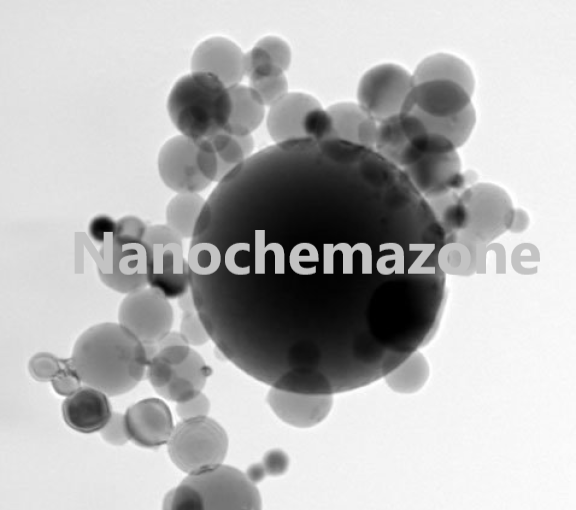

Copper Aluminum Alloy Nanopowder
| MF: | Cu:Al |
| Chemical Name: |
Copper Aluminium Alloy Powder |
| Purity: | > 99.9% |
| APS: | APS 70 nm, APS 10 µm, APS 40-50 µm (Size Customization possible) |
| Form: | Nanopowder and Micropowder |
| Product Number: | NCZA175-20 |
| CAS Number: | 7440-50-8 / 7429-90-5 |
Size Options: also available in the other nano and micron size range, 325 Mesh, 200 Mesh, etc. (Ask for the size and ratio customization)


Copper Beryllium Alloy Nanopowder
| MF: | CuBe2 |
| Chemical Name: |
Copper Beryllium Alloy Nanopowder |
| Purity: | > 99.99% |
| APS: | 80-100 nm (Size Customization possible) |
| Form: | Nanopowder |
| Product Number: | NCZA107 |
| CAS Number: | 7440-50-8 / 7440-41-7 |
Size Options: also available in the micro size range and 325 Mesh, 200 Mesh, etc. (Ask for the customization)
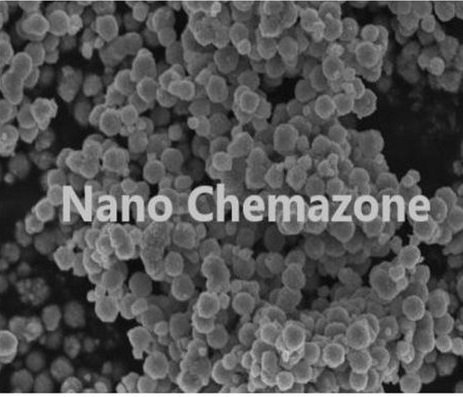
Copper Cadmium Alloy Nanopowder
Cu-Cd Alloy Nanoparticles/Nanopowder (Particle Size Less than ≤ 80 nm, 99.9%)
Copper Cadmium Alloy Nanopowder
| Product Formula | Cu:Cd |
| Product Number | NCZ-A-123-19 |
| CAS Number | 7440-50-8/7440-43-9 |
| Molecular Weight | 175.95 g/moL |
| APS | ≤ 80 nm (can be customized) |
| Purity | 99.9% |
| Color | Grayish |
| Form | Nanopowder |
Note: We can manufacture and supply different particle sizes (Nano size range, Micron, Submicron, and different Mesh size) products of Alloy powders (Multi-Element, Multi-Element Oxide and Mixture of Rare Earth Elements) according to client’s requirements. Kindly ask for the customization in size and Element ratio composition.


Copper Chromium Alloy Nanopowder
| MF: | Cu:Cr |
| Chemical Name: |
Copper Chromium Alloy Nanopowder |
| Purity: | > 99.99% |
| APS: | 40-80 nm (Size Customization possible) |
| Form: | Nanopowder |
| Product Number: | NCZA108 |
| CAS Number: | 7440-50-8 / 7440-47-3 |
Size Options: also available in the micro size range and 325 Mesh, 200 Mesh, etc. (Ask for the customization)
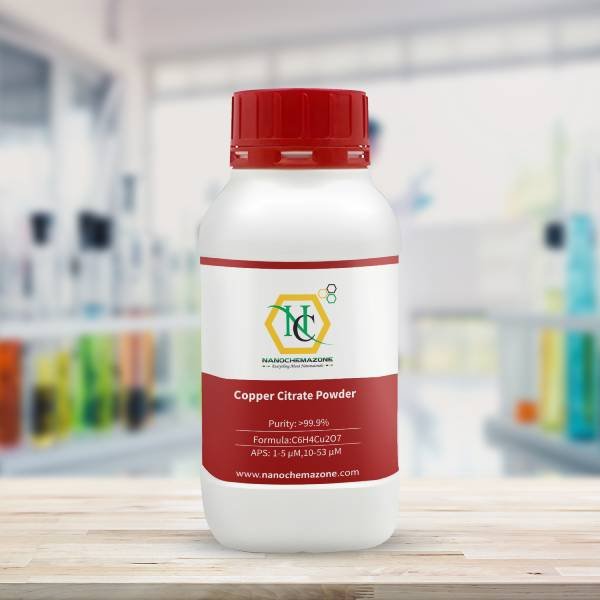
Copper Citrate Powder
Copper Citrate Powder
| Product | Copper Citrate Powder |
| CAS No. | 10402-15-0 |
| Appearance | Blue-Green Powder |
| Purity& nbsp | ≥99%, ≥99.9%, ≥95%
(Other purities are also available) |
| APS   | 1-5 µM, 10-53 µM (Can be customized), Ask for other available size range. |
| Ingredient | C6H4Cu2O7 |
| Density | N/A |
| Molecular Weight | 315.18g/mol |
| Product Code | NCZ-MNO-389/25 |
Copper Citrate Description:
Copper Citrate Powder is one of the numerous advanced ceramic materials manufactured by Nanochemazone. Nanochemazone produces too many standard grades when applicable, including Mil Spec (military grade); ACS, Reagent and Technical Grade; Food, Agricultural and Pharmaceutical Grade; Optical Grade, USP and EP/BP (European Pharmacopoeia/British Pharmacopoeia) and follows applicable ASTM testing standards. Typical and custom packaging is available. Additional technical, research and safety (MSDS) information are available. Please request a quote above for more information on lead time and pricing.
Copper Citrate Powder Related Information:
Storage Conditions:
Airtight sealed,avoid light and keep dry at room temperature.
Please contact us for customization and price inquiry
Email: contact@nanochemazone.com
Note: We supply different size ranges of Nano and micron as per the client’s requirements and also accept customization in various parameters.
Copper Citrate Powder (CAS 10402-15-0)
| Catalog No. | NCZ-MNO-389/25 |
| Molecular Formula | C6H4Cu2O7 |
| CAS Number | 10402-15-0 |
| Appearance | Blue-green powder |
| Purity | > 95% |
| Molecular Weight | 315.18 |
Copper Citrate Powder Descriptions:
Copper Citrate Powder (CAS 10402-15-0) is a blue-green crystalline powder, slightly soluble in water, soluble in ammonia and dilute acid, easily soluble in a hot citric acid-based solution, soluble in ammonia water and dilute acid, slightly soluble in water and cold citric acid-based solution. Copper Citrate Powder can be used as a preservative, insecticide, astringent, and can also be used to supplement copper in animals or humans.
Copper Citrate Powder Specifications:
Specification
| Chemical Formula | Cu2C6H4O7 |
| CAS NO | 10402-15-0 |
| Molecular Weight | 324.41 |
| Use | Nutrient; Dietary Supplement; Pharmaceuticals |
| Description | Bluish-green powder or fine granular; odorless |
| Storage | Store in a clean, dry warehouse in the original unopened containers |
Chemical Specification
| Cu (As Is) | 34.0 - 38.0% |
| Arsenic | 7 ppm max |
| Lead (Pb) | 7 ppm max |
| Cadmium | 7 ppm max |
| Bulk density | According to Customer Requirements |
Copper Citrate Powder Applications:
Copper Citrate Powder can be used as a preservative, insecticide, astringent, and can also be used to supplement copper in animals or humans.
Copper Citrate Powder Safety Information:
| Symbol | GHS07, GHS09 |
| Signal word | Warning |
| Hazard statements | H302-H410 |
| Precautionary statements | P273-P501 |
| RIDADR | UN 3077 9 / PGIII |
| WGK Germany | 3 |

Copper Coated Alloy Powder
Product Name: Copper Coated Alloy Powder
| Product | Copper Coated Alloy Powder |
| CAS No. | 7440-50-8 |
| Appearance | Powder |
| Purity | 99.9% |
| APS | 1 – 5 Microns (Can be customized) |
| Ingredient | Cu-Fe |
| Product Code | NCZ-AE-147 |
DESCRIPTION
Copper Coated Iron Powder
With iron powder as the base, red copper alloy powder has its surface enveloped with a layer of new composite powder of pure copper powder. Such product is mainly used for oil-retaining bearing, diamond tool, abrasives, etc. Uniform and complete clad, high bonding strength, strong antioxidation capability, good compatibility, high thermal conductivity and bright colour.
- Used for oil-retaining bearing
Good fluidity and compressibility. Oil-retaining bearings made from red copper alloy powder have the same quality as oil-retaining bearings made from 663 bronze powder. Their mechanical property and abrasive resistance are apparently better than those of copper base oil-impregnated bearings and their prices are much lower than those of copper powder. Red copper alloy powder is ideal material used to produce various oil-impregnated bearings.
- Used for diamond tools
Uniform and complete, which is favourable for improving the homogeneous diffusion and alloying extent of each metal component of diamond tool in the sintering process, so as to better the mechanical properties and wear-resisting properties of diamond tools. Its performance is significantly better than that of premixed powder and the composite production costs can be greatly reduced.
- Used for abrasives
Uniform and compact. Their strength of bonding with iron powder is high, which can improve the thermal conductivity of powder, so as to better the thermal conductivity of abrasives. Besides, since the metal powder diffuses uniformly and the alloying degree increases in the sintering process, the mechanical performance of abrasive is also improved.
RELATED INFORMATION
Storage Conditions:
Airtight sealed, avoid light, and keep dry at room temperature.
Please email us for the customization.
Email: contact@nanochemazone.com

Copper Coated Iron Powder
Product Name: Copper Coated Iron Powder
| Product | Copper Coated Iron Powder |
| CAS No. | 7440-50-8 |
| Appearance | Powder |
| Purity | 99.9% |
| APS | 1 – 5 microns (can be customized) |
| Ingredient | ultrafine iron-based spray welding copper-clad iron powder for oil bearing |
| Product Code | NCZ-AE-247 |
APPLICATION
- Copper-clad iron for oil bearing
The product has a bright appearance and good fluidity, and is suitable for the production of oil-impregnated bearings. Its mechanical properties and wear resistance are significantly higher than copper-based oil-containing shafts.
Cheng, and the price of copper-clad iron powder is lower than that of copper powder.
- Copper-clad iron powder for friction materials
- Copper clad iron powder for diamond tools
The product can improve the alloying degree of each metal powder of the diamond tool during the sintering process, thereby improving the mechanical properties and the wear resistance, and the integrated production cost of the diamond tool can be reduced.
RELATED INFORMATION
Storage Conditions:
Airtight sealed, avoid light, and keep dry at room temperature.
Please email us for the customization.
Email: contact@nanochemazone.com


Copper doped Ti3AlC2 MAXene powder
Product Name: Copper Doped Ti3AlC2 MAXene Powder
Product Code: NCZ-MX-105-20A
| Product | Cu doped Ti3AlC2 MAXene powder |
| Colour | Black Powder |
| Purity | ≥98 wt% |
| Ingredient | Cu@Ti3AlC2 |
| CAS NO | 196506-01-1 |
Copper doped Ti3AlC2 MAXene powder application field:
High-temperature coating, Mxene precursor, conductive self-lubricating ceramic, lithium-ion battery, supercapacitor, electrochemical catalysis.
RELATED INFORMATION
Storage Conditions:
Airtight sealed, avoid light and keep dry at room temperature.
Please email us for the customization.
Email: contact@nanochemazone.com


Copper Foam
Product: Copper Foam Structures
Copper Foam Open Cell
Copper Metal Foams
| Stock No. | NCZFF101 |
| PPI | 5-120, customization is also possible |
| Bulk Density | 0.80-0.85 g/cc |
| Purity | ≥ 99.9% |
| Porosity | ≥ 70%, customization is also possible |
| Dimension | 500mm X 500 mm, customization is also possible |
| Thickness | 1 to 25 mm, customization is also possible |
Physical Characteristics of heat-absorbing Copper Foam
| Compression Strength | 131 psi |
| Tensile Strength | 1000 psi |
| Shear Strength | 190 psi |
| Modulus of Elasticity (Compression) | 107 kpsi |
| Modulus of Elasticity (Tension) | 14.6 × 10³ psi |
| Shear Modulus | 40.9 kpsi |
| Vickers Hardness | 35 |
| Specific Heat | 0.385 J/g-°C |
| Bulk Thermal Conductivity | 10.1 W/m-°C |
| Coefficient of Thermal Expansion | 1.7 × 10⁻⁵ m/m–°C (0-100°C) |
| Bulk Resistivity | 2.56× 10⁻⁵ ohm – in |
| Melting Point | 1080 °C |


Copper Foil Sheets
Product: Copper Foil Sheets (Cu, Purity: >99.8%, APS: <20 μm)
| Materials | Copper Foil Sheets |
| Stock No. | NCZ-F-0011 |
| CAS | 7440-50-8 |
| Purity | ≥99.8% |
| APS | <20 µm, customization is available |
| Surface density | 175-181 g/m² |
| Tensile strength | ≥30 (25 °C) Kg/mm² |
| Extensibility | ≥8% |
| Roughness Rz | ≤3.0 μm |
| Thickness Tolerance | -0, 3 |
| Width Tolerance | ±1 |
| Tolerance Oxidation Susceptibility | 160°C/10 min.no oxidation |
| Polished | Single/Both Side Polished |
| Appearance Quality | No oxidation, smooth and no concave-convex |